
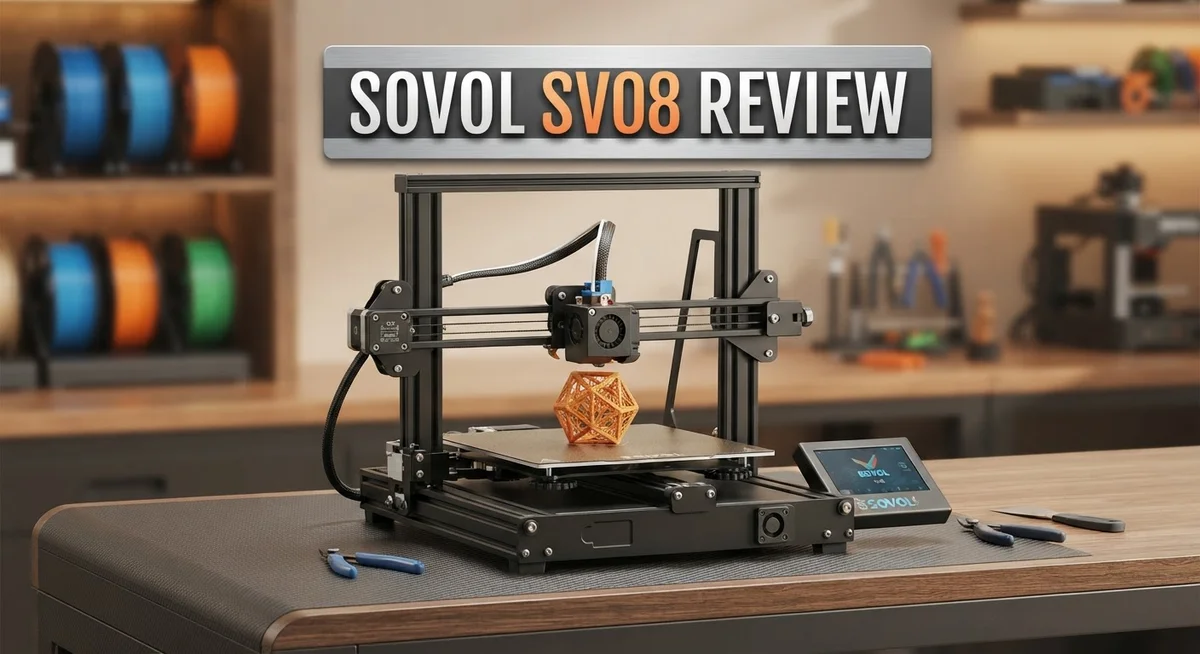
Sovol SV08 3D Printer Review: Is It Worth Your Money?
Want a 3D printer that prints fast and prints well? The Sovol SV08 might be your answer.
This printer uses Core XY kinematics based on the Voron 2.4 design. It brings serious speed to your desktop.
The SV08 hits print speeds up to 700mm/s. It also reaches a max acceleration of 40,000 mm/s². These numbers mean less waiting and more printing.
You get good print quality right out of the box. Minimal tuning is needed before you start your first project.
Assembly stays simple too. You won’t need hours of frustration to get this machine running.
This printer also works as a highly modifiable platform. You can tweak and upgrade it as your skills grow.
In this review, we break down everything about the SV08. We cover its specs, strengths, and a few drawbacks worth knowing.
In a Nutshell
Here is the quick rundown on the Sovol SV08. This printer brings big performance numbers but skips some modern features you might expect.
- Build space reaches 350×350×345mm, giving you room for large projects. The SV08 Max pushes this further to 500×500×500mm.
- Acceleration hits an impressive 40,000 mm/s². Your prints finish faster without sacrificing much quality.
- This printer lacks filament change capability. You cannot switch materials mid print automatically.
- Don’t expect flow sensors, LIDAR, or AI features here. The SV08 keeps things simple and mechanical.
- The design borrows from a two year old printer architecture. This means fewer bleeding edge innovations compared to newer rivals.
- Competitors like the Voron 2.4 and QIDI Max4 offer different strengths. Some excel at material support while others focus on longevity.
The SV08 works best for makers who want raw speed and easy modifications. If you need smart features or filament switching, look elsewhere.
Print Speed and Performance
The SV08 delivers speed without compromise. This printer maintains consistent performance across different print types. You get reliability when you need it most.
Real world testing shows the 700mm/s capability translates into actual faster prints. Users report completed projects in roughly half the time compared to standard printers. The Core XY system keeps movements smooth and precise even at high velocities.
Acceleration matters just as much as top speed. The 40,000 mm/s² rating means the printer reaches maximum velocity quickly. This reduces print time further because the nozzle spends less time ramping up and down. You notice this benefit on every single print you make.
Print quality holds steady even when you push speed limits. Many users run the SV08 at 600mm/s for daily printing without quality loss. You can dial back to 400mm/s for critical parts that need perfect surfaces. The flexibility lets you choose speed or precision based on each project.
The Core XY design contributes heavily to performance consistency. Both X and Y motors work together to move the print head. This shared responsibility reduces strain on individual components. The result is faster acceleration and smoother corners compared to Cartesian systems.
Thermal stability keeps performance predictable. The 350×350×345mm build platform maintains even temperatures across the entire surface. Warping becomes less of a problem. Your prints come out consistent from the first layer to the last.
The SV08 Max variant pushes this further with a 500×500×500mm build volume. Larger prints still benefit from the same speed advantages. You gain more room for multiple objects without sacrificing performance.
Performance testing reveals minimal slowdown during complex prints with many details. The printer handles intricate designs just as quickly as simple ones. This makes the SV08 practical for production runs and one off projects alike.
Users switching from older printers often express surprise at how much faster their workflow becomes. What took 8 hours now takes 4. This time savings compounds quickly across multiple prints.

- [Core XY 700mm/s Max Speed] - SVO8 utilizes CoreXY kinematics todecrease moving mass and enhancemotion...
- [Open Source] - Sovol SV08 is based on Voron 2.4. From the beginning of research and development, we decided...
Last update on 2026-10-07 / Affiliate links / Images from Amazon Product Advertising API
Build Quality and Design
The Sovol SV08 shows solid construction from the moment you unbox it. The frame uses aluminum extrusions that feel sturdy and well assembled. The machine maintains a clean, industrial appearance without unnecessary decorative elements.
The Core XY kinematics setup contributes to the printer’s structural rigidity. This design keeps the build platform stationary while the print head moves in two axes. You get better stability during high speed movements compared to traditional Cartesian designs.
The build platform itself sits on a heated aluminum bed. It reaches temperature quickly and distributes heat evenly across the surface. The magnetic sheet attachment system works reliably for removing prints without fuss.
Cable management deserves mention here. Sovol routed wires cleanly along the frame with minimal clutter. This keeps the machine looking organized and makes future maintenance easier.
The enclosure design is minimalist but functional. Unlike some competitors, the SV08 doesn’t come with a full cabinet. The open frame design helps with cooling and visibility during printing. You can add your own enclosure later if needed for temperature sensitive materials.
The extruder assembly feels compact and well engineered. The hot end sits at a reasonable distance from the nozzle, allowing good print bed access. Component placement makes cleaning and nozzle changes straightforward.
Build quality shows attention to detail in small ways. The power supply mounts securely without vibration. The control board sits in a protected location away from heat sources. Connectors use proper locking mechanisms that resist accidental disconnection.
Material choices balance durability with cost effectiveness. The SV08 uses aluminum where strength matters most. Plastic components appear in sensible locations where they don’t affect performance. This approach keeps the machine functional without unnecessary expense on every part.
The overall design philosophy emphasizes reliability and practicality. You won’t find flashy aesthetics or unnecessary features. Instead, Sovol focused on creating a machine that prints consistently and handles modifications well. The result is a printer that looks professional on your workbench and performs like it means business.
Ease of Assembly and Setup
Getting the Sovol SV08 ready for printing happens faster than you might expect. The assembly process follows a logical order that makes sense even if you’re new to 3D printers.
Out of the box, most major components arrive pre assembled. The frame comes together in stages, and the instructions guide you through each step clearly. You won’t need specialized tools or advanced mechanical skills to complete the setup.
The Core XY kinematics system requires careful attention during assembly, but the process remains straightforward. Aligning the motion rails takes patience rather than expertise. Once you tighten the fasteners, the system feels solid and ready to work.
The heated aluminum bed installs without complications. You’ll mount it, connect the power cable, and verify it sits level before your first print. The leveling process works smoothly, and most users report good results without extensive calibration.
Cable management becomes important during setup. The SV08 keeps wiring organized through thoughtful routing channels. This prevents cables from tangling with moving parts, which keeps your printer running safely.
The extruder assembly attaches to the carriage with minimal fuss. The compact design means fewer parts to coordinate, and everything fits together logically. You’ll connect the heating element, thermistor, and motor without confusion.
Firmware installation happens through a simple process. Sovol provides clear instructions for loading the software onto your printer. The system boots up and recognizes all components automatically in most cases.
First time calibration moves quickly with the SV08. The printer walks you through nozzle height adjustment and bed leveling. Many users print successfully within hours of unboxing, which speaks to how well the assembly process works.
The modular design means you can upgrade components later without disassembling everything. This flexibility comes from the Voron 2.4 inspired architecture, which separates systems into independent modules.
Overall, assembly takes between four to six hours for someone working carefully. The experience feels manageable rather than overwhelming, and the printer rewards your effort with reliable performance from day one.
Top 3 Alternatives
Creality Ender 3 S1

- 【250mm/s High-speed Printing】Creality Ender 3 V3 SE 3d printer supports a maximum printing speed of...
- 【Powerful ""Sprite"" Direct Extruder】Ender 3 V3 SE is the upgrade of ender 3, ender 3 v2, ender 3 pro...
Last update on 2026-09-13 / Affiliate links / Images from Amazon Product Advertising API
The Creality Ender 3 S1 offers reliable performance for users who want a straightforward 3D printer. This machine features a direct extruder that improves printing accuracy and reduces filament jams. The heated bed reaches temperature quickly, so you spend less time waiting and more time printing.
Build quality feels solid. The printer handles standard materials like PLA and PETG without fuss. Users appreciate the large community support available online, which means finding solutions to problems becomes easier.
Anycubic Kobra Max

- 【Massive 350x350x350mm³ Build Volume】 Anycubic Kobra S1 Max Combo has extra-large 350x350x350mm...
- 【Fully-Enclosed CoreXY Structure】 Built with a solid all-metal frame that stays rock-steady even at top...

Last update on 2026-10-07 / Affiliate links / Images from Amazon Product Advertising API
The Anycubic Kobra Max delivers impressive build volume for creators working on larger projects. This printer includes an automatic leveling system that saves setup time. The machine prints consistently across the entire platform without manual adjustments between jobs.
Speed matters here. The Kobra Max moves quickly while maintaining print quality. Owners report satisfaction with how the printer handles various materials. The design feels modern, and the interface responds intuitively to user commands.
Prusa MK3S Plus

- [REWARDING DIY EXPERIENCE] Master your 3D printer by building it yourself with our detailed step-by-step...
- [PRO-GRADE SPEED & QUALITY] Elevate your workshop with this high-speed CoreXY professional 3d printer. The...
Last update on 2026-09-13 / Affiliate links / Images from Amazon Product Advertising API
The Prusa MK3S Plus represents premium engineering in the consumer 3D printing space. This printer includes a filament sensor that pauses printing if material runs out, preventing wasted prints. The build plate removes easily, making part removal simple and damage-free.
Precision stands out as a key strength. The MK3S Plus produces detailed models with minimal post-processing needed. The printer includes built-in safety features and reliable electronics. Users consistently report high satisfaction with print quality and machine durability over extended use periods.
Customization and Modularity
The Sovol SV08 stands out as a highly modifiable platform from day one. You can swap components without needing to rebuild the entire machine. The Core XY design means upgrading the extruder, nozzle, or hotend takes minutes rather than hours.
The modular construction extends to the build platform itself. You can replace the heated aluminum bed with alternative surfaces. Many users upgrade to textured plates or PEI sheets based on their material preferences. The mounting system keeps everything secure while remaining accessible.
Cooling solutions offer another customization avenue. The stock cooling setup works well, but you can add aftermarket fan ducts if you print specific materials like nylon or TPU. The carriage design accommodates different cooling configurations without modification to the frame.
Electronics modularity deserves attention here. The SV08 uses a standard control board that accepts firmware updates easily. You can modify settings through the touchscreen interface without opening the machine. Advanced users can replace the board entirely if they want different functionality, though the stock setup handles most printing needs.
The frame itself follows the Voron 2.4 philosophy, meaning the community has developed countless modifications. You can find upgraded parts, custom enclosures, and accessory mounts designed specifically for this platform. The open source nature of the design means new options emerge regularly.
Cable management and component routing remain user friendly. Cables run through designated channels that you can access for upgrades. The power supply mounts externally, making it simple to swap if needed. The extruder assembly connects through quick disconnect points on some configurations.
Storage and organization become easier with the modular approach. You can add filament guides, material holders, or tool racks without permanent modifications. The compact footprint means these additions don’t demand much extra space.
The SV08 doesn’t lock you into a single setup. Whether you want to experiment with different nozzle sizes, upgrade cooling systems, or modify the frame, the printer’s architecture supports these changes. This flexibility appeals to makers who enjoy tinkering and optimizing their equipment over time.
Print Quality and Output
The Sovol SV08 delivers impressive print quality right away. You won’t need weeks of tweaking to get good results. Most users report clean, accurate prints from their first successful build.
The Core XY kinematics system plays a major role here. This setup keeps the print head stable and responsive. You get precise movements that translate directly into sharper details and smoother surfaces on your prints.
Speed doesn’t compromise quality on this machine. The SV08 reaches up to 700mm/s, yet maintains dimensional accuracy. Faster printing means less time for thermal drift to affect your output. Parts come off the bed with consistent layer adhesion and minimal warping.
Layer consistency stands out as a real strength. The heated aluminum bed maintains even temperatures across the entire surface. Hot spots and cold zones won’t ruin your prints. This uniform heat distribution keeps dimensional accuracy tight, especially on larger projects.
Surface finishes appear smooth and professional. The extruder assembly delivers consistent filament flow without stuttering or grinding. You’ll notice fewer stringing issues and cleaner retractions compared to older printer designs. Wall thickness stays uniform throughout your prints.
The printer handles various materials well. PLA, PETG, and TPU all print with minimal fussing. Nylon requires more attention, though the SV08 manages it better than some competitors. Your material choice won’t limit what you can achieve here.
Overhangs and bridges print cleanly without excessive support material. The cooling system works efficiently enough to handle challenging geometry. Infill patterns stay consistent, and perimeter quality remains high even on complex shapes.
Print failures drop significantly once you dial in your first successful print. The machine’s stability means you can repeat good results reliably. This consistency matters when you’re printing functional parts or prototypes. You spend more time printing and less time troubleshooting.
The SV08 proves that speed and quality aren’t enemies. Sovol engineered this printer to do both well. Your finished parts will look sharp, measure accurately, and hold up under use.
Pros and Cons
Pros
- Reaches print speeds up to 700mm/s without sacrificing quality or layer consistency
- Arrives largely pre assembled, so you skip weeks of build frustration and start printing fast
- Works beautifully with the Voron 2.4 community, giving you access to thousands of proven upgrades and modifications
- Core XY kinematics deliver smooth, reliable performance across different materials and print types
- Modular construction lets you swap cooling solutions, electronics, and other components without rebuilding the entire machine
Cons
- No automatic filament or tool change system, so multi color prints require manual intervention between colors
- Missing modern sensors like flow monitors, LIDAR, or AI leveling features that some competitors now include
- Design foundation comes from 2 year old printer architecture, so it lacks the latest innovations appearing in newer models
- No built in support for advanced features like nylon printing optimization compared to specialized competitors
Who Should Buy It
The Sovol SV08 works best for makers who want speed without compromise. If you print functional parts regularly, this machine delivers. The 700mm/s capability means you finish projects faster while maintaining solid layer consistency.
You should consider the SV08 if you enjoy tinkering. The Core XY kinematics and modular frame attract builders who love upgrades. The Voron 2.4 community has created thousands of proven modifications, so you’ll find endless customization options. You can swap cooling systems, upgrade electronics, or adjust components without rebuilding the entire machine.
This printer suits hobbyists and small makers who need reliable output. Assembly happens quickly, and print quality comes excellent right out of the box. You skip weeks of tuning frustration. The machine handles various materials well, from standard PLA to more demanding filaments. Overhangs print cleanly, and surface finishes look professional.
The SV08 makes sense if you value independence over convenience. There’s no automatic filament change system, so multi-color prints require manual intervention between colors. You won’t find flow sensors, LIDAR, or AI features here. This is a straightforward machine that prints what you tell it to print.
Skip the SV08 if you need automatic tool changes or advanced sensors. The Creality K1 Max and QIDI Max4 offer different strengths in those areas. If longevity and proven performance matter most, Prusa machines excel there. The RatRig V-Core 3 appeals to users who want maximum customization from the start.
The SV08 shines for makers aged 18 to 55 who understand 3D printing basics. You don’t need expert knowledge, but you should feel comfortable with calibration and material testing. Small business owners printing prototypes or custom parts find real value here. Educational settings benefit from the accessible assembly and strong community support.
This machine rewards curiosity and experimentation. If you love learning how printers work and enjoy the modification process, the SV08 becomes your ideal partner. You get a fast, capable machine that grows with your skills.
Final Verdict
The Sovol SV08 stands as a solid choice for makers who want CoreXY performance without complex builds. It takes proven Voron 2.4 architecture and packages it into something ready to print.
This printer doesn’t try to reinvent the wheel. It borrows a design that already works well and refines the user experience around it. That approach pays off in reliability.
Compared to machines like the Creality K1 Max or QIDI Max4, the SV08 skips flashy extras. You won’t find flow sensors, LIDAR scanning, or AI-powered error detection here. Some buyers may miss these features.
But that simplicity has its own charm. Fewer sensors mean fewer things that can fail. The SV08 focuses on core printing performance instead of chasing every new trend.
Printers like RatRig V-Core 3 or the original Voron 2.4 offer similar kinematics, but often demand more assembly time and technical know how. Sovol trims that learning curve significantly.
If longevity matters most to you, Prusa machines might still hold an edge over time. Their track record speaks for itself. The SV08 is newer, so its long term durability remains to be fully proven.
For those wanting bigger builds, the SV08 Max expands print volume significantly. This variant suits makers who outgrow standard bed sizes quickly.
The bottom line is simple. The SV08 brings fast, reliable CoreXY printing to more people. It doesn’t lead the innovation race, but it doesn’t need to.
This printer delivers dependable results without unnecessary complexity. It’s a smart pick for anyone ready to explore CoreXY printing without jumping into a full DIY Voron build.
If you want cutting edge automation, look elsewhere. If you want speed, quality, and a strong upgrade path, the Sovol SV08 earns its place on your workbench.
Frequently Asked Questions
Can the SV08 print multiple colors without stopping?
No. The SV08 lacks automatic filament or tool change systems. You need to pause the print, swap filament manually, and resume. This works fine for simple two color designs, but it’s not ideal for complex multi color projects. If you print frequently with different colors, you’ll spend extra time managing material changes between jobs.
How difficult is assembly compared to other CoreXY printers?
Assembly is straightforward. The SV08 arrives largely pre assembled, so you skip weeks of frustration. You’ll handle basic wiring, bed leveling, and calibration. Compared to machines like the RatRig V-Core 3 or original Voron 2.4, the SV08 requires far less hands on building. Most users get printing within a few hours, not days.
What upgrades and modifications are available?
Thousands. Since the SV08 uses Voron 2.4 architecture, you tap into a massive community of proven upgrades. You can swap cooling solutions, upgrade electronics, add enclosures, or modify the frame. The modular construction lets you experiment without rebuilding the entire machine. This flexibility rewards makers who enjoy tinkering and customization.
Does the SV08 need a lot of tuning out of the box?
Not really. Print quality is solid from day one. You’ll do basic bed leveling and nozzle calibration, but the printer doesn’t demand extensive tuning. The Core XY kinematics and rigid frame handle different materials and print types smoothly. This makes it ideal for hobbyists who want reliable output without constant adjustments.
How does the SV08 compare to machines with AI and sensor features?
The SV08 keeps things simple. It skips flow sensors, LIDAR, and AI features that competitors offer. This simplicity means fewer potential failure points and lower complexity. If you value independence and straightforward operation over convenience features, the SV08 delivers. You control your prints directly rather than relying on automatic systems.

DK is a technology expert who specializes in AI tools, software, and tech gadgets. He writes for How to Tech Info, providing detailed reviews and practical guides. DK helps readers discover the best AI applications, navigate new software, and choose the right tech gadgets.


