Insignia Chest Freezer Review: Is It Worth Your Money?
Looking for a reliable freezer to store your extra food? The Insignia Chest Freezer might catch your eye.
It comes in sizes from 5 to 14 cu. ft. This means you can pick a model that fits your space and needs.
This freezer works well for storing meat and vacuum sealed food long term. Its manual temperature control lets you adjust settings with ease.
But does it hold up in every season? Some users report cooling issues during hot summer months.
In this review, we break down the real pros and cons of this freezer. You will learn about its design, performance, and how it compares to brands like Frigidaire and GE.
Let’s find out if this freezer earns a spot in your home.
In a Nutshell
Here is a quick summary of what this freezer offers. Check these key points before you decide.
-
Space-smart design: This freezer fits well in garages or basements. It needs just 6 inches of clearance on the sides and back for proper airflow.
-
Manual temperature control: You get a simple dial to set cooling levels. The range runs from 0°F to 110°F, giving you flexibility for different storage needs.
-
Energy efficient options: Some models carry the ENERGY STAR certification. This means lower power bills over time.
-
Mixed reliability: This is a budget brand. Build quality does not always match bigger names like GE or Frigidaire.
-
Resale pattern: Many units show up on the used market after short use. This hints at possible long term performance issues.
-
Strong for specific storage: It shines for long term meat storage and vacuum sealed food. Short term or everyday use may not show its full value.
Keep these points in mind. They help you see the full picture beyond just size and looks.
Capacity and Size Options
Insignia offers chest freezers in five different sizes to match your storage needs. The lineup ranges from compact 5 cu. ft. models up to spacious 14 cu. ft. units. This variety means you can find an option whether you have a small apartment or a large family home.
The 7 cu. ft. model serves as a popular middle ground. It measures 33.5 inches high, 37.2 inches wide, and 20.6 inches deep. These dimensions fit nicely into most garage corners and basement spaces without consuming excessive floor area.
Smaller models work best for single people or couples. A 5 cu. ft. freezer holds enough for basic food storage without taking up much room. These compact versions slide into tight spaces like under stairs or in utility closets.
Larger models suit families and meal preppers. The 10 to 14 cu. ft. options provide ample room for bulk purchases and long term storage. You can stock multiple months of meat, frozen vegetables, and prepared meals without running out of space.
Each size requires proper ventilation clearance. You need at least 6 inches of open space on the sides and back of any Insignia model. This prevents heat buildup and helps the freezer run efficiently. Skipping this step can lead to cooling problems and higher energy use.
Consider your actual usage before choosing a size. Many people buy larger freezers thinking they will fill them completely. In reality, a freezer that matches your typical storage volume works better. An oversized unit wastes energy by cooling empty space.
The operating temperature range spans from 0 to 110 degrees Fahrenheit. This wide range means the freezer adapts to different room temperatures. Basements, garages, and climate controlled spaces all work as locations.
Measure your space carefully before purchasing. Account for the 6 inch ventilation clearance on all sides. Check doorway widths to ensure delivery is possible. Verify that your chosen location has stable flooring to support the unit’s weight. Taking these steps prevents installation headaches and ensures your freezer performs as intended.

Last update on 2026-10-07 / Affiliate links / Images from Amazon Product Advertising API
Build Quality and Design
The Insignia Chest Freezer features a straightforward design that prioritizes function over frills. You get a simple manual dial for temperature control instead of digital displays or smart features. This keeps the unit simple to operate and reduces potential breakdown points.
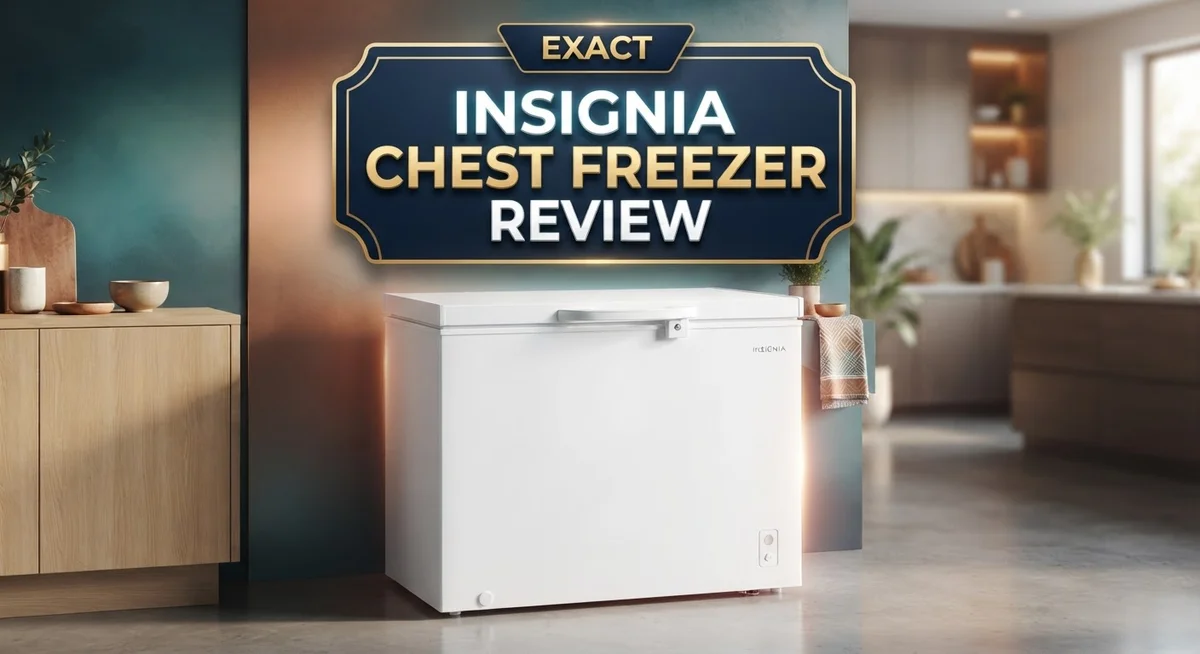
The exterior uses a standard white finish with a lift-top lid design. The cabinet sits low and wide, which means it fits well into tight corners of garages or basements. The compact footprint makes it ideal for spaces where upright freezers won’t fit.
Inside, you’ll find a basic wire basket system for organizing food. The basket slides out easily, so you can access items stored at the bottom without digging through everything. The interior walls are smooth and easy to clean when needed.
Insignia built these freezers with a simple compressor system. The cooling coils run quietly in the background. You won’t hear loud humming or strange noises during normal operation. The unit generates minimal vibration compared to some competing models.
The cabinet construction uses standard steel and plastic materials. The lid seal is a rubber gasket that keeps cold air locked inside. Over time, this gasket may wear out, but replacement gaskets are readily available and inexpensive.
Ventilation requirements matter for this freezer’s performance. You need to leave at least 6 inches of clearance on the sides and back. This airflow prevents the compressor from overheating. Cramped spaces can lead to cooling problems, especially during warm months.
The 7 cubic foot model measures 33.5 inches tall, 37.2 inches wide, and 20.6 inches deep. These dimensions work well for standard doorways and basement entrances. Larger models in the Insignia lineup reach up to 14 cubic feet but still maintain a reasonable footprint.
The overall build quality reflects the entry level positioning. You get solid construction that handles basic freezing tasks. The design focuses on reliability for long term storage rather than premium materials or advanced features. This approach keeps the unit simple and straightforward for everyday use.
Temperature Control and Performance
The Insignia chest freezer uses a straightforward manual temperature control system. You adjust cooling levels with a simple dial located on the interior wall. This approach keeps things easy to understand without fancy electronics or digital displays.
The freezer maintains an operating range from 0 to 110 degrees Fahrenheit. This means it can handle most home storage situations. The compressor system runs continuously to keep food frozen solid. Performance depends heavily on where you place the unit.
Ventilation clearance plays a critical role in how well this freezer performs. You need at least 6 inches of open space on the sides and back. Without proper airflow, the compressor works overtime and cooling suffers. Poor ventilation can cause the unit to struggle during warm months.
Summer heat presents a real challenge for this model. Some owners report that their units fail to maintain proper freezing temperatures when outdoor conditions get extreme. The cooling system simply cannot keep up in very hot climates. This is the biggest performance weakness you should know about.
The freezer excels at long term storage of frozen meats and vacuum sealed foods. Once items reach the proper temperature, they stay frozen reliably. The consistent cold environment preserves food quality over extended periods. This makes it a solid choice for hunters, bulk buyers, and meal preppers who stock up.
Manual controls mean you can adjust settings based on seasonal changes. During winter, you might lower the setting slightly. In summer, you’ll want maximum cooling power. This flexibility helps compensate for temperature swings throughout the year.
The wire basket system inside allows basic food organization. You can separate different items to prevent freezer burn. However, the system is minimal compared to more advanced models. Temperature consistency inside the cabinet is adequate but not exceptional. Hot spots can develop in the upper sections during extended operation. Most users find performance acceptable for typical household freezing needs, though it won’t match premium brand reliability in demanding conditions.
Top 3 Alternatives
Frigidaire Chest Freezer

- Large Storage Capacity - Effortlessly store frozen food and meals with this spacious 5.0 cu. ft. freezer...
- Adjustable Thermostat - Set the temperature with ease using the Adjustable Thermostat knob, featuring seven...

Last update on 2026-10-07 / Affiliate links / Images from Amazon Product Advertising API
The Frigidaire Chest Freezer keeps your frozen foods organized and fresh. It offers plenty of storage space for families who buy groceries in bulk. The unit features adjustable shelving so you can customize your storage layout.
This freezer runs quietly and uses energy-efficient cooling technology. You’ll find the temperature control easy to use. The white exterior fits well in most kitchens and garages.
GE Garage Ready Freezer
- Large Storage Capacity - Effortlessly store frozen food and meals with this spacious 5.0 cu. ft. freezer...
- Adjustable Thermostat - Set the temperature with ease using the Adjustable Thermostat knob, featuring seven...
Last update on 2026-10-07 / Affiliate links / Images from Amazon Product Advertising API
The GE Garage Ready Freezer performs well in cold environments. It works reliably even when temperatures drop significantly. This makes it perfect for unheated spaces like garages or basements.
The freezer includes a power-on indicator light and adjustable thermostat. You get ample basket storage for organizing different food items. The unit maintains consistent temperatures to preserve your food quality. Many users appreciate its durability and long-term performance.
Haier Compact Freezer

- Compact Freezer Dimension: The 2.1 cubic feet freezer, measuring 17.72 inches W, 16.93 inches D, and...
- 5-Grade Adjust Temperature: We provide 5 levels of temperature control. Choose your preferred temperature from...
Last update on 2026-10-07 / Affiliate links / Images from Amazon Product Advertising API
The Haier Compact Freezer works great for small spaces and apartments. Its compact size doesn’t sacrifice storage capacity. The freezer fits easily in dorms, offices, or tight kitchen corners.
This unit features a manual defrost system that keeps operating costs low. The interior light helps you find items quickly. Temperature settings are straightforward and reliable. The sleek design looks modern in any room. It’s ideal for individuals or couples who need supplemental freezing space without taking up much room.
Each option serves different needs. Frigidaire offers family-sized storage. GE handles extreme temperature conditions. Haier provides space-saving solutions for compact living situations.
Energy Efficiency and Operating Costs
The Insignia chest freezer comes with ENERGY STAR certification options that help reduce your electricity consumption. This matters because freezers run 24/7, so efficiency directly impacts your monthly utility bills.
Manual temperature controls let you adjust settings based on seasonal changes. During winter months, you can run the compressor less frequently. In summer, you may need to increase cooling power to maintain consistent temperatures.
The compressor system uses standard technology found in most entry level freezers. It cycles on and off to maintain your desired temperature range. The simpler design means fewer components that can fail, which supports long term reliability.
Ventilation clearance significantly affects energy performance. The manufacturer requires 6 inches of clearance on the sides and back. Poor airflow forces the compressor to work harder, consuming more electricity. Blocked vents can cause temperature fluctuations and increase operating costs substantially.
Real world performance shows mixed results in hot climates. Some users report the freezer struggles to maintain proper temperatures during extreme summer heat. This cooling challenge means the compressor runs longer cycles, raising energy consumption. Proper placement away from direct sunlight helps prevent this issue.
The wire basket system inside keeps food organized without blocking airflow. Good air circulation throughout the cabinet improves efficiency. Overcrowding the freezer reduces cooling performance and forces the compressor to work overtime.
Compared to competitors, Insignia models consume moderate amounts of electricity for their size. Frigidaire offers similar efficiency at comparable capacity levels. GE models typically use slightly less energy but require higher initial investment.
Defrosting occurs manually on most Insignia models. You’ll need to unplug the unit periodically and drain accumulated frost. Regular maintenance prevents ice buildup that reduces cooling efficiency and increases energy use.
The 5 cubic foot models consume less power than 14 cubic foot versions simply due to smaller capacity. Choose the size that matches your actual storage needs to avoid unnecessary energy waste. Oversized freezers run longer cycles to maintain temperature throughout the empty space.
Installation and Ventilation Requirements
Installing your Insignia chest freezer requires careful attention to location and airflow. The unit needs 6 inches of clearance on all sides and the back to ensure proper ventilation. This space allows hot air to escape from the condenser coils efficiently.
Choose a location that stays between 0 and 110 degrees Fahrenheit. Avoid direct sunlight, as heat exposure reduces cooling performance. Basements, garages, and utility rooms work well for most households. Keep the freezer away from heat sources like ovens, radiators, or water heaters.
Ventilation directly impacts how well your freezer maintains temperature. Without adequate airflow, the compressor works harder and consumes more energy. In summer months, poor ventilation becomes especially problematic. The freezer may struggle to maintain cold temperatures if airflow gets blocked.
Before placement, measure your space carefully. The 7 cubic foot model measures 33.5 inches tall, 37.2 inches wide, and 20.6 inches deep. Add the required clearance to these dimensions when planning your setup. Ensure doorways and hallways allow the unit to pass through during delivery.
Plug the freezer into a dedicated outlet on a grounded circuit. Avoid extension cords whenever possible. Let the unit sit for 4 to 6 hours after delivery before powering it on. This waiting period allows refrigerant to settle properly in the system.
Clean the interior before your first use. Wipe down all surfaces with a damp cloth to remove dust and manufacturing residue. The wire basket system should be positioned to allow air circulation around frozen items.
Check that the lid closes completely and seals properly. A loose seal lets cold air escape and forces the compressor to work harder. Inspect the door gasket monthly for cracks or gaps.
Position the freezer on a level surface. Uneven placement can cause the lid to close improperly and damage the seal. Most importantly, maintain that 6 inch clearance consistently. This single factor determines whether your freezer runs efficiently and reliably throughout its lifespan.
Pros and Cons
Pros
- Compact design fits easily into basements, garages, and small spaces without taking up much room
- Manual temperature control lets you adjust settings based on seasonal changes and your storage needs
- Excellent for storing frozen meats and vacuum sealed foods long term without quality loss
- Wire basket system keeps food organized while allowing proper airflow inside the unit
- ENERGY STAR certified models available to help reduce your electricity consumption
Cons
- Cooling struggles in hot summer weather, with some units failing to maintain proper freezing temperatures
- Lower reliability compared to established name brand freezers due to budget construction
- Some units show up on the used market after short ownership periods, suggesting durability concerns
Who Should Buy It
The Insignia chest freezer works best for specific types of buyers. If you live in a cool climate and want reliable long-term food storage, this unit fits your needs well. People who freeze meats, vegetables, and vacuum-sealed items will appreciate how the freezer maintains consistent temperatures in moderate conditions.
Homeowners with limited space benefit greatly from Insignia models. Your basement, garage, or utility room can accommodate these compact units without eating up valuable floor space. The design lets you store substantial quantities of frozen food in a small footprint.
Budget-conscious shoppers who prioritize storage capacity over premium features find good value here. You get straightforward functionality without unnecessary bells and whistles. Manual temperature controls put you in charge of adjusting settings based on your needs and seasonal changes.
Families planning to stock up on bulk frozen items should consider this freezer. The wire basket system keeps your food organized and accessible. You can separate different food types easily while maintaining proper airflow throughout the unit.
However, avoid this freezer if you live in a hot climate. Summer heat causes cooling struggles for some units. If temperatures in your area regularly exceed 90 degrees Fahrenheit, you may experience temperature maintenance issues. The compressor cannot always keep up with extreme external heat.
Buyers who demand top-tier reliability should look elsewhere. Insignia represents a budget brand with lower durability ratings compared to established manufacturers. If your freezer fails, you’ll face replacement rather than repair costs.
People with inconsistent power supply or unreliable electrical outlets should skip this model. Your freezer needs a dedicated, grounded circuit to function properly. Fluctuating power can damage the compressor or cause food spoilage.
Renters and temporary residents may hesitate due to the unit’s weight and size. Moving a chest freezer requires significant effort and planning. If you relocate frequently, this permanent-style appliance creates logistical challenges.
Choose the Insignia chest freezer when you need straightforward, space-efficient cold storage in stable climate conditions. Verify your location meets ventilation requirements before purchasing. Confirm your electrical setup can support the unit’s power needs consistently.
Final Verdict
Final Verdict
The Insignia chest freezer works well as a simple, no-frills storage solution. It skips smart features and digital displays, keeping things easy for everyday users.
This simplicity appeals to shoppers who want straightforward function over fancy technology. You get a freezer that does its job without extra complications.
When comparing options, Frigidaire often matches Insignia on value while offering similar performance. GE stands out for buyers who want extra reliability, though it comes with a different ownership experience.
Kenmore and Midea also compete in this space, each with their own strengths. Your final choice depends on what matters most to you: simplicity, space, or long-term durability.
Insignia suits people who need reliable cold storage without extra bells and whistles. It fits well into a straightforward lifestyle where function matters more than features.
If you already understand the climate limits and placement needs, this freezer can serve you well. Treat it as a practical tool, not a luxury appliance.
Think about your household’s long-term freezing habits before deciding. If you store food seasonally or in smaller batches, this model handles that task nicely.
For buyers who want a hassle-free introduction to chest freezers, Insignia offers a fair starting point. It teaches you what to expect from this appliance type without overwhelming complexity.
Keep your expectations realistic. This is not a premium name brand freezer, and it does not try to be one.
Judge it by what it actually offers: simple cooling, decent capacity, and manual control. For many households, that combination covers their basic needs.
In the end, your satisfaction depends on matching the freezer to your lifestyle. Choose it with clear eyes, and it can serve your household reliably for years.
Frequently Asked Questions
Can I use an Insignia chest freezer in a garage during summer?
Yes, you can place it in a garage, but summer heat creates real problems. The unit struggles to maintain freezing temperatures when outdoor temperatures climb above 90°F. If your garage gets hot and stays hot, the compressor works overtime and may fail to keep food frozen solid. You’ll want to ensure your garage stays cool or consider a different location like a basement or climate-controlled shed.
How much space do I need around the freezer?
Leave at least 6 inches of clearance on the sides and back of the unit. This gap allows proper air circulation so the condenser can release heat efficiently. Cramming it into a tight corner or against walls blocks airflow and reduces cooling performance. The front needs enough room for the lid to open fully without hitting obstacles.
Is this freezer good for long-term food storage?
Absolutely. Insignia chest freezers excel at storing frozen meats and vacuum-sealed foods for extended periods. The consistent cold maintains food quality without freezer burn when items are properly wrapped. The wire basket system keeps everything organized while allowing cold air to circulate around your food.
How reliable is an Insignia freezer compared to other brands?
Insignia is a budget brand, so expect lower reliability than GE or Frigidaire. Some units develop cooling issues early on. If maximum durability matters to you, investing in an established name brand makes sense. However, many owners get years of basic performance from their Insignia models without serious complaints.
What size should I choose for my family?
The 7 cubic foot model fits most households well. It measures 33.5 inches tall, 37.2 inches wide, and 20.6 inches deep. Larger families or serious bulk shoppers may prefer the 10 or 14 cubic foot options. Smaller households or tight spaces work fine with the 5 cubic foot model.

DK is a technology expert who specializes in AI tools, software, and tech gadgets. He writes for How to Tech Info, providing detailed reviews and practical guides. DK helps readers discover the best AI applications, navigate new software, and choose the right tech gadgets.