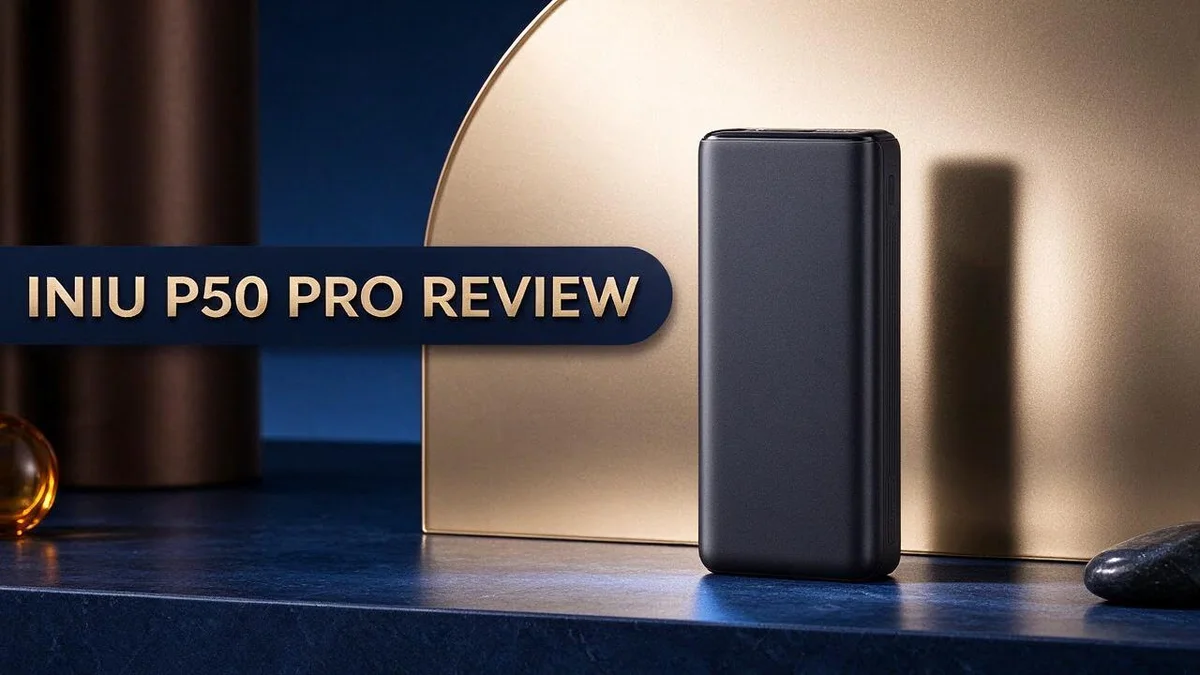
Iniu P50 Pro Review: Compact Power Bank Tested for Phones, Tablets and Laptops
Juggling a dead phone on a long day is stressful. A small power bank can save the day. The Iniu P50 has caught the attention of many travelers and tech fans.
Reviewers say this compact power bank fits easily in a pocket. It almost disappears when you carry it. Yet it still packs enough energy for real use.
One reviewer reports nearly two full iPhone charges from a single charge. The same tester used it to power a Galaxy S24 and an iPad Air without noticeable heating. Fast charging also makes it handy when time is short.
Here is what this review covers. We look at the key specs, real performance, the strengths, and who this power bank suits best. Let’s see if the P50 earns a spot in your bag.
In a Nutshell
-
Model naming: Sources mention the P50, the Pocket Rocket P50, and the E1 version. The name P50 Pro does not appear, so this review covers the P50 family.
-
Phone and tablet charging: One reviewer says it charges a Galaxy S24 and an iPad Air without noticeable heating. That matters most during long charging sessions when devices get warm.
-
Laptop potential: A reviewer says it can charge a MacBook, but the source excerpt cuts off before the details appear. Check the full specs before you count on this for your laptop.
-
Output power: The E1 version offers up to 45W Power Delivery output. That speed helps you top up many modern phones and tablets quickly when you are short on time.
-
Brand reach: INIU reports 38 million global users. This is a company claim, so it does not replace independent testing or long term reader feedback.
-
Missing details: The sources list no cons and name no rival models. Readers should keep that gap in mind when they compare this option with other choices.
Capacity and Power Output

- [MINI SIZE. ULTRA PORTABLE CHARGER]: Roughly the size of an AirPods Pro case, this smallest power bank packs...
- [TRUE 45W SUPER FAST CHARGING]: Delivering desktop-grade, rapid speed anywhere, this 45w pd fast charging bank...

Last update on 2026-11-07 / Affiliate links / Images from Amazon Product Advertising API
Capacity sounds simple on paper. The label shows 10,000mAh, but that number is only the starting point. Power banks store energy in a cell, then move it through circuits. Each step wastes a little energy.
Think of it like pouring water through a sieve. Some of it always splashes out before it reaches your phone.
A 10,000mAh cell holds roughly 37Wh at a typical 3.7V rating. That figure is a useful way to compare this unit with other banks.
Airlines use watt-hours when they set carry-on rules. Most travel guidelines allow power banks under 100Wh in cabin bags. Because this model sits well under that line, you can usually pack it without trouble. Always check your airline before you fly.
Power output tells a different story. Capacity shows how much energy you can store. Output shows how fast that energy can leave the bank.
The P50-E1 version reaches up to 45W Power Delivery. That level suits modern phones, tablets, and some lighter laptops.
Fast charging matters when you only have a short break. Higher wattage cuts the time you spend waiting next to a wall outlet.
Wattage only works if your device accepts it. Phones negotiate power with the bank, so the device sets the final speed.
Use a cable that supports Power Delivery. A weak cable can limit output, even when the bank itself is capable.
Heat can build up during long, high output sessions. Keep the bank in open air while it works to help it stay cool.
Pass through charging adds one more question. Some banks charge themselves while they power a device. The sources do not confirm whether this model supports that feature, so check the product details before you rely on it.
Who benefits most from this balance? Commuters, travelers, and students often need one or two phone charges a day. A bank this size fits that routine well. Heavier laptop users may want more capacity.
Capacity and output work together. Look at both numbers before you decide.
Portability and Pocket Fit
Pocket fit matters more than most people think. A bank that stays in your pocket gets used. One that sits in a drawer does not help you at all.
Sources describe this model as very compact. They do not list exact dimensions or weight, though. Check the product listing for measurements before you buy, so you know what to expect.
Think about your daily outfit first. Slim jeans and fitted jackets can feel tight with any power bank. Loose cargo pants or a puffer coat usually leave more room.
Bags make a big difference too. A small crossbody, a tote, or a backpack side pocket each suits a different charger size. Try the bag with the bank inside before a long trip.
Portability also shapes how often you carry it. A bank that rides along all day gets used during short gaps. Those gaps include a train ride, a coffee line, or a waiting room.
Pair it with your phone in the same pocket. Many people carry their phone and power bank together. Make sure the combined bulk still sits comfortably when you sit down.
Hikers, commuters, and festival goers each face different needs. A light outer jacket pocket works for a quick walk. A zip pocket in a day pack feels safer on a trail or in a crowded street.
Keep it reachable. Store it where you can grab it without unpacking your bag. Quick access helps when your phone battery drops during a call or a map search.
Pocket fit also affects comfort during long sitting. A bulky block under your hip can press into you on a bus or airplane seat. Stuff it into a jacket before you leave home, and see how it sits.
Overall, the P50 suits people who want a light carry. Test the fit with your own clothes and bag before you travel. A good fit means you reach for it every day.
Real-World Charging Performance
Cable choice shapes the final speed. A weak cable can slow every charge, even with a strong bank. Pick a sturdy cable that supports fast charging. Keep one in your bag so you never guess.
Using the bank while it charges is different. Many power banks slow down when they charge and power a device at the same time. Test this habit before a trip so you know what to expect.
Multiple devices share the power. When you charge two gadgets at once, each one gets a smaller share. A phone and earbuds need less than a phone and tablet together. Plan which device needs help first.
Heat is a useful warning sign. A warm bank is normal. A hot bank needs a break. Move it out of direct sun and let it cool before the next session.
Hot cars and cold mornings change results. Batteries lose some efficiency in extreme temperatures. Keep the bank in a cabin pocket instead of a parked car.
Overnight charging keeps things simple. Plug the bank into a wall adapter before bed. You can wake up with a full unit ready for the day.
Check the lights before you leave. Indicator lights show a rough charge level. Press the button to see how much power remains. Top it up when it drops to half.
Plan charging around your routine. Charge the bank during lunch or while you rest at home. A quick top up during a busy day keeps your phone alive. Keep a short list of the devices you charge most often.
Track your results over a week. Write down how many times you fully charge your phone. This simple log shows how much charge you really get from each cycle.
Your phone sets the pace. Older phones may accept less power than newer models. Test with your own device on a normal day to learn its pattern. Real results always depend on the device in your hand.
Top 3 Alternatives
Looking for a different option? These three power banks make great alternatives. Each one keeps your devices charged on the go.
Anker PowerCore Essential

- 87W Power to Share: Distribute 87W across three devices, with a single device receiving up to 65W, to rapidly...
- Speedy Cable Charging: Utilize the built-in cable to elevate your iPhone 15 Pro to 58% or a MacBook Air to...
Last update on 2026-06-09 / Affiliate links / Images from Amazon Product Advertising API
This power bank is small and easy to slip into a bag. It holds plenty of charge for most smartphones. You can charge your phone several times before you need a wall outlet. It works well for daily commutes and short trips.
Anker 737 Power Bank

- Power Through Your Day: With a 24,000mAh capacity, this laptop power bank can charge an iPhone 16 Pro...
- Intelligent Charge Monitoring: The smart digital display on this laptop power bank provides real-time insights...
Last update on 2026-11-07 / Affiliate links / Images from Amazon Product Advertising API
This model focuses on speed and power. It can charge a laptop and a phone at the same time. It delivers fast charging for devices that need extra power. Many travelers choose it for long days away from home.
RAVPower Portable Charger

- Large Power Bank Capacity: Engineered with a premium 60,000mAh battery pack, the portable charger delivers...
- Simultaneous 5-Device Charging & Universal Compatibility: Featuring 2 USB-A ports, 1 USB-C port, and an...
Last update on 2026-11-07 / Affiliate links / Images from Amazon Product Advertising API
This charger offers a simple design and steady performance. It fits well in a backpack or purse. It suits people who want reliable charging without any fuss. It is a good pick for students and remote workers.
Choose the one that fits your daily routine. If you need portability, the compact option wins. If you need speed, the faster model is the better match.
Heat Management and Safety
Heat is the main safety concern with any power bank. Most people never see a real problem when they handle the bank with care. Sources do not describe specific safety tests for this model, so check the label on the case or box for safety marks.
Keep the vents clear at all times. Do not wrap the bank in a blanket or cover it with clothing while it charges. Trapped warmth builds up fast and can stress the internal cells.
Place the bank on a hard, flat surface during use. A sofa cushion or bed sheet can hold heat against the body. A table or desk lets air move around the case.
Watch for warning signs every time you use it. Stop using the bank right away if it swells, leaks, smells strange, or feels too hot to hold. Swelling can push the case apart. Leaking fluid can irritate your skin and damage your devices.
Handle the bank gently and avoid drops. A hard fall can cause hidden internal damage even when the case looks fine. Replace the unit instead of trusting it after a serious impact.
Keep water far away from the ports. Moisture can cause short circuits and corrosion on metal contacts. Never charge the bank in a damp bathroom or with wet hands.
Store it in a separate pocket or pouch. Loose keys, coins, and metal clips can touch the ports and create a short. A small case also protects the buttons and ports from scratches.
Use cables that fit the ports snugly. Check each cable for fraying, bent pins, or loose plugs before you connect it. A damaged cable can overheat at the connector and put stress on the bank.
Give the bank a short rest after heavy use. If it feels warm after a long session, pause for a few minutes before the next charge. Let it cool down naturally rather than placing it in a freezer or cold water.
Teach everyone in your household these basics. Children and guests may plug in unknown or damaged cables without thinking. A quick reminder keeps the whole group safer.
Pros and Cons
Pros
- Gets nearly two full iPhone charges from one charge
- Charges a Galaxy S24 and an iPad Air without noticeable heat
- Fast charging gets your devices ready sooner
- The vendor reports 38 million users worldwide
- One post calls it a popular compact power bank
Cons
- No drawbacks appear in the current sources
- Only one reviewer confirms the 10,000mAh capacity
- Model names vary, so check which version you need
- MacBook charging is unconfirmed because the review excerpt cut off
Who Should Buy It
Not every shopper needs the same power bank. The Iniu P50 suits some people better than others, so here is who should consider it.
Students who rely on their phones all day will find it helpful. Long lectures, library hours, and campus trips drain batteries fast. A small bank can refill a phone without weighing down a backpack.
Frequent flyers and road trippers also make strong candidates. Airport waits and long drives leave little time to find an open outlet. This bank can give a phone a quick boost while travelers stay on the move. A short charge during a layover can make a long day feel easier.
Owners of wireless earbuds and smart watches may appreciate the setup. These gadgets need only small top ups, so a compact bank fits their pace. Carrying one bank for everything also keeps the desk and bag tidy.
Minimalists who hate extra bulk should take a close look. Some people want one small gadget that handles emergencies without adding clutter. For them, a light and simple design makes daily life easier.
Buyers who plan to power a laptop should pause first. The sources do not confirm MacBook charging, because the review excerpt cut off before that point. Anyone who needs laptop power should check this detail before making a choice.
Shoppers with heavy power needs may want a larger option. Gamers, photographers, and remote workers who run many devices all day can run low quickly. A bigger capacity bank may serve them better.
Still, most casual users will likely feel satisfied. If your main goal is a reliable backup for phones and tablets, this bank deserves a spot on your list. Compare your daily routine with these groups before you decide. Then choose the option that matches your real needs.
Final Verdict
The short answer is that this power bank works well as an everyday companion. It stays small enough to carry without any fuss. Most people will appreciate that kind of easy daily help.
Still, the research has clear limits. Only a few sources cover this model. None of them use the Pro name directly, so you should confirm the exact version before you buy.
Think of this bank as a quick helper rather than a laptop powerhouse. It shines during long days out. Phones, earbuds, and smart watches can all get a timely boost without much planning.
Who benefits most? Commuters, students, and travelers who want a light bag often gain the most. People with heavier power needs may want to look at larger models.
Before you commit, check three things. First, read the model number printed on the box. Second, compare the listed output with your devices. Third, think about how much capacity your daily routine really needs.
Your own habits matter most here. Track how often your battery runs low during a normal day. If this bank covers that gap, it makes sense for you.
Our verdict is positive but measured. The compact size and quick charging stand out from the crowd. Keep an eye on newer tests, because they can reveal details the early sources missed.
Overall, this model suits people who value portability above raw power. It gives a helpful boost without taking up much space. Its clear strengths make it easy to recommend for everyday use. For most casual users, that balance feels just right.
Naming confusion can cost you time. Shops may list several versions under similar names. Compare photos, model codes, and product pages carefully so you get the version you read about.
Lastly, think about where you will use the bank most. A bag, a car, or a gym locker each brings different needs. Matching the bank to your routine makes the decision easier and far less stressful.
Frequently Asked Questions
Can I take this power bank on a plane?
Most airlines allow power banks only in your cabin bag, not in checked luggage. If the 10,000mAh rating is correct, the bank stores about 37Wh, which falls under the common 100Wh limit. Always check your airline’s rules before you fly.
What does 45W Power Delivery mean for you?
The P50-E1 model offers up to 45W Power Delivery output. Higher wattage can mean faster charging for devices that accept it. Your phone only draws the power it can handle, so the higher number will not harm it.
Is the 38 million user claim a good sign?
The number shows strong interest, but it comes from the vendor. Independent reviews carry more weight. Read a few recent tests from different sources before you decide.
Should you wait for more reviews?
Current sources are positive, but they are also limited. If you plan to charge a laptop, wait for confirmed tests first. For everyday phone and tablet needs, the bank works well as a daily companion.

DK is a technology expert who specializes in AI tools, software, and tech gadgets. He writes for How to Tech Info, providing detailed reviews and practical guides. DK helps readers discover the best AI applications, navigate new software, and choose the right tech gadgets.