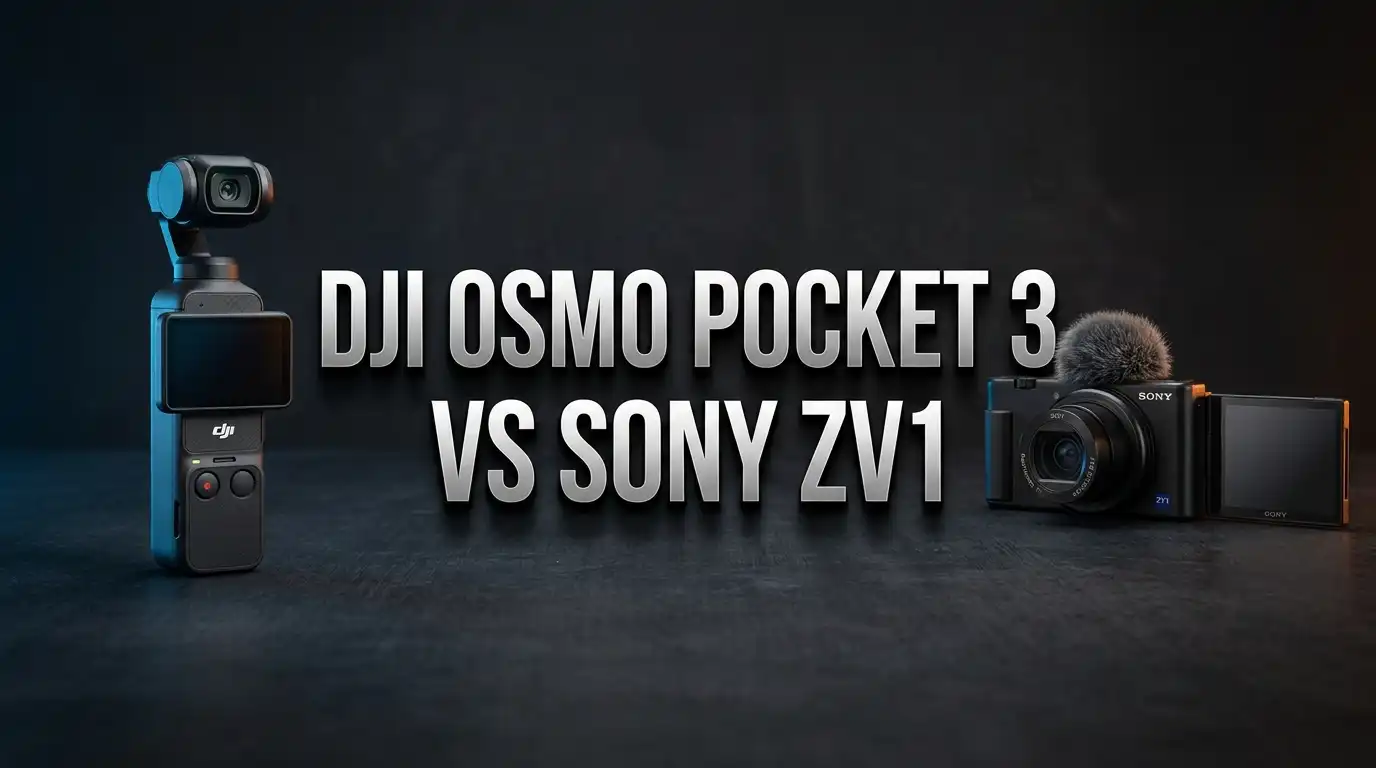
DJI Osmo Pocket 3 vs Sony ZV-1: Which Camera Wins in 2026?
You want a compact camera that shoots stunning video. You want something small enough to carry everywhere. But you keep going back and forth between the DJI Osmo Pocket 3 and the Sony ZV-1. Sound familiar?
These two cameras sit at the top of every vlogger’s shortlist, and for good reason. Both pack serious power into small bodies. Both record crisp 4K footage. And both promise to make content creation easier than ever. But they do so in very different ways.
The DJI Osmo Pocket 3 gives you a built-in 3-axis gimbal and a pocketable form factor. The Sony ZV-1 offers a traditional compact camera layout with a versatile zoom lens. Choosing the wrong one could mean wasted money and missed shots. This guide breaks down every detail so you can pick the camera that fits your style of shooting.
Key Takeaways
- The DJI Osmo Pocket 3 features a 1-inch CMOS sensor and a mechanical 3-axis gimbal. This combination delivers ultra-smooth, cinematic footage right out of the box with no extra gear needed.
- The Sony ZV-1 packs a 20.1MP 1-inch Exmor RS sensor with a ZEISS Vario-Sonnar T* 24-70mm zoom lens. It gives you optical zoom flexibility that the Pocket 3 simply cannot match.
- Stabilization is the biggest difference between these two cameras. The Pocket 3 uses a mechanical gimbal, while the ZV-1 relies on electronic and optical image stabilization. The gimbal wins for smooth walking shots.
- The Pocket 3 weighs only 179g, making it far lighter and more portable than the Sony ZV-1 at 294g. If you travel light, this weight gap matters.
- The Sony ZV-1 offers better photography capabilities with its 20.1MP sensor, RAW shooting support, and hot shoe for external accessories. It works as both a photo and video camera.
- Pricing favors the DJI Osmo Pocket 3 at around $499, while the Sony ZV-1 is harder to find new since its discontinuation and often sells for $600 or more. The newer Sony ZV-1 II (its successor) retails around $900.
DJI Osmo Pocket 3: Overview and Key Features

- Capture Stunning Footage - This vlogging camera features a 1-inch CMOS sensor and records in 4K resolution at...
- Effortlessly Frame Your Shots - Get the ideal composition with Osmo Pocket 3's expansive 2-inch touch screen...
Last update on 2026-07-01 / Affiliate links / Images from Amazon Product Advertising API
The DJI Osmo Pocket 3 launched in late 2023 as a major upgrade over its predecessor. It packs a 1-inch CMOS sensor into a body that fits in your palm. This sensor size is a huge leap from the 1/1.7-inch sensor in the Pocket 2. It records video at 4K resolution up to 120fps, giving you smooth slow-motion footage straight from the camera.
The standout feature is the 3-axis mechanical gimbal built right into the body. This gimbal smooths out every shake and vibration as you walk, run, or move. You do not need any external stabilizer. The result is buttery-smooth video that looks professional without any post-production stabilization work.
DJI also added a 2-inch rotatable touchscreen that flips between landscape and portrait orientation. This makes it perfect for shooting vertical content for platforms like TikTok, Instagram Reels, and YouTube Shorts. The screen is responsive and bright enough to use outdoors.
Other key features include ActiveTrack 6.0 for face and object tracking, 10-bit D-Log M color profile for serious color grading, and a fast-charge battery that reaches 80% in just 16 minutes. The camera supports microSD cards up to 512GB. At around $499 for the standard version, it offers strong value for vloggers who prioritize smooth video and portability.
Sony ZV-1: Overview and Key Features

- 20.1MP stacked back illuminated 1” Exmor RS CMOS sensor w/ DRAM. Large aperture 24-70mm1 F1.8-2.8 ZEISS...
- Fast Hybrid Autofocus and Real Time Eye Autofocus and Real-time Autofocus tracking.
Last update on 2026-06-17 / Affiliate links / Images from Amazon Product Advertising API
Sony released the ZV-1 in mid-2020 as its first camera built specifically for content creators. It carries a 20.1MP 1-inch Exmor RS CMOS sensor with DRAM chip. This stacked sensor design allows faster readout speeds and reduced rolling shutter effects. The sensor handles both photos and video with excellent quality.
The camera features a ZEISS Vario-Sonnar T lens with a 24-70mm equivalent focal range*. The maximum aperture sits at f/1.8 at the wide end and f/2.8 at the telephoto end. This bright lens performs well in low light and creates beautiful background blur for talking-head videos. The optical zoom gives you framing flexibility the Pocket 3 cannot offer.
Sony built the ZV-1 with several creator-focused features. The Background Defocus button instantly blurs the background with one tap. The Product Showcase mode shifts focus smoothly from your face to objects you hold up. The side-opening vari-angle screen makes it easy to frame yourself while filming.
The camera records 4K video at 30fps and 1080p at 120fps for slow motion. It has a 3.5mm microphone jack, a multi-interface shoe for accessories, and built-in Wi-Fi and Bluetooth. The battery life is rated at approximately 260 shots or 75 minutes of continuous 4K recording. The ZV-1 weighs 294g and costs around $600 to $800 depending on availability, as Sony has shifted focus to the newer ZV-1 II.
Video Quality Comparison
Both cameras use 1-inch sensors, but they process video differently. The DJI Osmo Pocket 3 records 4K at up to 120fps. This means you can capture ultra-smooth slow-motion footage at the highest resolution. The Sony ZV-1 maxes out at 4K/30fps and limits slow motion to 1080p/120fps.
The Pocket 3 also supports 10-bit D-Log M color recording. This wider color depth captures more dynamic range and gives editors much more flexibility during color grading. The ZV-1 offers S-Log2 and S-Log3 profiles, which also provide good color grading flexibility. Both cameras produce professional-grade footage.
In real-world tests, the Pocket 3 tends to produce slightly warmer and more vibrant colors straight out of the camera. The ZV-1 leans toward a more neutral, true-to-life color palette. Both look excellent on YouTube and social media.
Low-light performance is strong on both, thanks to their 1-inch sensors. The Pocket 3 has a slight edge in shadow detail and noise handling at higher ISO values. The ZV-1 compensates with its wider f/1.8 aperture, which lets in more light at the wide-angle setting.
Stabilization: Gimbal vs Electronic
This is where the DJI Osmo Pocket 3 creates the biggest gap. Its 3-axis mechanical gimbal physically moves the camera lens to counteract motion. The result is incredibly smooth footage, even during fast walking or light jogging. No software processing is needed, which means no cropping of the frame.
The Sony ZV-1 uses SteadyShot electronic image stabilization combined with optical stabilization from the lens. This system works well for stationary or slow-moving shots. It reduces minor shakes and vibrations effectively. But it cannot match a mechanical gimbal during active movement.
If you walk and talk on camera regularly, the Pocket 3’s gimbal is a game-changer. Your footage will look like it was shot on a dolly or Steadicam. The ZV-1 will show noticeable movement and micro-jitters during the same walking shots.
For seated or tripod-mounted shooting, the stabilization difference shrinks. Both cameras produce steady, clean footage when you are not moving. The ZV-1’s stabilization is more than enough for desk setups, interviews, and product reviews.
Top 3 Alternatives for DJI Osmo Pocket 3
If the Pocket 3 does not match your needs, these three alternatives deserve a close look.

- Compact Powerhouse: Canon PowerShot V10 vlogging camera features a sleek, pocket-sized design; perfect for...
- Versatile Vlogging Camera: Incredible low-light capabilities with a 15.2-megapixel 1-inch back-illuminated...

Last update on 2026-06-17 / Affiliate links / Images from Amazon Product Advertising API
The Canon PowerShot V10 is a budget-friendly compact vlogging camera with a 1-inch sensor, built-in kickstand, and excellent stereo microphones. It records 4K video and weighs just 211g. It lacks a gimbal but offers great quality at a lower price point around $300 to $350.

- IMMERSIVE 360 VIDEO - The 8K era is here. Insta360 X4 delivers 360° video in stunning 8K or 5.7K60fps! Use...
- SIMPLE, EASY REFRAMING - With Insta360 X4, get out there and shoot, not having to worry about lining up a...
Last update on 2026-06-17 / Affiliate links / Images from Amazon Product Advertising API
The Insta360 X4 takes a completely different approach with its 8K 360-degree capture. You shoot everything around you and reframe the shot in post-production. It is waterproof, lightweight, and supports the invisible selfie stick effect. This camera works best for action and travel content.

- Large 24.2MP APS-C Exmor CMOS Sensor and fast BIONZ X processor
- 4K Movie oversampled from 6k w/ full pixel readout, no pixel binning
Last update on 2026-06-17 / Affiliate links / Images from Amazon Product Advertising API
The Sony ZV-E10 gives you interchangeable lenses on an APS-C sensor body built for vlogging. It features a flip-out screen, excellent autofocus, and 4K recording. The larger sensor delivers better low-light performance and background blur. It costs more and weighs more, but the image quality is a step up.
Autofocus Performance
The Sony ZV-1 has a clear advantage in autofocus. It uses a 315-point phase-detection AF system combined with contrast detection. Sony’s Real-time Eye AF locks onto eyes with remarkable speed and accuracy. The tracking sticks to subjects even when they turn away and come back into frame.
The DJI Osmo Pocket 3 uses a hybrid autofocus system with phase detection. It focuses quickly and accurately in most situations. DJI’s ActiveTrack 6.0 adds face and object tracking that follows subjects as the gimbal head rotates to keep them in frame. This tracking works differently from Sony’s AF because the entire camera head moves.
For talking-head videos and vlogging, both autofocus systems work well. The Sony ZV-1 transitions between subjects more smoothly. Its Product Showcase mode is especially useful for reviewers who hold up items to the camera. The focus pulls are natural and cinematic.
The Pocket 3 occasionally hunts in low contrast situations, but firmware updates have improved this over time. In bright daylight, both cameras lock focus quickly and reliably.
Portability and Build Quality
The DJI Osmo Pocket 3 weighs 179g and measures just 139.7 x 42.2 x 33.5 mm. It slips into a jeans pocket, a jacket pocket, or a small bag compartment. You can carry it all day without feeling any burden. The body uses a combination of plastic and metal that feels solid in hand.
The Sony ZV-1 weighs 294g and measures 105.5 x 60 x 43.5 mm. It is still compact for a camera, but it will not fit in a typical pants pocket. You will need a small bag or camera pouch. The body feels well-built with a textured grip that is comfortable for one-handed shooting.
The Pocket 3 wins on portability without question. Its stick-like form factor makes it the most portable serious video camera you can buy. You can pull it out of your pocket, press record, and start shooting in seconds.
The ZV-1 feels more like a traditional camera. It has a more ergonomic grip that provides better control during extended shooting sessions. If you plan to shoot for hours at a time, the ZV-1’s shape may feel more natural in your hand.
Audio Quality and Microphone Options
Good audio matters as much as good video for content creation. The Sony ZV-1 ships with a directional 3-capsule microphone that captures forward-facing sound and reduces ambient noise. It also has a 3.5mm microphone jack for external mics. A furry windscreen comes included in the box for outdoor shooting.
The DJI Osmo Pocket 3 has built-in stereo microphones that perform adequately for casual use. They pick up more ambient sound than the ZV-1’s directional setup. However, the Creator Combo version includes a DJI Mic 2 wireless microphone that dramatically improves audio quality. This wireless mic clips onto your clothing and transmits audio directly to the camera.
If you buy the standard Pocket 3, you will likely want an external microphone for professional results. There is no 3.5mm jack on the Pocket 3. Audio accessories connect through the USB-C port or wirelessly via DJI’s ecosystem.
For out-of-the-box audio quality, the Sony ZV-1 wins. Its directional mic is purpose-built for vlogging and delivers clear, focused voice capture. The Pocket 3 Creator Combo closes this gap with the included wireless mic, but it costs more.
Screen and User Interface
The DJI Osmo Pocket 3 features a 2-inch OLED rotatable touchscreen. This screen pivots between landscape and portrait orientations. The rotation happens physically, so you see the full image without any cropping. The touchscreen interface is clean and intuitive. You swipe to access settings, tap to set focus, and pinch to zoom digitally.
The Sony ZV-1 has a 3-inch LCD touchscreen that flips to the side. This vari-angle design lets you see yourself while filming from the front. The screen is larger than the Pocket 3’s display and shows more detail. Sony’s menu system is familiar to anyone who has used a Sony camera before.
For self-shooting, both screens work well. The Pocket 3’s screen is smaller but always visible because of the gimbal’s rotation capability. The ZV-1’s larger screen shows more detail and is easier to review footage on the spot.
The Pocket 3’s interface is simpler and faster to learn. New users can start shooting within minutes. The ZV-1 has more settings and deeper menu structures, which give experienced users more control but add a learning curve for beginners.
Battery Life and Charging
The DJI Osmo Pocket 3 offers up to 166 minutes of recording at 1080p/24fps. At 4K/60fps, this drops to around 90 to 100 minutes. The battery charges to 80% in just 16 minutes and 100% in 32 minutes using the USB-C port. This fast charging is a standout feature for creators who shoot on the go.
The Sony ZV-1 lasts approximately 75 minutes of continuous 4K recording and is rated for about 260 still images per charge. Charging takes around 2.5 hours via the USB port. This slower charge time and shorter video recording life put the ZV-1 at a disadvantage for long shooting days.
The Pocket 3 clearly wins on battery performance. Its longer recording time and rapid charging mean less downtime between shoots. You can top up the battery during a short lunch break and have enough power for an entire afternoon.
The ZV-1 uses the NP-BX1 battery, which is small and widely available. You can carry multiple spare batteries easily. The Pocket 3’s battery is built into the handle and cannot be swapped. If the battery dies and you have no charger nearby, you are stuck.
Photography Capabilities
The Sony ZV-1 is the stronger photography camera by a wide margin. Its 20.1MP sensor captures high-resolution still images. It shoots RAW files for maximum editing flexibility. The 24-70mm zoom lens gives you versatile framing for portraits, street photography, and product shots.
The Pocket 3 captures still images but treats photography as a secondary function. It shoots JPEGs and can take decent photos in good light. The fixed wide-angle lens limits your composition options. There is no RAW support, and the resolution is lower than the ZV-1.
If you want a camera that handles both video and photography well, the ZV-1 is the better pick. You can switch from filming a vlog to shooting high-quality stills without changing cameras. The Pocket 3 works best as a dedicated video tool.
The ZV-1 also supports features like burst shooting, self-timer, and manual exposure controls for photos. Its hot shoe mount accepts external flashes. These features make the ZV-1 a much more complete camera for creators who work across photo and video.
Lens and Field of View
The DJI Osmo Pocket 3 has a fixed 20mm equivalent lens with an f/2.0 aperture. This wide-angle view captures a broad scene in every frame. It works perfectly for vlogging, travel footage, and environmental shots. The fixed focal length means you cannot zoom optically. You rely on digital zoom or moving physically closer to your subject.
The Sony ZV-1 offers a 24-70mm equivalent zoom range with an aperture of f/1.8 to f/2.8. This zoom lens lets you go from a comfortable wide angle to a moderate telephoto. You can frame tight shots of products, food, or distant subjects without moving. The zoom flexibility is a major creative advantage.
The wider 20mm lens on the Pocket 3 fits more of the scene into the frame. This is great for solo vlogging because you can hold the camera at arm’s length and still capture your face plus the background. The 24mm wide end on the ZV-1 is slightly tighter, but the zoom compensates.
For food vlogs, product reviews, and B-roll with varied framing, the ZV-1’s zoom lens offers more creative control. For walk-and-talk vlogging and travel shooting, the Pocket 3’s wide, fixed lens paired with its gimbal creates a winning combination.
Price and Value for Money
The DJI Osmo Pocket 3 retails at $499 for the standard version. The Creator Combo costs around $629 and includes the DJI Mic 2 wireless microphone, a wide-angle lens adapter, and a battery handle. Both options offer strong value given the built-in gimbal and 1-inch sensor.
The Sony ZV-1 originally launched at $799 but has been discontinued. You can still find it new or refurbished for $600 to $800 at various retailers. Its successor, the Sony ZV-1 II, sells for around $900. The ZV-1 remains a solid buy if you find it at a good price.
Dollar for dollar, the Pocket 3 delivers more value for most vloggers. You get a built-in gimbal, a 1-inch sensor, 4K/120fps, and a rotatable screen for under $500. Achieving similar stabilization with the ZV-1 would require purchasing a separate gimbal, adding weight, bulk, and cost.
However, if you need zoom capability, strong autofocus, and photography features, the ZV-1 justifies its higher price. Your choice depends on what matters most: smooth handheld video or versatile all-around performance.
Which Camera Should You Buy?
Choosing between these two cameras comes down to your primary use case. Buy the DJI Osmo Pocket 3 if you shoot walk-and-talk vlogs, travel content, or social media videos. Its gimbal stabilization, lightweight body, and excellent 4K video make it the perfect on-the-go camera. It excels at one thing and does it better than almost anything else in its price range.
Buy the Sony ZV-1 if you need a versatile camera that handles both video and photography. Its zoom lens, superior autofocus, and rich still image quality make it a better all-around content creation tool. It works well for desk-based videos, product reviews, interviews, and photography.
If portability is your top priority, pick the Pocket 3. If creative flexibility is what you need, go with the ZV-1. Both cameras can produce professional-quality content in the right hands. Neither is a bad choice. They are simply built for different styles of shooting.
Consider the Pocket 3 Creator Combo if you want the best audio experience from DJI. Consider the ZV-1 II if you want the latest version of Sony’s vlogging camera with upgraded features. Whatever you choose, invest time in learning your camera’s features to get the best results.
Frequently Asked Questions
Is the DJI Osmo Pocket 3 better than the Sony ZV-1 for vlogging?
It depends on your vlogging style. The Pocket 3 is better for walking vlogs and travel content because of its built-in gimbal. The Sony ZV-1 is better for seated vlogs, product reviews, and situations where zoom and autofocus matter more. Both produce excellent video quality.
Can the Sony ZV-1 match the stabilization of the DJI Osmo Pocket 3?
No. The ZV-1’s electronic stabilization cannot match a mechanical 3-axis gimbal. You would need to pair the ZV-1 with an external gimbal to achieve similar smoothness. This adds extra weight and cost.
Does the DJI Osmo Pocket 3 take good photos?
The Pocket 3 takes decent photos in good lighting, but it is primarily a video camera. It lacks RAW shooting, has a fixed wide-angle lens, and offers lower resolution than the Sony ZV-1. For serious photography, the ZV-1 is the better option.
Which camera has better battery life?
The DJI Osmo Pocket 3 has significantly better battery life at up to 166 minutes of recording. It also charges much faster, reaching 80% in just 16 minutes. The ZV-1 lasts about 75 minutes of continuous 4K recording and takes over two hours to charge fully.
Is the Sony ZV-1 still worth buying in 2026?
The ZV-1 remains a capable camera for content creation. Its image quality, autofocus, and zoom lens still hold up well. However, since Sony discontinued it, finding one at a fair price may be challenging. The Sony ZV-1 II is the updated model and may be a smarter purchase for long-term use.
Can I use external microphones with the DJI Osmo Pocket 3?
The standard Pocket 3 does not have a 3.5mm microphone jack. You can connect audio accessories through the USB-C port or use the DJI Mic 2 wirelessly. The Creator Combo includes the DJI Mic 2 transmitter. The Sony ZV-1 has a 3.5mm mic input and accepts a wider range of external microphones.

DK is a technology expert who specializes in AI tools, software, and tech gadgets. He writes for How to Tech Info, providing detailed reviews and practical guides. DK helps readers discover the best AI applications, navigate new software, and choose the right tech gadgets.