
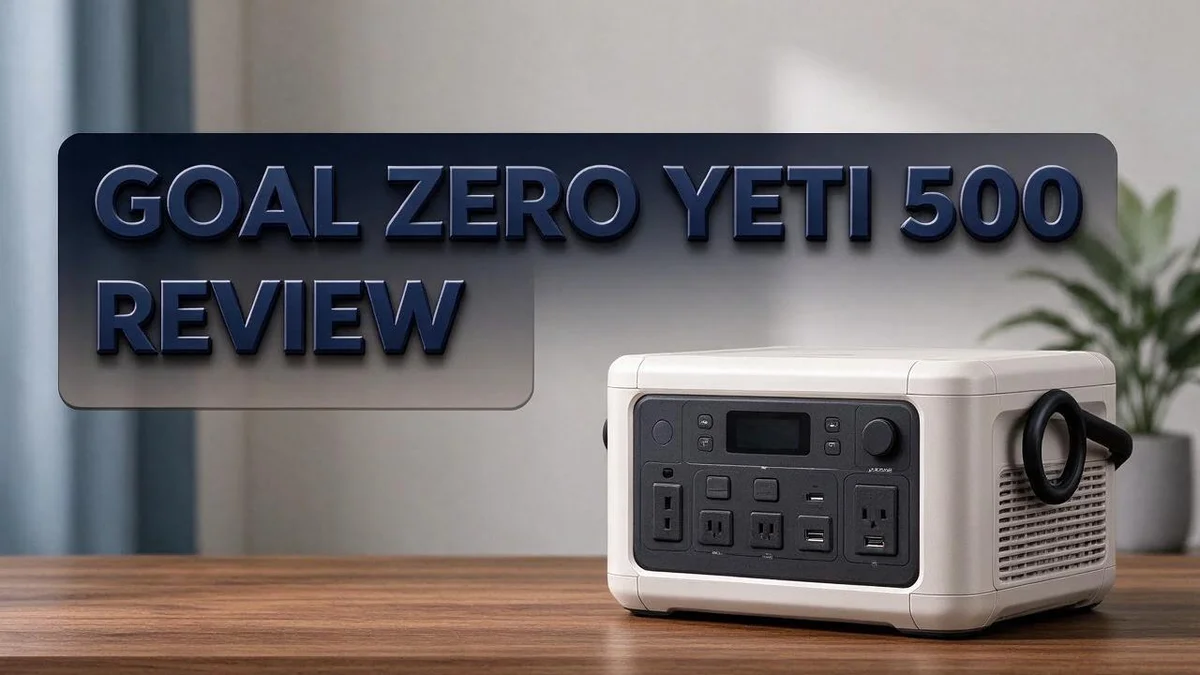
Goal Zero Yeti 500 Review: Capacity, Charging Speed, Runtime and Verdict
Power outages, camping trips, and job site work all need reliable electricity. A portable power station can solve that problem fast. The Goal Zero Yeti 500 is one option worth a close look.
The Yeti 500 stores 499 Wh of energy. It delivers 500 W of AC output. That means it can run air pumps, pellet grills, and even a portable fridge for a long stretch.
Many buyers also like how quickly it recharges. Users often report a full charge in about 90 minutes. The unit feels light and sturdy, so it travels well.
Still, it is not perfect. Some owners find wall charging slower than rival models. Others compare it with the Jackery Explorer 500. In this review, we will look at what works, what does not, and who should buy it.
In a Nutshell
-
Built for tough outdoor use: The Yeti 500 feels light and easy to carry. Its weatherproof build handles rain, dust, and rough trips well.
-
Runs everyday gear: You can power air pumps, pellet grills, and portable fridges. Bundle listings show a Alta 50 fridge running for two days or more.
-
The 500X offers more capacity: The 500X holds a slightly larger battery than the standard model. Some owners report AC port faults, so read recent reviews first.
-
Ports feel dependable for most people: Many owners say the ports keep working over time. A few 500X users, however, report steady battery drain.
-
Jackery is the main rival: The Jackery Explorer 500 competes directly with this model. Reviewers often say Jackery charges faster from a wall outlet.
-
Pick the Yeti 700 for bigger jobs: The Yeti 700 stores more energy for longer trips. Heavy users who need extra runtime may prefer this larger unit.
Capacity and Power Output

- Impressive Power Output: The Yeti 700 can run power tools, Alta portable fridges, and pellet grills and has...
- Class-Leading Lifespan: Upgraded LiFePO4 battery technology means the battery has 4,000+ cycles for over...
Last update on 2026-11-06 / Affiliate links / Images from Amazon Product Advertising API
Capacity sounds like a simple number, but it tells a bigger story. Think of the battery as a fuel tank. The more energy you carry, the longer your gear keeps running.
Real power use is never perfect. Inverters lose some energy as they turn stored battery power into usable AC power. The full rated number never reaches your devices.
Running time depends on the load. A device drawing 50 watts runs far longer than one drawing 400 watts. Divide the usable energy by the device wattage to estimate hours.
Start with a quick check. List each device you plan to run. Note its wattage from the label or manual. Then add the totals together to see your peak draw.
Surge demand matters too. Some motors need a short burst of extra power when they start. Pumps and compressors often behave this way. Leave some headroom under the output limit.
Keep a buffer for safety. Running near the maximum output can make the unit work hard. Many users run loads at a comfortable share of the limit instead.
Battery percentage helps you plan. The display shows how much charge remains. Watch it during long jobs so you can shut down heavy gear first.
Temperature also affects performance. Cold weather reduces usable capacity, so bring the unit indoors on frosty nights. Heat can also slow things down.
Solar input changes the math. Panels add energy during daylight hours. Even a modest panel can extend runtime for light loads like lights, phones, and laptops. Sunny days work best for this.
Think about daily cycles. A single full charge may cover one day of light use. Heavier users may need to recharge between uses, so plan your charging schedule.
Lower loads also save battery life over time. Gentle use keeps the cells healthy for more seasons.
Overall, the output suits small to medium jobs. It handles tools, lights, and kitchen gear well. Match your load to the output, and the unit will serve you well.
Plan for a spare battery or a solar panel if you run long jobs. Charging twice a day becomes easy with the right setup. This small step prevents surprises.
Charging Speed and Recharge Options
Charging speed decides how soon you can use the unit again. Many people want full power before a storm, trip, or job. Knowing your recharge options helps you plan ahead.
The wall outlet is the main option. Plugging into a standard outlet works for most homes. Some owners report a full recharge in about 90 minutes, which gives you a useful benchmark. Some reviewers say this route feels slower than the Jackery Explorer 500, so start early.
Solar panels add a backup plan. You can connect solar panels to recharge the unit when no outlet is nearby. One user found the pace lagged behind small solar USB panels, so choose a larger panel for steady results. Cloudy days slow the process, so plan extra time when you rely on sunlight.
Car charging works during road trips. A 12 volt car outlet can top up the battery while you drive. This keeps your gear running on long routes. Let the engine run so your car battery stays strong.
Plan your charge before you leave. Start charging a full day early if possible. A full battery gives you a safety margin for surprises. Place the unit in a shaded spot so it stays cool while it charges.
Recharge time depends on the input. The speed depends on how much power the unit accepts at once. Fast inputs fill the battery more quickly than weak sources. Check the display often to track progress.
Short charging sessions still help. Even a partial top up gives you extra runtime for small devices like phones and lights. Build a simple habit of plugging in at night so the unit is ready each morning.
Overall, the Yeti 500 suits people who recharge often between uses. Wall, solar, and car options give you flexible choices. Pick the method that matches your daily schedule. Good planning keeps your power ready when you need it most.
Build Quality and Portability
The Goal Zero Yeti 500 feels solid right out of the box. Its build holds up well against daily bumps and knocks. Many people find it a good fit for camping and backyard use.
Weather resistance matters most outdoors. The unit carries weatherproof ratings, so light rain will not harm it. Still, keep it covered during heavy storms.
The unit feels lightweight for its power output. Most adults can carry it from the car to a campsite with one hand. The carry handle makes lifting simpler.
Size keeps packing simple. The footprint stays compact. It slides into a trunk or onto a camper shelf without much fuss. Packing takes only a minute.
Think about the ground before you set it down. A flat and stable surface keeps the unit steady. Gravel or grass can make it wobble, so place it on a mat or table.
Moving it on rough paths takes a little planning. A small cart or strap helps on long walks. Keep the unit upright to protect the case and the inside parts.
Cable care also matters during travel. Loosely wrap the cords and store them in a separate bag. Tangled wires waste time when you need power fast.
Secure the unit during every drive. Place it in the cargo area and use a strap. A sudden stop can slide a heavy box across the floor.
Heat is another factor for the build. Avoid leaving it in a hot car for long hours. High temperatures can wear down internal parts over time.
Dust and sand need attention too. Wipe the vents and surface after a day at the beach. Clean units tend to run cooler and last longer.
Storage at home also matters. Keep it indoors between trips when possible. A dry garage shelf or closet protects the body from moisture.
Overall, the build suits people who move often. It handles trips without fuss. You get a sturdy and light unit that works well for camping, tailgating, and home backup.
Top 3 Alternatives
Jackery Explorer 500

- Ultra-Lightweight: At only 7.5 lbs, the Explorer 300 delivers a robust 292Wh capacity while remaining...
- Versatile Power for 6 Devices: Equipped with 2 AC outlets, a 100W USB-C PD port, 2 USB-A ports, and a 120W car...
Last update on 2026-06-09 / Affiliate links / Images from Amazon Product Advertising API
The Jackery Explorer 500 offers about 518 watt hours of capacity. It delivers 500 watts of continuous output, so it can run a laptop, a mini fridge, and small lights. It charges fast from a wall outlet or a solar panel. Many campers pick it for longer weekend trips.
It weighs around 13 pounds, so you can carry it from the car to the campsite with ease. It is a great choice for families who want reliable backup power.
EcoFlow River 2

- [1 Hour AC Recharge] - Power up in just 1 hour! With EcoFlow's X-Stream fast charging technology, recharge...
- [Power All Your Essentials] - With an output of up to 1000W, run 11 essential appliances simultaneously...
Last update on 2026-11-05 / Affiliate links / Images from Amazon Product Advertising API
The EcoFlow River 2 is a compact power station with 256 watt hours of storage. It supports up to 300 watts of output, which works well for phones, cameras, and CPAP machines. It recharges quickly and fits easily in a backpack or a small car trunk.
Its simple controls make it a friendly pick for beginners. It works well for short trips and emergency use at home.
Anker SOLIX C300

- ...
- 𝗠𝗮𝘀𝘀𝗶𝘃𝗲 𝗣𝗼𝘄𝗲𝗿 𝗼𝗻 𝘁𝗵𝗲 𝗚𝗼: Take portable power anywhere...
Last update on 2026-11-05 / Affiliate links / Images from Amazon Product Advertising API
The Anker SOLIX C300 is a sleek option with 288 watt hours of capacity. It provides 300 watts of output through its AC and USB ports. A built in display shows the battery level and power flow, so you always know how much energy remains.
It suits people who want a clean, modern look. It also accepts solar input, which helps during long outings when you cannot plug into a wall.
Running Air Pumps, Fridges and Grills
The Goal Zero Yeti 500 handles three popular jobs well. It can run an air pump, a portable fridge, and a pellet grill. Each device needs a different amount of power, so plan ahead.
Air pumps work well with this unit. You can inflate car tires, paddle boards, and air mattresses at camp. Plug the pump into the AC port and switch it on.
Set a target pressure before you start. The pump then shuts off on its own. This saves battery power and keeps the process simple for beginners.
Portable fridges need steady power. They run through the day and night. A compatible Alta 50 fridge can keep food cold for two days or more.
Keep the lid closed as much as possible. Every opening lets cold air escape. Pack the cooler with chilled food first.
Pellet grills make a good match too. Check the grill label for its startup and running watts. The igniter pulls the most power when the grill starts. After the fire settles, the fan and auger need less.
Plan each device around its own runtime. Think about how often you use each item. A pump runs for a few minutes. A fridge runs for hours. A grill runs for the length of your cook.
Set the fridge to a cold setting before loading food. Cold food stays safe longer when the unit starts cold.
Pellet grills need steady heat for slow cooking. Keep the lid closed to hold heat inside.
Check the ports before every trip. Some 500X owners report AC port faults and fast battery drain. Test your gear at home first.
Reviews for the newer 500X feel mixed. Read recent owner feedback before you choose a model.
Long camps need a backup plan. Pack a spare cooler with ice packs. This helps when the fridge rests.
Match the gear to the power. The Yeti 500 suits pumps, fridges, and small grills well. Test each item once at home. Then you can head out with confidence. Good planning turns a simple setup into a reliable camp kitchen.
Pros and Cons
Pros
– Many users report quick charging times.
– Reliable ports keep power flowing during daily use.
– UL certification gives extra peace of mind on every trip.
– The 500 W AC output runs everyday gear with ease.
Cons
– Wall charging feels slow next to Jackery rivals.
– Some 500X owners report AC port faults.
– A few users report battery drain on the 500X.
– Small solar USB panels can charge it more slowly than expected.
Who Should Buy It
Weekend campers who want quiet power should take a close look at this unit. A gas generator fills the campsite with noise and fumes. This station runs silently, so neighbors and wildlife stay undisturbed.
Remote workers and creators also benefit from this model. Laptops, cameras, drones, and microphones can all charge from one central source. Many people find that simpler than juggling several small power banks.
Families with young kids often appreciate a steady supply. Tablets, lamps, and phone chargers keep working through a long evening. Everyone stays comfortable without constant battery checks.
Photographers on trips lasting several days often carry a pile of batteries. This station can top up camera batteries, drones, and lights each evening. Fewer trips to town mean more time outdoors.
Homeowners preparing for outages may find real value here. The unit can keep a router, a fridge light, and a few lamps running during a short blackout. It works as a backup, not a full home solution.
People who already own Goal Zero solar panels gain another advantage. The panels and station share a familiar setup. Adding this model to an existing kit feels natural and simple.
Hikers and van lifers with modest needs can also get a good return from this unit. Those who plan short trips with light loads often find the capacity enough. Planning ahead keeps the battery ready for the next day.
Some buyers should look elsewhere. Anyone who runs heavy appliances for long periods needs more capacity. The larger Yeti 700 suits that job better.
Choosing the right unit starts with a simple list. Write down every device, its power needs, and how long it runs each day. That list shows whether this model meets your needs.
Final Verdict
The Goal Zero Yeti 500 earns a strong spot on your shortlist. It offers a sensible mix of power, portability, and build quality. Most shoppers will find it a useful all round pick.
Model choice matters more than many shoppers expect. The standard 500 and the newer 500X differ in battery size and owner feedback. Read reviews for the exact version you plan to buy.
Start with your trip length. A 499 Wh battery suits short weekends well. Longer stays need a clear plan for recharging in the field.
Weigh portability against capacity. The unit stays light enough for one person to carry. Bigger stations offer more runtime, but they add bulk and weight to every trip.
Solar charging adds flexibility, but it asks for patience. Sunny days keep the battery topped up during the day. Cloudy stretches slow everything down, so plan around the weather. Top up the battery before each leg of the trip.
Run a full test before you rely on it. Power up your pump, fridge, or grill for one complete session at home. This shows real runtime, and it reveals any odd behavior before the trip begins.
Buy from a seller with clear return terms. That gives you room to test the unit properly. If something feels off, you can send it back without stress.
Think about your next step. If you outgrow this unit, the larger Yeti 700 offers more room for heavy loads. Many buyers, however, find this size covers their needs.
Who should say yes? Campers, home backup planners, and remote workers with steady, moderate needs will likely feel pleased. Heavy daily users may want a larger model instead.
Overall, the Yeti 500 offers dependable power for the right user. It works best with clear goals and realistic expectations. Match the unit to your plan, and it will serve you well on many trips to come. Take your time with the choice, since good planning beats a quick purchase.
Frequently Asked Questions
Can the Yeti 500 run a CPAP machine?
Many people use it for small medical devices during trips or outages. Check your device’s wattage first. Then confirm with your device maker that battery power is safe for your model.
Can I use it indoors during a power cut?
Yes, it works well indoors. It runs quietly and produces no fumes, so it suits a home during a storm. Plug in a lamp, a router, or a phone charger.
Can it charge several devices at once?
Yes, it can power a laptop, phones, and a small fan together. Keep the total load under 500 W. Add up each device’s wattage before you plug everything in.
How should I store it between trips?
Store it in a cool, dry place with a partial charge. Top it up every few months. This habit helps the battery stay ready when you need it.
Can I use it on a road trip?
Yes, it fits well in a car, van, or truck bed. Secure it so it does not slide around while you drive. Keep it away from direct sunlight so it stays cool during the drive.

DK is a technology expert who specializes in AI tools, software, and tech gadgets. He writes for How to Tech Info, providing detailed reviews and practical guides. DK helps readers discover the best AI applications, navigate new software, and choose the right tech gadgets.


