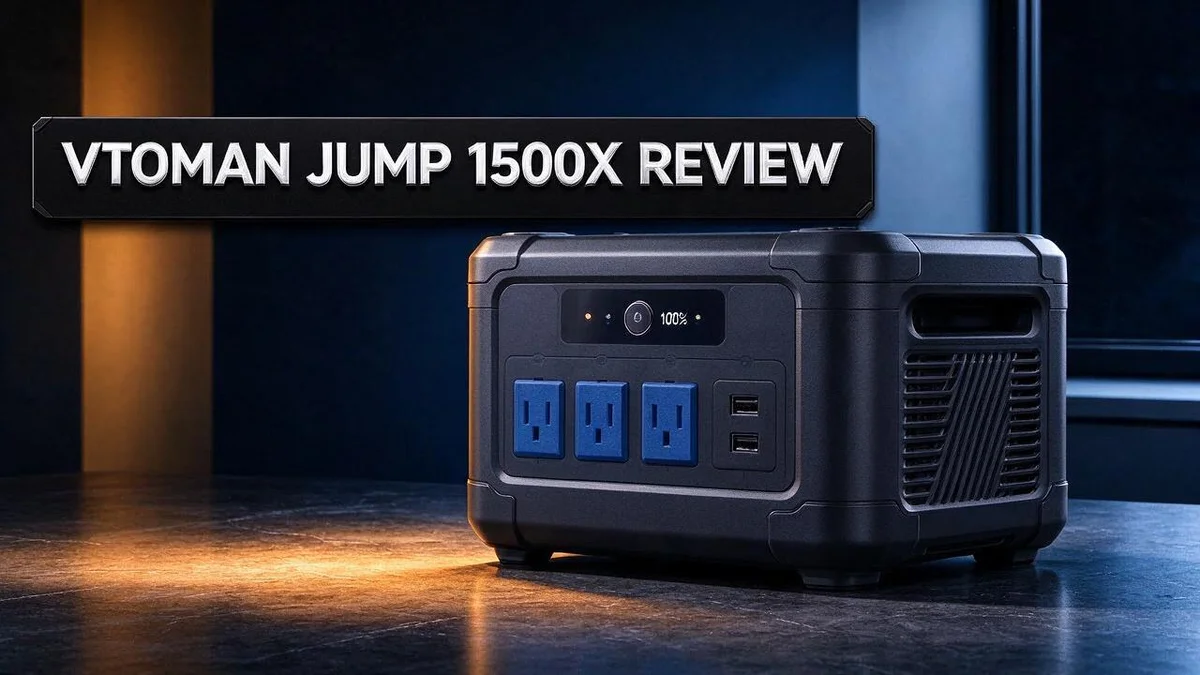
Vtoman Jump 1500X Review: Specs, Expandability, and Real-World Performance
A portable power station can make a big difference. Planning a road trip or a backup plan for your home? The Vtoman Jump 1500X is a name you will see often.
Power needs change fast. Cabins, road trips, and outages all need reliable energy. This unit aims to cover those moments.
It packs an LFP battery with 828Wh of storage. It delivers 1500W of output with a 3000W peak. You can add an expansion pack to reach 2376Wh, and it can charge while it powers your devices.
Specs vary between sources, so verify the details before you decide. In this review, we cover what works, what does not, and who this model suits best.
In a Nutshell
-
Room to grow. You can add an expansion pack later. This raises total storage well above the base unit, so the setup can keep pace with your needs.
-
Charge and power at once. The unit can recharge while it runs your devices. This helps during an outage or a busy day on the road.
-
Solar ready. Some listings bundle a 200W solar panel. This lets you recharge the unit from the sun without using a wall outlet.
-
RV friendly. Many RV owners use it to run everyday appliances. One source claims wide appliance support, so check your own device list first.
-
Plan for bulk. The unit feels heavy and bulky for a portable option. Choose a spot where it can stay put before you buy.
-
Look at long term results. One user reported strong performance for about a year, then the unit stopped working. Review the warranty and keep a backup plan for critical power.
-
Compare with rivals. The Delta Gen 1 outperformed the Vtoman on 40 of 53 tested devices in one review. Compare running power and capacity side by side before you decide.
Power Output and Appliance Compatibility

- 【2-in-1 Portable Station & Car Jump Start】Never face a dead battery alone! VTOMAN portable power station...
- 【Easy Operation】 Insert a fully charged battery into the adapter. Connect the red clamp to the positive...
Last update on 2026-11-05 / Affiliate links / Images from Amazon Product Advertising API
Power output decides what you can plug in. The Vtoman Jump 1500X provides 1500W of continuous power, so it handles many everyday household items. Think of it as a small outlet that goes wherever you go.
Peak power matters too. The unit can reach 3000W for short bursts. Motors need this extra push when they start up. A fridge compressor or a well pump may need a surge far above its normal running load.
Start with the wattage label on each device. Add up the watts of the items you plan to run at the same time. Keep that total under 1500W for steady, safe use.
Many common items work well with this unit. Mini fridges, laptops, LED lights, box fans, and phone chargers all run with ease. A CPAP machine also fits nicely during a power cut.
Heavy heating tools need more care. Space heaters, hair dryers, and electric kettles pull large loads fast. Run one of these at a time, or skip them during longer runs.
Runtime depends on the load you choose. A device drawing 100W may run for several hours on a full charge. Higher draws shorten that time quickly. A simple formula helps here: divide the battery watt hours by the device watts.
Power conversion wastes some energy as heat. Expect slightly less runtime than the math suggests. Leave a small margin in your plans so you never run out.
Plan for devices that cycle on and off. Fridges and freezers restart often, so they draw surges again and again. Count these cycles when you plan total energy use over a day.
Test your setup at home before any trip. Plug in your key devices and watch how the unit responds. This quick check prevents surprises when you need power most.
Keep the unit in a dry, shaded spot while it runs. Good airflow helps the internal parts stay cool under heavy load.
Capacity and Expandability
Capacity decides how long your devices keep running. Think about your daily power use before you buy. Add up the watt hours for each gadget you plan to run.
Calculate your runtime first. Divide the battery capacity by the wattage of your device. This simple math gives a rough estimate. Real results often come in lower because of energy loss.
Expansion changes the plan. With an expansion pack, total storage can reach 2376Wh. That gives you room for longer camping trips or a full day of work during a power cut.
Think about future needs too. Maybe you start with a few lights and a phone. Later you may add a mini fridge or a laptop. An expansion pack lets you grow without buying a new station.
Check the pack compatibility. Confirm the expansion pack works with your exact model. Read the product page closely. Ask the seller if you feel unsure.
Expansion also affects weight. Each added pack adds bulk to your setup. Plan where the units will sit in your vehicle or home before you commit.
Consider recharge time. A bigger battery takes longer to fill. Plan to charge overnight or use solar input during the day. Keep a schedule so your power never runs low.
Plan for worst case days. Cloudy weather can slow solar input. A bigger total capacity gives you a safety buffer. This helps during storms or long road trips far from power outlets.
Estimate with a margin. Add about 20 percent extra to your totals. This covers energy lost as heat during conversion and keeps your plan realistic.
Capacity is a key factor when you choose a power station. Match it to your real habits, not just the largest number on the box. Smart planning saves frustration later and keeps your devices running when it counts.
Charging and Solar Input
Charging gives you more than one way to fill the battery. You can use a standard wall outlet or a compatible solar panel. Each method works at its own pace.
Start by checking the input rating. Every power station has a maximum input limit. Read that number before you buy a panel or charger.
Wall charging is the simplest option. Plug the unit into an outlet and let it fill up. Many people charge it overnight so it is ready in the morning.
Solar charging needs a closer match. Pick a panel whose wattage fits the unit’s input range. A mismatched panel may charge slowly or not at all.
Panel angle matters more than most people expect. Point the panel toward the sun. Adjust the tilt during the day so it catches direct light for longer.
Check the connectors before you set up. Make sure the panel cable fits the input port firmly. Use the cable that came with your kit when you can.
Charging slows down near the end of a cycle. The last stretch often takes longer than the first part. Plan extra time if you want a full fill.
Temperature also affects charging. Many lithium batteries charge poorly in freezing conditions. Move the unit indoors if it feels very cold outside.
Keep the vents clear while charging. Airflow helps the unit stay cool. Never cover the vents with a blanket, bag, or box.
Watch the charge level on the display. Stop the input once the battery reaches your target. This habit saves time and keeps your plan on track.
Good charging habits help the battery last longer. Avoid draining the unit to zero again and again. Recharge after each trip so it stays ready for the next one.
Test your full charging setup at home first. Try the wall outlet and the solar panel together. This gives you a clear picture before you rely on it outdoors.
Top 3 Alternatives
If the Vtoman Jump 1500X does not fit your needs, these three portable power stations are strong choices. Each one gives you reliable backup power for camping, road trips, or home emergencies.
Jackery Explorer 1000

- Powerful yet Compact: Boasting a 1,500W AC output and a 3,000W surge peak, the Solar Generator 1000 V2 can...
- One Hour Fast Charging: Charge your Explorer 1000 v2 Portable Power Station from 0% to 100% battery level in...
Last update on 2026-06-29 / Affiliate links / Images from Amazon Product Advertising API
The Jackery Explorer 1000 stores about 1,002 watt hours of energy. It delivers 1,000 watts of output through standard outlets. It charges from wall outlets, solar panels, or a car. Its handle and compact body make it easy to carry to a campsite.
EcoFlow River 2

- [1 Hour AC Recharge] - Power up in just 1 hour! With EcoFlow's X-Stream fast charging technology, recharge...
- [Power All Your Essentials] - With an output of up to 1000W, run 11 essential appliances simultaneously...
Last update on 2026-11-05 / Affiliate links / Images from Amazon Product Advertising API
The EcoFlow River 2 works well for smaller loads. It holds about 256 watt hours and provides 300 watts of output. It weighs much less than many full-size power stations, so it fits easily in a backpack or day bag. Phones, laptops, LED lights, and small fans all run well on it.
Anker Solix C1000

- 49 Min UltraFast Recharging: With upgraded HyperFlash tech, fully recharge at 1,600W—for outage prepping...
- 2,000W Output via 10 Ports: Delivers 2,000W (3,000W peak) and 1,024Wh capacity. Power up to 10 devices—ideal...
Last update on 2026-06-29 / Affiliate links / Images from Amazon Product Advertising API
The Anker Solix C1000 suits heavier power needs. It stores about 1,056 watt hours and supports up to 1,800 watts of output. Its fast charging feature fills the battery in a short time. Power users who run tools or household appliances often find this model very useful.
Choose the model that matches your devices. List what you plan to power, then pick the option with enough capacity and output for your trip or home backup plan.
Portability and Build Quality
Carrying this unit is a real consideration. The Vtoman Jump 1500X is relatively bulky for a portable power station.
Its size matters most when you pack it into a car trunk or a camper. A bulky box takes up floor space you may need for gear.
Think about where it will sit before you buy. Measure your storage bay and the path you walk through to reach it.
Weight adds up fast. A battery this size is heavy, so lifting it alone can strain your back. Ask a friend to help when you move it.
Keep the unit upright during transport. Tipping it on its side can stress the casing and connections.
Build quality shows up in daily use. The outer shell handles regular trips well, yet dust and rough knocks still take a toll over time.
One long term owner said the unit worked well for about a year. Then it stopped working, so the story is a clear reminder to plan ahead.
Check the warranty early. Save your receipt and read the coverage terms before your first trip.
Inspect the casing, ports, and cables each time you unpack. Loose plugs or small cracks deserve quick attention before you run any devices.
Plan for careful handling on trips. Strap the unit down in your vehicle so it cannot slide. A loose unit can bang into walls or corners.
Padding around the unit adds protection during bumpy drives. A soft blanket or foam sheet works well for short trips.
Portability depends on your habits. A wheeled cart can help you move the unit across a campsite with less strain.
Short trips may need less lifting than long road trips. Choose the setup that fits your routine and your back.
Compare the physical size with your storage space before you commit. A quick tape measure check can prevent a return later.
Long-Term Reliability
Reliability shows up over years, not days. A power station must keep working long after the first camping trip or storm.
Battery chemistry shapes lifespan. The Vtoman Jump 1500X uses LiFePO4 cells. This chemistry generally handles more charge cycles than many older lithium designs.
Cycle count is the number to watch. Every full charge and discharge wears the battery a little. Light, partial use often keeps capacity higher over time.
Storage habits matter too. Leaving the unit full or empty for months can speed up aging. Storing it at a moderate charge, around half, is a common recommendation.
Most modern units include a battery management system. This system guards against overcharge and deep discharge. Healthy protection helps the cells last across many seasons.
Expansion packs age on their own schedule. If you add a pack later, it may not match the age of the main unit. Buying close in time or matching usage keeps performance even.
Keep the connections in good shape. Loose plugs and worn ports can cause sudden faults. Inspect cables every few months and replace any damaged ones.
Plan for replacement down the road. Lithium batteries lose some capacity over many years of use. A simple log of charge cycles helps you spot a drop in performance early.
Use it often rather than letting it sit. Regular use and recharging keep the system active. A unit that sits unused for a year may need a full recharge before it works properly. Even light weekend use helps.
Track warning signs early. Slower charging, shorter runtime, or unusual heat during normal use can signal wear. Note these changes and contact support before the problem grows.
Good habits stretch the working life of any power station. Treat the battery with care, and it will serve you for many seasons. A little care now prevents surprises later on.
Pros and Cons
Pros
- Expandable capacity lets you grow from 828Wh to 2376Wh.
- The unit can charge while it powers your devices.
- It pairs with solar panels, and one listing bundles a 200W panel.
- It can run many appliances in an RV.
- It offers 1500W output with 3000W peak power.
Cons
- Sources list different specs, with some showing 1408Wh and 1000W.
- The Delta Gen 1 outperformed it on 40 of 53 tested devices.
- Buyers comparing models may find the Uibi SoundPower 1200 a close rival.
Who Should Buy It
The Vtoman Jump 1500X works best for people who need steady power in more than one place. It fits buyers who plan to use it often.
Camp hosts and RV travelers get the most benefit. They can run lights, fans, and small kitchen tools without a loud generator. Quiet campsites stay calm, and neighbors stay happy.
Remote workers and creators also fit well. A laptop, router, and camera can run from a picnic table or a backyard shed.
The unit can also keep work going during a short outage.
Families with a backup plan may like this model too. During a storm, it can keep a fridge cold and charge phones.
If someone uses a medical device, check its wattage first. Power loss can be serious, so plan ahead.
Tailgaters and outdoor event crews need quick setup. Plug in a speaker, a blender, or string lights and go.
Simple setup saves time on busy days.
Some shoppers should look elsewhere. People who only charge a phone may find a smaller model easier.
Hikers who count every ounce may want a lighter option.
Apartment dwellers with no outdoor space may find it less useful. Without a safe spot to charge or store it, the unit can feel like clutter.
Think about your peak load before you buy. Add up the wattage of every device you plan to run at once. Keep that total below the rated output for smooth use.
Ask three simple questions first. What will you power? How often will you use it? Where will it sit between trips?
Honest answers make the decision clear. If you want more raw running power, compare models side by side before you buy.
Final Verdict
The Vtoman Jump 1500X earns a solid spot on your shortlist. It suits people who plan their power use ahead of time.
Start with a simple math check. Add up the wattage of every device you plan to run. Then compare that total with the unit’s output.
Peak power matters less than steady power. Many devices need a short burst to start, so check their startup load before you buy.
Weight is the main trade off. This unit feels heavy for quick grab and go use. Make sure your vehicle or cart can carry it easily.
Think about the length of outages you face. Short blackouts need less capacity than multi day storms. Count the hours you need, then size your setup to match.
Do not forget the accessories. Extra cables, adapters, and a carry case make daily use smoother. Check what comes in the box first.
Shoppers who value flexibility will likely feel pleased. Room to add capacity later helps the unit grow with your needs.
Test it at home first. Run your usual devices for a full day. This shows real runtime far better than any spec sheet.
Think about how you will recharge, too. A wall outlet, a car charger, and a solar panel each refill the battery at different speeds.
The final call comes down to your routine. If you need dependable power in more than one spot, this model fits well.
Good planning turns a good product into a great fit.
Bottom line: the Vtoman Jump 1500X delivers strong flexibility. It rewards buyers who plan carefully and test before they rely on it. Read reviews from owners who use similar setups, then choose the size that matches your daily needs.
Frequently Asked Questions
Can I store the Vtoman Jump 1500X between trips?
Yes, you can store it safely. Keep it in a cool, dry spot away from direct sun. Charge it to about half before long breaks. Recharge it every few months so the battery stays healthy.
Does cold weather affect the unit?
Yes, cold weather slows charging. Lithium batteries often refuse to charge below freezing. Bring the unit indoors and let it warm up before you plug in a charger. This simple step protects the battery during winter camping trips.
Can I use it indoors during a power cut?
Yes, you can use it indoors. Place it on a hard, flat surface with air flow around it. Never block the vents. Also avoid running it inside a closed bag or box, since heat can build up fast.
Is the warranty worth checking before I buy?
Always read the warranty terms. A longer warranty shows the maker stands behind the battery. Check how long the coverage lasts, what it includes, and how claims work. Save your receipt in a safe place too.
What should I do if the unit stops working?
Stop using it first. Check the display for error codes and review the manual for basic fixes. If the problem continues, contact customer support with your proof of purchase. Support teams can often guide you through the next steps quickly.

DK is a technology expert who specializes in AI tools, software, and tech gadgets. He writes for How to Tech Info, providing detailed reviews and practical guides. DK helps readers discover the best AI applications, navigate new software, and choose the right tech gadgets.