NIMO vs ASUS Vivobook Go: Laptop Comparison Guide
Picking a new laptop feels like a big decision. You want great specs, a sturdy build, and a screen that looks good every day.
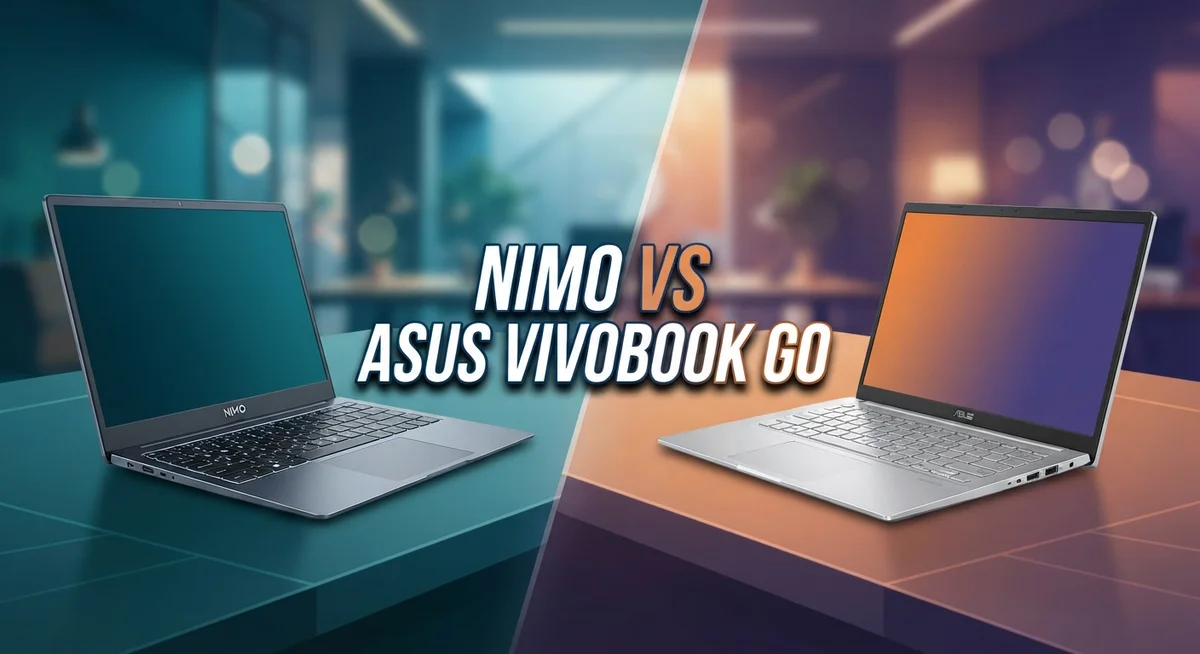
Two laptops often come up in this search: NIMO and the ASUS Vivobook Go. Both target everyday users who need a reliable machine without extra fuss.
NIMO stands out with its impressive RAM and storage options. The ASUS Vivobook Go counters with a stunning OLED display and solid battery claims.
So which one fits your daily routine? This guide breaks down specs, performance, and real world use.
By the end, you will know exactly which laptop deserves a spot on your desk.
Quick Comparison: Nimo vs ASUS Vivobook Go
| Feature | Nimo | ASUS Vivobook Go |
|---|---|---|
| Display | 15.6″ IHD (IPS) | 15.6″ OLED/standard options |
| Processor | AMD Ryzen 5 or Intel options | Ryzen 5 7520U or Pentium/i3 |
| RAM | Up to 32GB | Up to 8GB |
| Storage | Up to 1TB SSD | Up to 512GB SSD |
| Battery Life | ~5 hours | ~4-4.3 hours |
| Build Quality | Durable, premium feel | Military-grade chassis |
| Extra Features | Fingerprint login, backlit keyboard | 180-degree hinge |
| Warranty | 2-year warranty | Standard warranty |
Nimo Review

- 【Immersive 15.6" FHD Anti-Glare Display – Work & Study with Visual Comfort】 Features a 15.6-inch Full HD...
- 【Unmatched 16GB RAM & Massive 1TB SSD – Seamless Multitasking & Massive Storage】 Packed with 16GB DDR...
Last update on 2026-08-16 / Affiliate links / Images from Amazon Product Advertising API
NIMO is a 15.6-inch laptop that delivers high-end specs at accessible price points. It appeals to users who want serious processing power and storage without compromise.
The standout feature is its customizable configuration options. You can max out RAM to 32GB and storage to 1TB—far beyond what competitors offer at similar price tiers.
Build quality feels premium and travel-ready. The lightweight design, backlit keyboard, and fingerprint login make daily use smooth and secure.
Real-world performance is solid for multitasking and demanding apps. The trade-off is battery life sits around 5 hours, so you’ll want a charger nearby for longer workdays.
Pros
- Up to 32GB RAM and 1TB SSD for power users and content creators
- Clean Windows 11 with minimal bloatware
- Durable, lightweight frame built for travel
- 65W Type-C charging offers flexibility
Cons
- Battery endurance falls short for all-day unplugged work
- Limited processor variety compared to larger product lines
ASUS Vivobook Go Review

- Striking 15.6-inch FHD Display — Brings visuals to life with a 250-nit sustained brightness and 45% NTSC...
- Reliable AMD Ryzen 3 7320U Processor — An efficient processor that delivers reliable performance for...

Last update on 2026-08-16 / Affiliate links / Images from Amazon Product Advertising API
The ASUS Vivobook Go is a 15.6-inch laptop built for users who value long battery life and display quality. It suits light productivity work, streaming, and everyday computing rather than heavy multitasking.
The standout feature is its OLED display option, which delivers excellent color accuracy and clarity compared to standard panels. The military-grade chassis feels solid and inspires confidence during travel.
Real-world performance depends on your processor choice—AMD Ryzen 5 models handle daily tasks smoothly, but Pentium and Celeron variants run sluggish for demanding apps. Fast boot speeds and a clean system make startup snappy.
The 180-degree hinge adds flexibility for different work angles. Build quality feels robust without excessive weight.
Pros
- OLED display option with vibrant colors and sharp contrast
- Fast boot speed and responsive startup
- Military-grade build quality that feels durable
- Lightweight design suitable for travel
Cons
- Standard display is dim and lacks vibrancy
- RAM and storage limited to 8GB and 512GB maximum
- Entry-level processors (Pentium/Celeron) struggle with multitasking
- Real-world battery life underperforms marketing claims (4–4.3 hours reported)
Head to Head: Key Differences
RAM and Storage Capacity make the biggest practical difference between these two laptops. NIMO maxes out at 32GB RAM and 1TB SSD, while ASUS Vivobook Go tops out at 8GB RAM and 512GB SSD.
If you run multiple apps, edit videos, or work with large files, NIMO gives you significantly more headroom.
Processor Selection varies between the two machines. NIMO offers both AMD Ryzen 5 and Intel options, giving you flexibility based on your needs.
ASUS Vivobook Go focuses on AMD Ryzen 5 models for higher-end versions, but entry-level options use Pentium or Celeron chips, which feel sluggish for everyday multitasking.
Display Technology differs in quality. ASUS Vivobook Go includes an OLED display option with vibrant colors and sharp contrast.
NIMO uses a standard IPS display, which is reliable but less visually striking than OLED.
Battery Performance tells an interesting story. ASUS markets superior battery life, yet real-world testing shows both laptops deliver around 4 to 5 hours unplugged.
Neither excels at all-day untethered work, so battery endurance is roughly equal in practice.
Charging Flexibility favors NIMO. It uses a 65W Type-C charger, which works with many other devices and offers faster charging.
ASUS Vivobook Go uses a proprietary connector.
Build and Portability are comparable. Both weigh little and feel durable for travel.
ASUS includes a 180-degree hinge for flexible positioning, while NIMO emphasizes a premium, lightweight frame.
The choice depends on your priorities: choose NIMO for power and customization, or pick ASUS Vivobook Go if display quality and processor variety matter most.
Which One Should You Buy
NIMO comes out as the overall winner in this comparison. It offers higher RAM and storage, giving you more room for demanding tasks.
Its durable build and clean Windows 11 setup add extra value for everyday use.
The ASUS Vivobook Go still holds its ground with better battery life, but NIMO’s performance edge makes it the stronger choice overall.
Best for each buyer
- NIMO: Best for buyers who need high specs and durability for demanding tasks, even if it means shorter battery life.
- ASUS Vivobook Go: Best for users who want reliable battery life and good display quality for light, everyday productivity.
Frequently Asked Questions
Which laptop handles multitasking better?
NIMO wins here. It offers up to 32GB RAM compared to ASUS Vivobook Go’s 8GB maximum.
If you juggle multiple browser tabs, edit photos, or run several apps at once, NIMO gives you much more breathing room. The extra RAM means smoother performance and fewer slowdowns when switching between tasks.
ASUS Vivobook Go works fine for light tasks like email and web browsing. But once you push it with heavier workloads, you’ll notice the difference.
Can I upgrade the RAM and storage later?
NIMO allows customization during purchase. You can select your exact RAM and storage configuration before buying.
This flexibility means you pay only for what you need now.
ASUS Vivobook Go offers limited upgrade options after purchase. Most models come with soldered RAM, making upgrades difficult or impossible.
Storage can sometimes be expanded, but check your specific model first.
Which display looks better?
ASUS Vivobook Go has the edge with its OLED display option. Colors pop more, blacks appear deeper, and contrast is noticeably sharper.
This makes watching videos or editing photos more enjoyable.
NIMO uses a standard IPS display. It’s reliable and clear for everyday work, but it won’t match OLED’s visual impact.
For general computing tasks, the difference matters less.
Will either laptop last a full workday without charging?
Both fall short here. NIMO delivers roughly 5 hours per charge.
ASUS Vivobook Go claims longer battery life, but real users report 4 to 4.3 hours in practice. Neither truly handles a full 8 hour workday unplugged.
Plan to carry a charger or power bank if you work away from outlets frequently.

DK is a technology expert who specializes in AI tools, software, and tech gadgets. He writes for How to Tech Info, providing detailed reviews and practical guides. DK helps readers discover the best AI applications, navigate new software, and choose the right tech gadgets.