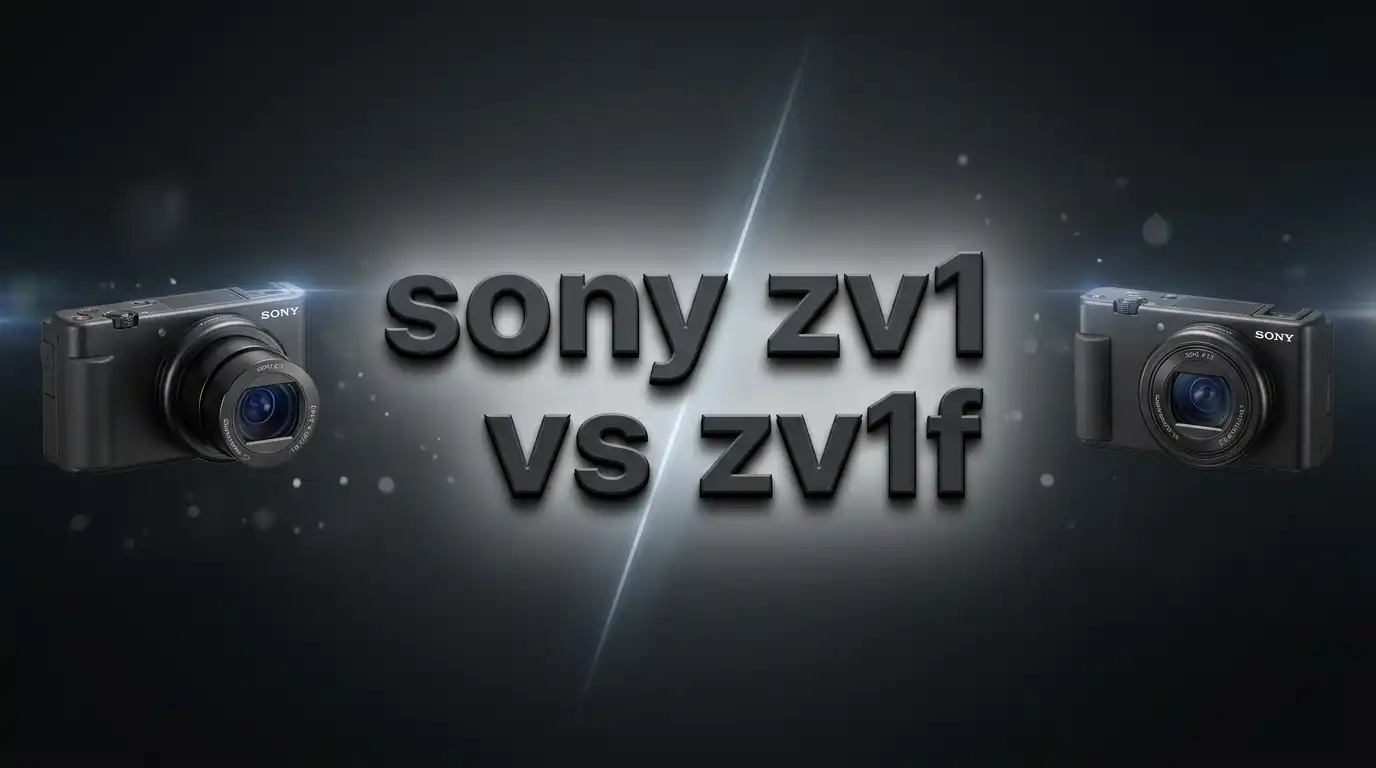
Sony ZV1 vs ZV1F: Which Vlogging Camera Wins in 2026?
Choosing a vlogging camera feels hard when two models look almost the same. The Sony ZV1 and the Sony ZV1F sit next to each other on shelves. They share a similar shape. They target the same creators. Yet they perform very differently once you press record. This guide breaks down every key point so you pick the right one fast.
Both cameras carry a 1 inch sensor. Both shoot 4K video. Both flip the screen for selfies. So the choice comes down to small details that change your daily results. Autofocus, lens type, and zoom range separate these two. Price also plays a big role. Read on and you will know exactly which camera matches your style, your budget, and your content goals.
In A Nutshell
Short on time? Here is the quick summary before the deep dive starts.
- The Sony ZV1 uses a 24 to 70mm zoom lens, which gives you flexible framing for close shots and wide shots.
- The Sony ZV1F uses a fixed 20mm wide lens, which stays simple and works great for arm length selfie vlogs.
- The ZV1 has a faster hybrid autofocus with phase detection points, so it tracks moving subjects better.
- The ZV1F relies on contrast detection autofocus only, which still works but lags on fast action.
- The ZV1 includes a built in ND filter and shoots RAW photos, while the ZV1F skips both features.
- The ZV1F costs less, so budget creators and pure vloggers often pick it first.
Pick the ZV1 for versatility and photo quality. Pick the ZV1F for simple wide vlogging at a lower price.
Head To Head Comparison Table
This table shows both cameras side by side. Scan it to spot the biggest gaps at a glance.
| Feature | Sony ZV1 | Sony ZV1F |
|---|---|---|
| Sensor | 20.1MP 1 inch Stacked Exmor RS | 20.1MP 1 inch Exmor RS BSI |
| Lens | 24 to 70mm f1.8 to f2.8 zoom | Fixed 20mm f2.0 |
| Zoom | 2.7x optical zoom | Digital step zoom only |
| Autofocus | Hybrid phase and contrast (315 phase points) | Contrast detection (425 points) |
| Video | 4K 30p, Full HD 120p | 4K 30p, Full HD 120p |
| RAW Photos | Yes | No, JPEG only |
| ND Filter | Yes, built in | No |
| Burst Rate | Up to 24fps | Up to 16fps |
| Microphone | 3 capsule directional mic | 3 capsule mic |
| Screen | 3 inch flip LCD | 3 inch flip LCD |
| Battery | NP BX1 | NP BX1 |
| Weight | About 294g | About 256g |
| Price | Higher | Lower |
Sony ZV1 Overview

- 20.1MP stacked back illuminated 1” Exmor RS CMOS sensor w/ DRAM. Large aperture 24-70mm1 F1.8-2.8 ZEISS...
- Fast Hybrid Autofocus and Real Time Eye Autofocus and Real-time Autofocus tracking.
Last update on 2026-06-17 / Affiliate links / Images from Amazon Product Advertising API
The Sony ZV1 launched in 2020 as a vlogging focused compact camera. Sony built it for YouTubers, streamers, and travel creators. It packs a 1 inch stacked sensor into a body that fits your pocket. That sensor pulls in more light than a phone sensor, so your footage looks clean.
The star feature is the 24 to 70mm zoom lens. This range lets you shoot wide selfie clips and then zoom into a tight product shot. You get real framing control without moving your feet. The bright f1.8 aperture also blurs backgrounds nicely, which gives your videos a professional look.
The ZV1 shoots 4K video at 30 frames per second. It also records Full HD at up to 120 frames per second for smooth slow motion. The camera adds a built in ND filter, which lets you shoot at wide apertures on bright days. This feature matters a lot for outdoor vloggers who want soft backgrounds under strong sun.
Autofocus stands out here. The ZV1 uses a hybrid system that mixes phase detection and contrast detection. It locks onto faces and eyes quickly. It also tracks subjects that move around the frame. For fast paced content, this speed makes a clear difference. The ZV1 also captures RAW photos, so photographers get real editing room.
Sony ZV1F Overview

- Ultra-wide 20mm lens gets it all in the frame, even at arm’s length
- Large 1” sensor and F2 lens, for low-light and defocusing backgrounds

Last update on 2026-08-28 / Affiliate links / Images from Amazon Product Advertising API
The Sony ZV1F arrived in 2022 as a cheaper entry point into the ZV series. Sony aimed it at new creators who want great video without a big price. It keeps the 1 inch sensor class, so image quality stays strong for the price.
The main design choice is the fixed 20mm wide lens. This wide view captures your face and background even at arm length. You never need to stretch or use a long tripod. That makes the ZV1F a natural pick for handheld selfie vlogs and quick social clips. The wide 20mm equivalent field of view fits groups and rooms with ease.
The ZV1F records 4K video at 30 frames per second, just like its pricier sibling. It also offers Full HD slow motion. Sony added a touch step zoom that jumps between preset crops like 1x, 1.5x, 2x, and 4x. This zoom uses digital cropping, so image quality drops slightly at the long end. Still, it gives you quick framing options.
Autofocus on the ZV1F uses contrast detection only with 425 points. It handles faces and eyes well in calm scenes. It still supports Eye AF and Product Showcase mode. The tradeoff shows with fast motion, where tracking can lag. The ZV1F also skips RAW photos and shoots JPEG only, so it leans hard toward video use.
Design And Build Quality
Both cameras share a similar compact shell. They fit in a jacket pocket or a small bag. The ZV1F is lighter at around 256 grams, while the ZV1 weighs about 294 grams. That gap feels small in hand but helps during long handheld shoots.
The button layout stays close on both bodies. Each camera has a big red record button on top. Each has a dedicated Background Defocus button. Each has a Product Showcase button for quick focus pulls. Sony kept the controls friendly for beginners on both models.
Neither camera offers weather sealing. So you protect both from rain and dust. Both charge through a USB C port, which lets you top up power from a power bank on the go. This feature helps creators who film all day away from outlets.
The grip feels secure on each model. The textured front gives you a firm hold during walking shots. Both bodies use plastic that feels solid rather than premium. For the price and target user, the build quality satisfies most creators. You get a tool that survives daily bag life and travel.
The bottom mount fits standard tripods and the optional Bluetooth shooting grip. That grip adds remote zoom and record control. It works with both cameras, so your accessories stay useful if you upgrade later.
Sensor And Image Quality
Both cameras use a 20.1 megapixel 1 inch sensor. This size beats every phone sensor and most action cameras. It pulls in more light, so your footage stays clean in dim rooms. The image quality between the two stays very close in good light.
The ZV1 uses a stacked Exmor RS sensor. The stacked design reads data faster. This speed feeds the hybrid autofocus and the fast 24fps burst mode. It also reduces rolling shutter, so fast pans look cleaner. The ZV1F uses a BSI Exmor RS sensor that performs well but reads slower.
Color science stays consistent across both cameras. Skin tones look natural. Sony picture profiles like S Log2 and S Log3 appear on both models. So you can grade your footage and match it with higher end Sony cameras. This flexibility helps creators who want a cinematic finish.
Low light results favor the ZV1 slightly. Its brighter f1.8 lens at the wide end gathers more light than the ZV1F f2.0 lens. Both handle ISO up to 12,800 with expansion to 25,600. Noise appears at high ISO on each, so you keep light levels reasonable for the best results.
For photos, the ZV1 wins clearly because it shoots RAW. The ZV1F only saves JPEG. If you want to edit stills deeply, the ZV1 gives you the data you need.
Top 3 Alternatives For Sony ZV1 And Sony ZV1F
Maybe neither camera fits your needs. Here are three strong alternatives worth a look before you buy. Each offers a different mix of features and price.

- Ultra-wide 18-50mm1 zoom lens gets it all in the frame
- Large 1.0-type sensor for professional results even in low-light
Last update on 2026-07-01 / Affiliate links / Images from Amazon Product Advertising API

- SONY USA Authorized Model - Includes FULL SONY USA Warranty | Specifically designed with vloggers and online...
- Shoot High quality 4K movies and 20.1 megapixel still photos with easy-to-use features: Sony’s acclaimed...
Last update on 2026-07-16 / Affiliate links / Images from Amazon Product Advertising API
No products found.
The Sony ZV1 II upgrades the original with an even wider 18 to 50mm zoom and better touch controls. It suits creators who want the newest ZV zoom camera with modern menus. The ZV1F kit bundle adds accessories like a tripod grip and extra items for new creators who want a ready to film set. The third pick expands your options if you want an interchangeable lens body for future growth. Compare these against your budget and your content goals before you commit.
Lens And Zoom Comparison
This section holds the single biggest difference between the two cameras. The lens choice shapes how you shoot every day. Pick wrong here and you may feel limited fast.
The Sony ZV1 carries a 24 to 70mm zoom lens with an f1.8 to f2.8 aperture. This range covers wide vlogging shots and tight close ups. You can film a room, then zoom into a small object without moving. The optical zoom keeps image quality sharp across the range. This versatility helps travel and product creators.
The Sony ZV1F uses a fixed 20mm wide lens at f2.0. The wide view fits your face and the scene behind you at arm length. This design works great for selfie vlogs and group shots. But it offers no true optical zoom. You only get a digital step zoom that crops the image.
So which lens suits you? Choose the ZV1 zoom if you shoot varied content like reviews, travel, and interviews. The zoom gives you room to compose creative frames. Choose the ZV1F wide lens if you shoot mostly talking head vlogs and social clips. The wide angle keeps everything in frame with zero fuss.
Keep in mind the digital zoom on the ZV1F softens the image at longer crops. The ZV1 optical zoom stays crisp. For pure image quality across framing, the ZV1 lens wins.
Autofocus Performance
Autofocus decides how sharp your subject stays while you move. Both cameras offer Sony Real Time Eye AF and face tracking. But the systems behind them differ in a big way.
The Sony ZV1 uses a hybrid autofocus system. It combines 315 phase detection points with contrast detection. Phase detection reads distance fast. So the ZV1 tracks moving subjects with speed and confidence. It follows your face during walking shots and fast pans. This speed helps action and pet content.
The Sony ZV1F uses contrast detection only with 425 points. It works well when subjects stay calm. Eye AF still locks onto faces in most scenes. But contrast detection hunts more when action gets fast. You may notice slight focus lag during quick movement. For steady vlogging, this rarely causes trouble.
Both cameras include Product Showcase mode. This mode shifts focus from your face to an item you hold up. It works smoothly on each model, which helps reviewers and unboxing creators. Both also add Face Priority auto exposure to keep your face bright.
So the ZV1 leads for fast tracking and action. The ZV1F handles calm talking head content just fine. If your shots involve sports, pets, or quick movement, the ZV1 gives you more reliable focus. If you sit and talk to the camera, the difference feels smaller.
Video Features
Both cameras shine as video tools since Sony built them for creators. The core video specs match closely between the two. Each records 4K at 30 frames per second and Full HD at up to 120 frames per second. So slow motion clips look smooth on both.
Each camera includes special HFR modes. These let you capture super slow motion at 250, 500, or even 1000 frames per second in short bursts. This feature adds creative flair to your edits. Both also support S Log2, S Log3, and HLG for wider dynamic range and flexible grading.
The ZV1 adds a built in ND filter. This filter cuts light so you can keep a wide aperture on bright days. Video creators love this because it keeps backgrounds soft outdoors. The ZV1F lacks an ND filter, so you rely on smaller apertures or an add on filter in bright sun.
Both cameras use Active SteadyShot. This digital stabilization smooths handheld and walking footage. It crops in slightly, so your face grows larger in selfie mode. Neither camera has true optical stabilization, so you rely on the digital version for stable clips.
Live streaming works on both models through USB. You connect to a computer or phone and stream without a capture card. This makes each camera a simple webcam upgrade for calls and streams.
Audio Quality
Sound quality often decides how professional a vlog feels. Both cameras include a built in directional microphone with a three capsule design. This mic captures clear voice audio and reduces side noise. It focuses on the person in front of the camera.
Both models come with a wind screen accessory, often called a dead cat. This furry cover slips over the mic and cuts wind noise outdoors. It helps a lot during walking vlogs and beach shots. The clear voice pickup makes both cameras strong for talking content.
Each camera includes a 3.5mm microphone input. So you can attach an external mic like a shotgun or lavalier for better sound. This flexibility helps creators who want studio grade audio. Sadly, neither camera has a headphone jack. So you cannot monitor audio live through headphones.
The built in mic on both models beats phone audio by a wide margin. For casual vlogs, the internal mic sounds clean and usable right away. For serious projects, the external mic port gives you room to grow your setup.
Overall the audio experience feels very similar between the ZV1 and ZV1F. Neither pulls far ahead here. Both give creators solid sound without extra gear, and both scale up with an external mic when you need it.
Screen And Usability
Both cameras use a 3 inch flip out LCD screen. The screen swings to the side and rotates forward 180 degrees. So you see yourself while filming selfie vlogs. This fully articulating design helps every solo creator frame shots with ease.
The screens carry similar resolution around 921,000 dots. Each supports touch control for focus and menu taps. You tap your subject to set focus fast. You swipe to adjust settings. This touch friendly design makes both cameras beginner friendly.
The ZV1F menu feels simple and clean. Sony trimmed options to keep new users comfortable. The ZV1 menu offers more depth for advanced shooters. Both fold the screen inward to protect the glass when you toss the camera in a bag.
Neither camera has a viewfinder. So you compose only with the LCD. In bright sun the screen can feel hard to see. You may add a screen hood if you shoot outdoors often. For most creators the flip screen handles daily use well.
Overall usability stays high on both. The controls, buttons, and screen make each camera easy to learn. A total beginner can pick up either model and film within minutes. That simplicity is a big reason these cameras stay popular with new creators.
Battery Life And Storage
Both cameras use the Sony NP BX1 battery. This small battery powers each body through short shoots. Sony quotes about 45 to 75 minutes of video per charge. Still photo shooters get around 260 shots. So battery life stays modest on both.
The good news is USB C charging. You top up either camera from a power bank while you film or between takes. Many creators carry a spare battery for full days. A second battery costs little and doubles your shooting time.
Both cameras use a single SD card slot. Each supports UHS I type SD cards. So you use common, affordable memory cards. Fast cards help with 4K recording and burst photos. A card rated for 4K keeps your footage smooth.
Because battery life is short, plan ahead for long shoots. Pack extra batteries or a power bank. Bring a spare SD card too. With these small extras, both cameras keep up with a full day of content. The shared battery and card system means accessories work across both models, which helps if you own or upgrade either camera.
Price And Value
Price often makes the final call. The Sony ZV1F sits at the lower price point. Sony designed it as the budget friendly entry into the ZV line. New creators love it because it delivers strong 4K video for less money. The value here feels very high for casual vloggers.
The Sony ZV1 costs more. That extra money buys you the zoom lens, the hybrid autofocus, the ND filter, and RAW photos. For creators who need these features, the higher price pays off. You get more flexibility and more room to grow your skills.
So think about your content. If you shoot simple selfie vlogs and social clips, the ZV1F gives you great value. You save cash and still get clean footage. If you shoot varied content and want photo quality, the ZV1 justifies its price with real feature gains.
Both cameras hold their value well since Sony vlogging cameras stay popular. Prices shift with sales, so check current deals before you buy. During sale events, either camera can drop to a tempting price. Watch for those windows to save more.
For pure dollar value, the ZV1F leads. For total feature value, the ZV1 leads. Match the choice to your budget and your shooting needs.
Verdict: Which One Should You Buy?
The right camera depends on your content style and budget. Both cameras shine for their target users, so there is no single winner for everyone.
Choose the Sony ZV1 if you want versatility. The zoom lens, hybrid autofocus, ND filter, and RAW photos make it the stronger tool. It suits travel creators, product reviewers, and anyone who shoots varied scenes. If you want one camera that grows with your skills, the ZV1 is the pick. Fast action shooters also gain from its quicker focus.
Choose the Sony ZV1F if you want simple wide vlogging at a lower price. The fixed 20mm lens captures selfie shots and group scenes with ease. It works great for talking head vlogs, TikTok, and social clips. New creators on a budget get clean 4K video without spending extra. If you sit and talk to the camera, this model handles it beautifully.
In short, the ZV1 wins for flexibility and photo quality. The ZV1F wins for value and simple wide vlogging. Match the camera to how you film, and you will feel happy with your choice.
Frequently Asked Questions
Is the Sony ZV1 better than the ZV1F?
The ZV1 offers more features like a zoom lens, faster hybrid autofocus, a built in ND filter, and RAW photos. So it performs better for varied content and photography. The ZV1F still shoots great 4K video and costs less. The better camera depends on your needs and budget.
Does the Sony ZV1F have a zoom lens?
No. The ZV1F uses a fixed 20mm wide lens with no optical zoom. It offers a digital step zoom that crops the image, but this softens quality at longer crops. The ZV1 has a true 24 to 70mm optical zoom for sharp framing.
Which camera is better for beginners?
The ZV1F suits beginners well. It has a simple menu, a wide lens, and a lower price. New creators can film clean vlogs right away. The ZV1 also works for beginners but adds more settings and a higher price for extra features.
Can both cameras shoot 4K video?
Yes. Both the ZV1 and ZV1F record 4K video at 30 frames per second. They also shoot Full HD slow motion at up to 120 frames per second. Video quality stays very close between the two in good light.
Do these cameras have image stabilization?
Neither camera has true optical stabilization. Both use Active SteadyShot, a digital stabilization that smooths handheld footage. It crops in slightly, so your face looks larger in selfie mode. It works well for walking shots and casual vlogging.
Which camera is better for photography?
The ZV1 is better for photos because it shoots RAW files and has a zoom lens. This gives you real editing room and framing control. The ZV1F only shoots JPEG, so it leans toward video use rather than serious photography.
Are the batteries the same on both cameras?
Yes. Both cameras use the Sony NP BX1 battery. Battery life runs about 45 to 75 minutes of video per charge. Both support USB C charging, so you can top up from a power bank while filming or between takes.

DK is a technology expert who specializes in AI tools, software, and tech gadgets. He writes for How to Tech Info, providing detailed reviews and practical guides. DK helps readers discover the best AI applications, navigate new software, and choose the right tech gadgets.