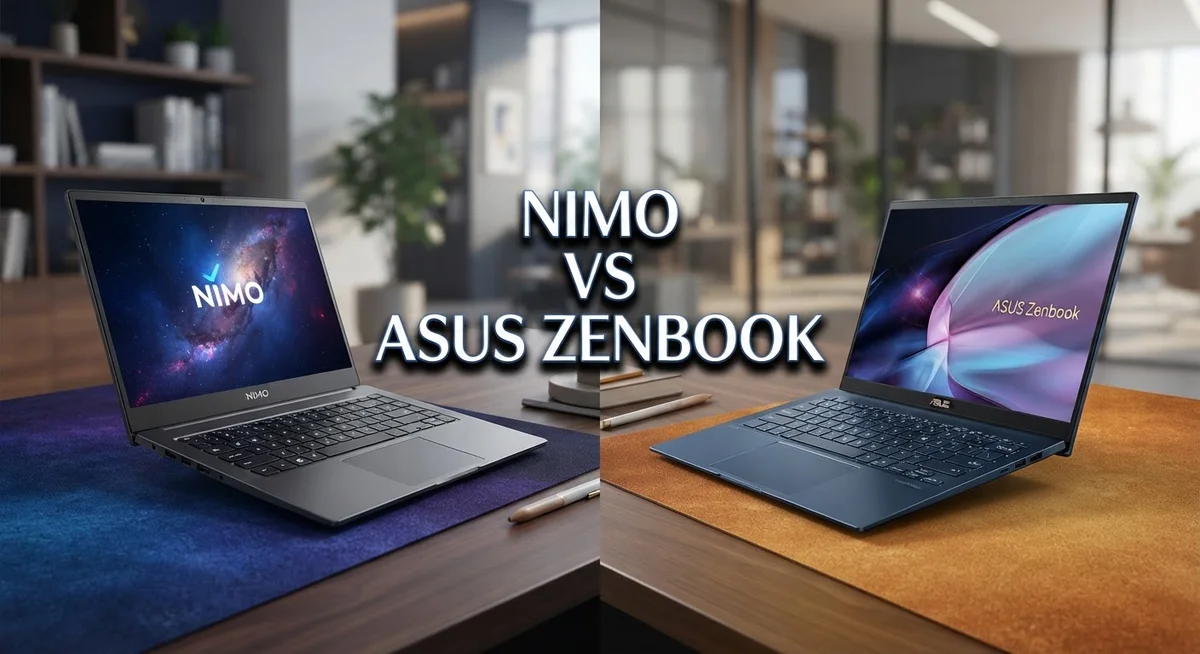
NIMO vs ASUS Zenbook: Which Laptop Offers Better Performance?
Picking a new laptop can feel like a big decision. Nimo and Asus Zenbook both promise great value, but they serve very different needs.
Nimo focuses on simplicity and everyday reliability. It gives casual users and students a solid, no-fuss machine for daily tasks.
Asus Zenbook takes a different path. It brings a stunning OLED display, strong processing power, and a premium build for creatives and professionals.
So which laptop fits your lifestyle better? This guide breaks down specs, performance, and real-world use cases for both models.
We will look at display quality, battery life, and build design. You will also see how each laptop handles daily tasks versus demanding creative work.
By the end, you will know exactly which laptop matches your needs. Let’s dive into the details and find your perfect match.
Quick Comparison: Nimo vs ASUS Zenbook
| Feature | Nimo | ASUS Zenbook |
|---|---|---|
| Display | 15.6″ FHD IPS | 14″ OLED |
| Processor | Intel/AMD Ryzen | Intel Core Ultra 9 |
| RAM | 16-32GB | 16GB+ |
| Storage | 512GB-1TB SSD | SSD (config varies) |
| Battery Life | ~5 hours average | All-day battery |
| Build Quality | Durable metal construction | Premium slim design |
| Operating System | Windows 11 | Windows 11 Pro |
| Best For | Budget students/casual users | Professionals/creatives |
Nimo Review

- 【Immersive 15.6" FHD Anti-Glare Display – Work & Study with Visual Comfort】 Features a 15.6-inch Full HD...
- 【Unmatched 16GB RAM & Massive 1TB SSD – Seamless Multitasking & Massive Storage】 Packed with 16GB DDR...
Last update on 2026-08-16 / Affiliate links / Images from Amazon Product Advertising API
Nimo is a practical laptop built for students and everyday users who want solid performance without unnecessary frills. It strips away premium features to deliver essential computing power in a lightweight package.
The display uses a 15.6″ FHD IPS panel that handles schoolwork, streaming, and general browsing with clear visuals. Processing comes from Intel or AMD Ryzen chips paired with 16-32GB RAM and up to 1TB SSD storage, giving you reliable multitasking capability.
Build quality stands out here—the metal construction feels durable and resists wear from daily backpack travel. The backlit keyboard and fingerprint login add convenience touches that justify the value proposition.
Real-world battery life sits around 5 hours, which works for campus days with charging access. Weight stays light enough for portability, making this a genuine travel-ready option for mobile users.
Pros
- Durable metal frame built to handle student life
- Generous RAM and storage for the segment
- Clean Windows 11 experience with minimal bloatware
- 65W USB-C charging adds flexibility
Cons
- Battery drains faster than premium competitors
- Processor power lags behind high-end alternatives
- Brand recognition remains limited in some markets
ASUS Zenbook Review

- High-Performance DUO Take your productivity further in Windows 11 with the 16-core Intel Core Ultra...
- AI That Works Supercharge your productivity with 50 TOPS on Copilot, giving you instant file retrieval, quick...

Last update on 2026-08-16 / Affiliate links / Images from Amazon Product Advertising API
The ASUS Zenbook is a premium ultrabook designed for professionals and creatives who demand both power and portability. It combines high-end components with a sleek form factor that feels equally at home in a coffee shop or boardroom.
The standout feature is the 14″ OLED display, which delivers exceptional color accuracy and contrast that rivals desktop monitors. This screen transforms photo editing, video work, and even everyday browsing into a visually rich experience.
Under the hood, the Intel Core Ultra 9 processor (up to 5.1GHz) handles multitasking, video rendering, and demanding applications without breaking a sweat. Paired with 16GB+ RAM, this machine keeps pace with creative professionals and power users.
The premium slim design feels solid and refined, reflecting careful engineering throughout. All-day battery life means you can work from morning to evening without hunting for an outlet, making it genuinely portable for remote work and travel.
Pros
- Stunning OLED display with vibrant colors and deep blacks
- Powerful Intel Core Ultra 9 processor handles intensive tasks smoothly
- Excellent battery life supports full workdays away from charging
- Slim, premium build quality feels durable and professional
Cons
- Speakers and trackpad lag behind the overall premium positioning
- Webcam quality doesn’t match flagship competitor standards
- Some users report battery drain concerns with heavy workloads
Head to Head: Key Differences
Display Technology Sets Them Apart
The ASUS Zenbook’s 14″ OLED screen delivers richer colors and deeper blacks compared to Nimo’s 15.6″ FHD IPS panel. If you edit photos, watch films, or do design work, the OLED makes a real difference in what you see on screen.
Processing Power and Speed
Nimo uses Intel or AMD Ryzen processors that handle everyday tasks like email and web browsing smoothly. The ASUS Zenbook’s Intel Core Ultra 9 processor (up to 5.1GHz) crushes demanding work like video editing, 3D rendering, and running multiple heavy applications at once.
Battery Life Reality
Nimo gives you around 5 hours of real use before needing a charge, which works fine if you have access to outlets during your day. ASUS Zenbook keeps going all day long, letting you work through meetings, classes, or travel without hunting for a power outlet.
Size and Weight Matter
The 15.6″ Nimo feels comfortable for desk work and offers more screen space for spreadsheets and documents. ASUS Zenbook’s 14″ ultrabook design weighs less and fits into smaller bags, making it ideal for frequent travelers and people moving between locations.
Build Quality and Durability
Both laptops use solid metal construction that resists damage from daily use. Nimo emphasizes practical durability for student backpacks, while ASUS Zenbook focuses on a premium, refined feel that reflects careful engineering.
Operating System and Software
Nimo ships with clean Windows 11 and minimal bloatware cluttering your experience. ASUS Zenbook comes with Windows 11 Pro, giving you extra security features and tools for professional work environments.
Which One Should You Buy
The ASUS Zenbook stands out as the overall winner in this comparison. It offers a significantly superior OLED display, stronger processing power, and better battery life.
This makes it the more capable and premium machine for demanding tasks. The NIMO remains a reasonable alternative, but it falls short in performance and display quality.
If you need raw specs like RAM and storage on a lightweight frame, NIMO still holds its own. For everything else, the Zenbook takes the lead.
Best for each buyer – Nimo: Best for budget-conscious students or casual users who need a lightweight laptop for basic tasks and value high RAM and storage specs. – ASUS Zenbook: Best for professionals and creatives who need a portable laptop with excellent display quality, strong performance, and reliable battery life for multitasking and creative work.
Frequently Asked Questions
Which laptop has a better display for watching videos and editing photos?
The ASUS Zenbook wins here with its 14″ OLED screen. OLED technology produces deeper blacks and more vibrant colors compared to the NIMO’s 15.6″ FHD IPS panel.
If you work with photos or videos, the OLED display gives you accurate color representation that matters for creative work.
The NIMO screen still looks sharp for everyday tasks like browsing and document work. However, it cannot match the contrast and color depth that OLED delivers.
Your choice depends on whether display quality is a priority for your workflow.
How long can each laptop run on a single charge?
The ASUS Zenbook offers all day battery life, making it ideal for professionals who work away from outlets. You can comfortably power through a full workday without searching for a charger.
The NIMO provides around 5 hours of real use per charge. This works well if you have regular access to power outlets during your day.
Students in classrooms or office workers at desks can manage this battery life easily.
Which processor performs better for demanding tasks?
The ASUS Zenbook uses an Intel Core Ultra 9 processor that reaches speeds up to 5.1GHz. This handles video rendering, multitasking, and complex software smoothly.
Professionals working with resource heavy applications benefit from this power.
The NIMO offers Intel or AMD Ryzen processors that handle everyday activities like email, web browsing, and document editing. These processors won’t struggle with normal tasks, but they lack the muscle for intensive creative work.
Are both laptops portable enough for travel?
Yes, both feature lightweight metal construction designed for mobility. The ASUS Zenbook emphasizes slim, premium design that fits easily into bags.
The NIMO weighs less and takes up minimal space, making it equally travel friendly.
Your choice depends on what else you need. The Zenbook’s superior battery life means fewer charging stops during long trips.
The NIMO requires more frequent charging but costs less to replace if damaged during travel.

DK is a technology expert who specializes in AI tools, software, and tech gadgets. He writes for How to Tech Info, providing detailed reviews and practical guides. DK helps readers discover the best AI applications, navigate new software, and choose the right tech gadgets.