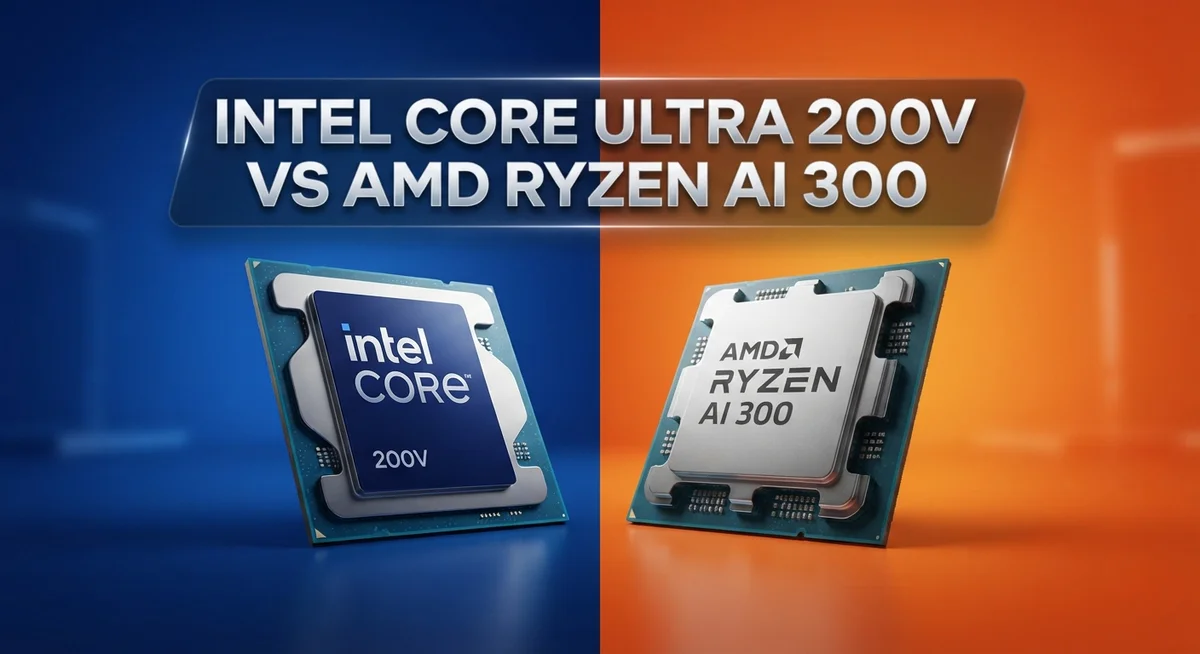
Intel Core Ultra 200V vs AMD Ryzen AI 300: Which is Better?
Choosing a new laptop chip feels tricky today. Two big names lead the pack: Intel Core Ultra 200V and AMD Ryzen AI 300.
Both promise speed, smart AI features, and all day usability.
But they take different paths to get there. Intel focuses on long battery life and steady efficiency.
AMD pushes harder on raw power and multi-threaded muscle.
This creates a real tradeoff for shoppers. Do you want a laptop that lasts all day on a single charge?
Or one that chews through heavy tasks faster, even if it means charging more often?
In this guide, we break down specs, strengths, and weaknesses for each chip. You will see how they perform in daily work, gaming, and productivity tasks.
By the end, you will know exactly which processor fits your needs best.
Quick Comparison: Intel Core Ultra 200V vs Amd Ryzen Ai 300
| Feature | Intel Core Ultra 200V | Amd Ryzen Ai 300 |
|---|---|---|
| Core Configuration | 8P + 12E cores, x86 | Higher perf-per-watt design |
| Battery Life | 20+ hours | Shorter than Intel |
| Multi-threaded Performance | Limited by core imbalance | 1.6x faster (Linux tests) |
| Single-core Performance | Strong | Competitive |
| GPU/Gaming Performance | Inconsistent GPU results | Low-res, blurry textures |
| Power Efficiency | Low power, high efficiency | Better perf-per-watt than Intel |
| Security Features | Built-in security features | Not highlighted |
| Best Use Case | Ultraportables, office work | Performance-focused productivity |
Intel Core Ultra 200V Review

- Get ultra-efficient with Intel Core Ultra desktop processors that improve both performance and efficiency so...
- Core and Threads 24 cores (8 P-cores plus 16 E-cores) and 24 threads. Integrated Intel Graphics included

Last update on 2026-06-09 / Affiliate links / Images from Amazon Product Advertising API
The Intel Core Ultra 200V is a 20-core processor built for laptops that prioritize battery life and everyday performance. It combines 8 high-speed cores with 12 efficiency cores, using Intel’s x86 architecture to handle both quick tasks and sustained workloads.
This chip shines in ultraportable devices where power management matters most. Users working on documents, emails, and web browsing will experience smooth, responsive performance without constantly hunting for a charger.
The standout feature is exceptional battery endurance—many laptops hit 20+ hours on a single charge. Security features come built-in, protecting your data without slowing things down.
Single-core speed remains competitive with rivals in its class.
Real-world use shows strong productivity performance across office applications and light creative work. However, the unequal core split means heavy multi-threaded tasks move slower than competing chips, and gaming performance sits in the middle of the pack.
Pros
- Outstanding battery life (20+ hours on many laptops)
- Fast single-core speed for everyday tasks
- Low power consumption keeps devices cool and quiet
- Built-in security features protect your system
Cons
- Unequal core count limits heavy multi-threaded workloads
- GPU performance inconsistent across different tasks
- Gaming performance trails behind dedicated graphics chips
Amd Ryzen Ai 300 Review

- The world’s fastest gaming processor, built on AMD ‘Zen5’ technology and Next Gen 3D V-Cache.
- 8 cores and 16 threads, delivering +~16% IPC uplift and great power efficiency
Last update on 2026-06-09 / Affiliate links / Images from Amazon Product Advertising API
The AMD Ryzen AI 300 is a high-performance processor built for users who demand speed and responsiveness above all else. This chip excels in multi-threaded workloads and pushes harder on raw computing power than its competitors.
The standout feature is superior performance-per-watt efficiency—it delivers faster system responsiveness while consuming less energy than comparable chips. Real-world tests show it runs 1.6x faster in Linux environments and matches the Snapdragon X Elite in overall speed.
This processor suits performance-focused professionals, content creators, and Linux users who prioritize getting work done quickly. It also handles productivity applications and heavy multitasking without breaking a sweat, making it ideal for anyone running demanding software daily.
Build quality remains solid across Ryzen AI 300 laptops, though battery endurance takes a hit compared to Intel’s ultra-efficient designs. You get blazing-fast performance in exchange for more frequent charging sessions.
Pros
- Superior multi-threaded performance (1.6x faster in Linux tests)
- Better performance-per-watt than Intel Meteor Lake
- Faster overall system responsiveness for demanding workloads
- Competitive with Snapdragon X Elite in raw speed
Cons
- Shorter battery life than Core Ultra 200V (charges more frequently)
- Gaming GPU performance disappoints (low resolution, blurry textures)
Head to Head: Key Differences
The Intel Core Ultra 200V and AMD Ryzen AI 300 represent two different philosophies for laptop processors. Intel focuses on battery longevity and efficiency, while AMD prioritizes raw speed and responsiveness.
Core architecture tells the story. The Core Ultra 200V uses 20 cores split into 8 performance and 12 efficiency cores, optimized for low power draw.
AMD’s Ryzen AI 300 focuses on higher performance-per-watt efficiency, delivering faster multi-threaded results without sacrificing power management.
Battery life shows the clearest real-world difference. Intel laptops commonly reach 20+ hours of usage, making them ideal for travelers and remote workers.
AMD machines typically drain faster, trading endurance for speed when you need it.
Performance workloads reveal another split. AMD delivers 1.6x faster multi-threaded performance in demanding tasks like video editing or data processing.
Intel handles single-threaded work smoothly, keeping productivity apps responsive without power drain.
Gaming performance disappoints on both chips. Neither processor excels at modern games, with AMD showing particularly weak GPU results at higher resolutions.
If gaming matters, external graphics remain necessary.
System responsiveness differs noticeably. AMD users report snappier overall performance during heavy multitasking and content creation.
Intel users experience smooth, efficient operation that rarely stutters, even on battery power.
Linux environments favor AMD significantly. The Ryzen AI 300 shows measurable speed advantages in Linux workflows compared to Intel’s x86 architecture on these systems.
Your choice depends on priorities. Choose Intel for ultraportable devices where battery life drives your decision.
Pick AMD if speed and multi-threaded power matter more than charging frequency.
Which One Should You Buy
Final Verdict
AMD Ryzen AI 300 takes the win here. It delivers stronger multi-threaded performance and better performance-per-watt efficiency overall.
This makes it the more capable chip for demanding, everyday computing tasks.
The trade-off is battery life. Intel Core Ultra 200V still holds an edge for users who need all-day power on a single charge.
Best for each buyer
-
Intel Core Ultra 200V: Suits users who prioritize ultra-long battery life in thin-and-light laptops. It works well for productivity and office work.
-
AMD Ryzen AI 300: Suits performance-focused users. It handles strong multi-threaded speed and responsiveness, including Linux environments.
Frequently Asked Questions
Which processor handles video editing and content creation better?
The AMD Ryzen AI 300 pulls ahead for content creators. Its 1.6x faster multi-threaded performance in Linux tests means rendering videos and exporting files finish quicker.
If you use Adobe Premiere Pro or DaVinci Resolve, the extra cores deliver real speed gains.
The Intel Core Ultra 200V works fine for light editing tasks. You won’t face major slowdowns with basic cuts and color grading.
However, complex timelines with effects will feel slower compared to AMD’s machine.
Does battery life really matter that much between these two?
Yes, it matters a lot. The Core Ultra 200V keeps going for 20+ hours on many laptops.
You can work all day without hunting for a charger.
The Ryzen AI 300 drains faster. Expect 12 to 16 hours depending on your workload.
If you travel frequently or work away from outlets, Intel’s endurance becomes a real advantage. If you stay near power, AMD’s speed matters more.
Which one should I pick for everyday office work?
Both handle email, spreadsheets, and documents smoothly. The Core Ultra 200V keeps your laptop cool and quiet during these tasks.
The Ryzen AI 300 feels snappier when you switch between apps. System responsiveness improves noticeably.
Pick the Core Ultra 200V if battery life is your main concern. Choose AMD if you want your laptop to feel faster and more responsive throughout the day.
Can I game on either of these chips?
Gaming performance disappoints on both processors. Neither delivers smooth gaming at high settings.
Low resolution and blurry textures appear on demanding games.
If gaming matters to you, consider external graphics instead. Both chips handle light games and esports titles fine, but serious gaming needs dedicated GPU support.

DK is a technology expert who specializes in AI tools, software, and tech gadgets. He writes for How to Tech Info, providing detailed reviews and practical guides. DK helps readers discover the best AI applications, navigate new software, and choose the right tech gadgets.