IKEA Matter Smart Home Review: Budget Thread Lineup Worth It?
Smart homes used to cost a lot of money. One brand name bulb could cost $40 or more. IKEA has changed that with its new Matter lineup.
Bulbs now start at $5.99. Remotes cost about $6. Sensors cost less than a pizza. So are these cheap gadgets actually good?
I dug through months of real user reports, expert tests, and IKEA’s own details. This review covers each device, the setup, the problems, and the best alternatives. By the end, you will know if IKEA belongs in your home.
In a Nutshell
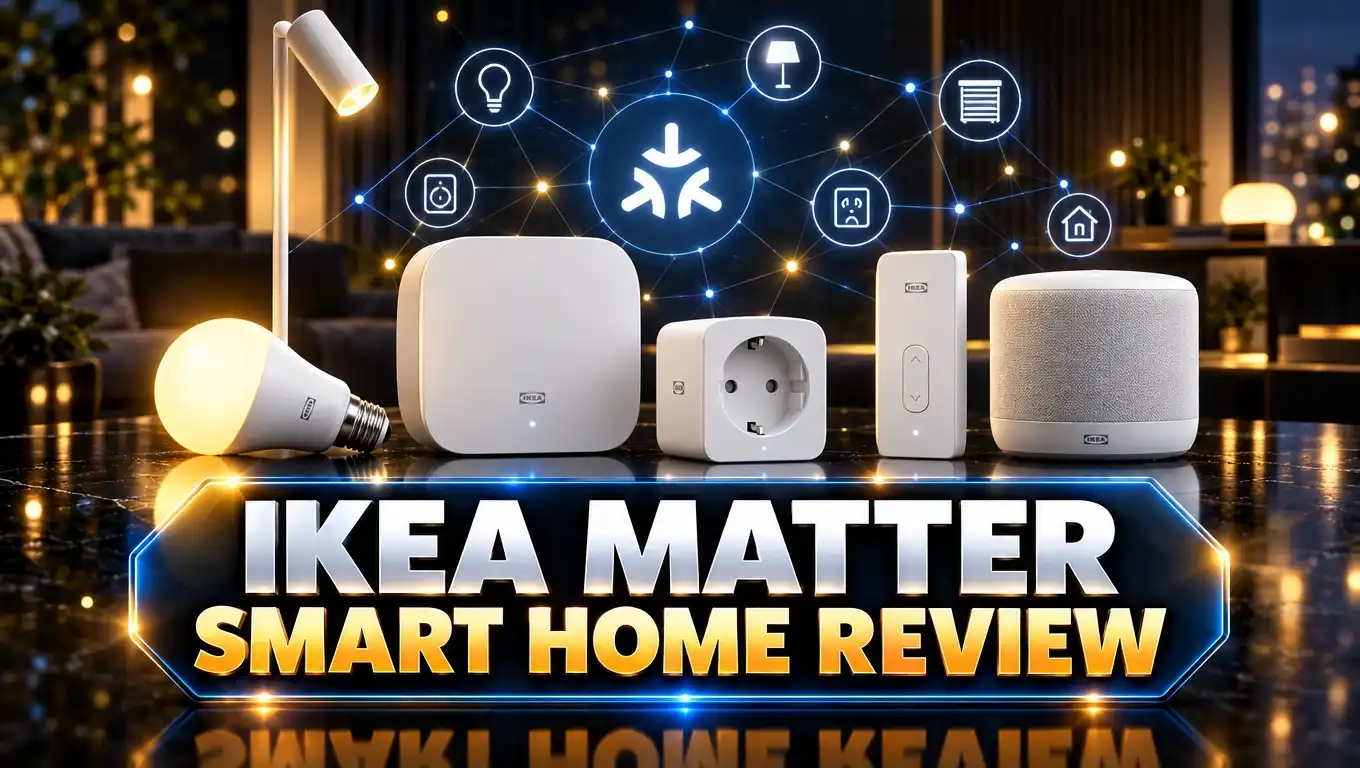
- Huge lineup at low prices: IKEA launched 21 Matter over Thread products. They include 11 KAJPLATS bulbs, five sensors, two BILRESA remotes, a smart plug, and the VARMBLIXT lamp. Prices run from $5.99 to $99, so you can start small.
- Works with every major platform: The devices pair with Apple Home, Google Home, Amazon Alexa, and Samsung SmartThings. One reviewer ran them in Apple Home and SmartThings at the same time with no trouble.
- You need a Thread border router: The battery sensors will not work without one. A HomePod mini, Apple TV, Nest Hub, newer Samsung TV, or the DIRIGERA hub can do this job.
- Connection problems exist: Some users report pairing failures and devices that stop responding. IKEA keeps sending firmware updates, and things are improving. Homes with several border routers and several platforms have the most trouble.
- The CO2 sensor is weak: AppleInsider tested four ALPSTUGA units in a calibrated chamber. The CO2 readings swung far outside IKEA’s stated accuracy. The other sensors seemed accurate.
- Great value overall: When the network behaves, these devices beat many pricier options. AppleInsider rated the lineup 3.5 out of 5, mostly because of the connection issues.
What Is the IKEA Matter Smart Home Lineup?
IKEA rebuilt its smart home range from scratch. The old TRÅDFRI products used Zigbee. The new products use Matter over Thread, the new shared smart home standard.
Matter lets devices from different brands talk to each other. Thread is the wireless network they use. Think of Matter as the language and Thread as the road.
The lineup has three main groups. IKEA calls them lighting, sensors, and control. Here is what each group includes:
- Lighting: 11 KAJPLATS bulbs plus the VARMBLIXT donut lamp.
- Sensors: MYGGSPRAY motion, MYGGBETT door and window, TIMMERFLOTTE temperature and humidity, ALPSTUGA air quality, and KLIPPBOK water leak.
- Control: BILRESA dual button remote, BILRESA scroll wheel remote, and the GRILLPLATS smart plug.
IKEA says its goal is simple. It wants smart homes to be easy to use and affordable for most people. David Granath, Range Manager at IKEA of Sweden, said smart tech has not been easy or cheap enough until now.
Thread has a big advantage over older systems. Every plugged in device, such as a bulb or plug, acts as a repeater. Each one makes your network stronger and extends its range.
Battery devices work differently. They save power by only receiving signals, not passing them along. So add bulbs and plugs first, then add sensors.
IKEA also plans more products. The company says this launch is only the first step. New categories will arrive over time.
KAJPLATS Smart Bulbs Review
The KAJPLATS bulbs are the heart of this lineup. IKEA offers 11 versions in different shapes, sizes, and brightness levels. Prices start at about $5.99 per bulb in starter kits.
You can choose from these main styles. The E26/E27 standard globe comes in 470, 1,055, and 1,521 lumen options. There are also compact E14/E12 bulbs, GU10 spotlights, and clear glass decorative bulbs.
The bulbs come in two types. White spectrum bulbs change from warm to cool white. Color and white spectrum bulbs can show any color.
Check the box before you buy. The clear filament bulbs are white spectrum only. They cannot show colors.
Brightness is strong for the price. The top bulb reaches 1,521 lumens. That is brighter than many premium smart bulbs.
Apple users get a great bonus. Every KAJPLATS bulb supports Adaptive Lighting in Apple Home. This feature shifts the color temperature through the day, warmer in the morning and evening and cooler at midday.
Many expensive bulbs skip this feature. IKEA includes it on bulbs that cost less than $10. AppleInsider called this extra impressive.
The clear decorative bulbs look especially nice. They do not look like smart bulbs at all. They work well in open fixtures and desk lamps.
Response speed is good when the network is healthy. Testers saw lights react almost instantly to buttons and scenes. Some users did report bulbs showing the wrong on or off status, though.
My take: These are the best value smart bulbs you can buy right now. Start with two or three before you fill your house.
BILRESA Remote Controls Review
The BILRESA remote might be the best deal in the whole lineup. It costs about $6, and a three pack costs about $15. Reviewers loved it.
IKEA sells two versions. The dual button remote has two large buttons. The scroll wheel remote lets you turn a dial to dim lights or change colors.
The dual button remote has a smart design. Its back is magnetic, so it sticks to your fridge. IKEA also includes a small metal plate with adhesive for walls, desks, or nightstands.
In Apple Home, one remote gives you six commands. Each button supports a single press, a double press, and a long hold. You can use all six or just one or two.
Here are a few ways people use it:
- Setting a “good morning” and “goodnight” scene in a child’s room.
- Cycling lights between 100%, 50%, and off.
- Controlling an air purifier fan speed.
- Opening and closing window shades.
Two AAA batteries power the remote. Rechargeable batteries should last around two years depending on use.
IKEA also sells colorful kits in green, red, and beige. These add a fun touch to kids’ rooms or offices.
The remote got a firmware update to Matter 1.4. That update improved stability for many users.
Some users say button presses feel slow through DIRIGERA. Direct pairing with Apple Home seems faster.
My take: Buy a few. At this price, you can place one in every room.
Top 3 Alternative for IKEA Matter Smart Home
IKEA sells its smart products mainly through its own stores and website. If you want to shop on Amazon, or you want proven brands, these three Matter over Thread options are strong picks.
Nanoleaf Essentials Matter A19 Smart Bulb

- [Matter-enabled] Compatible with all major smart home ecosystems to help futureproof your home.
- [16M+ RGBW Colors] Virtually limitless color options. Enjoy the brightest white lighting with extended...
Last update on 2026-09-25 / Affiliate links / Images from Amazon Product Advertising API
The Nanoleaf Essentials A19 is the closest rival to KAJPLATS. It also uses Matter over Thread. It works with Apple Home, Google Home, and SmartThings.
It costs more, about $15 per bulb. In return, you get a longer track record and very good color quality. It is a safe choice if IKEA bulbs are out of stock near you.
Aqara Motion and Light Sensor P2

- [Native Matter Support over Thread] The Aqara Motion and Light Sensor P2 seamlessly integrates with Matter...
- [2-in-1 Sensor] The Aqara Motion and Light Sensor P2 combines a PIR motion sensor with a separate light...

Last update on 2026-09-25 / Affiliate links / Images from Amazon Product Advertising API
The Aqara P2 is a strong swap for the MYGGSPRAY sensor. It detects motion and light levels. It has a wide 170 degree view.
Aqara has a long history with sensors. Home Assistant users report fewer timeout problems with Aqara than with the MYGGSPRAY right now.
Eve Energy Matter Smart Plug

- Eve Energy requires iOS/iPadOS 16.4 (or later) or Android 8.1 (or later) plus a hub of your chosen platform...
- Switch your lights and appliances on and off using your voice or an app, and control your appliances on the go...
Last update on 2026-08-22 / Affiliate links / Images from Amazon Product Advertising API
Eve Energy is a premium alternative to GRILLPLATS. It tracks energy use and works as a Thread repeater. Eve focuses heavily on privacy.
It costs much more than IKEA’s plug. However, Eve has years of solid Thread experience. Choose it if reliability matters more than price.
GRILLPLATS Smart Plug and VARMBLIXT Lamp Review
The GRILLPLATS smart plug costs about $7.99. It turns any ordinary lamp or small appliance into a smart device. It also tracks energy use.
Energy tracking at this price is rare. Most rivals charge double or more for the same feature. You can use it to find devices that waste power on standby.
The plug has another hidden benefit. It is a Thread router. Each plug you add strengthens your network, which helps battery sensors stay connected.
You can pair the plug with a BILRESA remote or MYGGSPRAY sensor. For example, a motion sensor can switch on a lamp plug when you walk in. Keep it indoors and away from heavy loads like space heaters.
The VARMBLIXT lamp is the most stylish item in the lineup. It is IKEA’s viral donut lamp, now updated with Matter and Thread. It costs about $99.
The price feels high next to $6 remotes. But the build quality is excellent. The body is all glass with a matte finish, a metal back, and a braided cable.
The lamp is about a foot wide. You can hang it on a wall or stand it on a shelf. A BILRESA remote comes in the box and pairs straight away.
The lamp changes colors and spreads light softly. It never feels too bright. It works best as an accent piece.
My take: Buy two GRILLPLATS plugs before any sensors. Buy the VARMBLIXT if you love the design.
IKEA Matter Sensors Review
IKEA offers five sensors. Most cost under $10. Here is how each one performs.
MYGGSPRAY motion sensor costs about $9.99. It works indoors and outdoors. It is great for closets, hallways, and garages.
It has limits, though. It detects motion, not presence. If you sit still during a movie, your lights may turn off. Pets and robot vacuums can also trigger it.
Home Assistant users face another issue. A reported bug makes the sensor stop sending data after 30 minutes of no motion. It works fine in DIRIGERA and Google Home.
MYGGBETT door and window sensor costs about $7.99. It uses a main body and a magnet. Testers reported no issues with it, and it runs on one AAA battery.
TIMMERFLOTTE measures temperature and humidity. It looks like a plain white circle. Press it, and a hidden retro display shows the readings.
It switches between Celsius and Fahrenheit with a switch on the back. One tester used it as a remote sensor for a smart thermostat, with great results.
ALPSTUGA is the air quality sensor at $29.99. It measures CO2, PM2.5, humidity, and temperature. It also shows the time and uses USB C power.
This is the weakest device. AppleInsider tested four units in a chamber set at 600 ppm of CO2. All four showed wild swings far outside IKEA’s stated tolerance. The other readings seemed accurate.
KLIPPBOK water leak sensor costs about $9.99. It sounds an alarm and sends phone alerts. Place it under sinks or near washing machines.
Do You Need DIRIGERA or the Aqara Hub M3?

- [Multi-Protocol Hub with Matter Bridge] The M3 is a versatile hub supporting Aqara Zigbee and Thread devices...
- [Edge Compatibilities and Local Automations] The M3 serves as an Edge Hub, prioritizing local control and...
Last update on 2026-06-09 / Affiliate links / Images from Amazon Product Advertising API
Here is the most important thing to know before you buy. Battery sensors need a Thread border router. Without one, they will not work at all.
Bulbs and plugs can pair directly with your phone over Bluetooth. Sensors cannot. Some shoppers returned sensors because the product pages did not make this clear.
A border router connects your Thread devices to your home network. You may already own one. Here are common options:
- Apple HomePod mini, HomePod, or Apple TV 4K (Ethernet model).
- Google Nest Hub (2nd gen) or Nest Hub Max.
- Some Amazon Echo models.
- Samsung TVs made since 2022, plus some soundbars and fridges.
IKEA’s own DIRIGERA hub also works as a border router. It supports Zigbee, Thread, and Matter. It can control your old TRÅDFRI devices and share them with Matter platforms through its Matter Bridge feature.
The Aqara Hub M3 is another strong choice. It supports Zigbee, Thread, Matter, WiFi, and even PoE. It works with Apple Home, Alexa, SmartThings, and Home Assistant.
Home Assistant users have a cheaper path. The Home Assistant Connect ZBT 2 costs about $49 and acts as a Thread border router.
My take: Check what you already own first. Only buy a hub if you have no border router at home.
Setup and App Experience
Setup is simple for most people. You scan the Matter code on the device. Then you name it and assign it to a room.
One source reported an average setup time of under a minute. AppleInsider said most devices paired on the first try. One device needed a second attempt.
You do not need the IKEA app. This is a big plus. Firmware updates install straight from Apple Home, just like HomePod updates.
You can set updates to run automatically. Or you can turn auto updates off and install them yourself. Updates also arrive through other platforms using the official Matter update system.
Multi platform support works well. One reviewer paired devices to Apple Home and SmartThings at the same time. Both apps controlled the devices without delay.
Automations open up many options. Here are a few examples from real users:
- A door sensor turns on a bedside light when a child opens their door at night.
- A humidity sensor switches on a dehumidifier.
- A motion sensor lights up a closet and turns it off when you leave.
- A timed morning scene turns on accent lights.
Setup tip: add plugged in devices first. Bulbs and plugs build your mesh. Then add battery sensors once two or more routers are active nearby.
Android and Home Assistant users may need extra steps. Syncing Thread credentials in the Companion app fixed pairing errors for several people.
Connectivity Issues and Firmware Updates
This is the biggest weakness of the lineup. Some users face serious connection problems. Others have a perfect experience.
Reported issues include pairing failures that need several resets. Some devices go unresponsive after setup. A few users saw lights turn on randomly at night.
AppleInsider saw both sides. One writer had a flawless setup. Another had constant problems, even after cutting power to his whole house to reset the network.
No one has found a single cause. IKEA says problems tend to appear in complex homes with multiple border routers, controllers, and platforms. Simple setups seem to work best.
IKEA admits the issue openly. The company told AppleInsider it is working with ecosystem partners and the Connectivity Standards Alliance. It has already released updates to improve Thread stability and onboarding.
The good news is clear. Things are getting better. Many users who had early trouble no longer do.
Here are some tips that may help:
- Keep all devices updated.
- Keep your Apple, Google, or Amazon hub software current.
- Add bulbs and plugs near sensors to strengthen the mesh.
- Avoid mixing too many platforms at first.
Buy a few devices from a local IKEA store first. If they fail, you can return them easily.
Pricing and Value for Money
Price is where IKEA wins by a huge margin. Here are the approximate US prices:
- KAJPLATS bulbs: from $5.99 in kits, around $12.99 for a single color bulb.
- BILRESA remote: about $6, or about $15 for a three pack.
- GRILLPLATS smart plug: about $7.99.
- MYGGBETT door sensor: about $7.99.
- MYGGSPRAY motion sensor and KLIPPBOK leak sensor: about $9.99 each.
- ALPSTUGA air quality sensor: about $29.99.
- VARMBLIXT lamp: about $99, remote included.
Compare this to premium brands. A Philips Hue bulb often costs $35 to $50. A Nanoleaf Essentials bulb costs about $15.
Prices vary by country. Check your local IKEA website for exact numbers.
One reviewer said he could replace eight bathroom bulbs with tunable, dimmable decorative bulbs for about $65. That same job would cost hundreds with most other brands.
You can build a starter home for under $100 if you already own a border router. Two bulbs, one plug, one remote, and one sensor cover a bedroom or hallway.
There are no subscription fees. You pay once and own the devices.
My take: No other brand matches this value. Even with some risk, the low price makes testing cheap.
Pros and Cons
After reviewing the full lineup, here is a clear summary.
Pros
- Very low prices. Most devices cost under $10, which makes smart homes affordable for almost anyone.
- Works with all major platforms. Apple Home, Google Home, Alexa, and SmartThings all support these devices.
- Adaptive Lighting on every bulb. Apple users get a feature many pricier bulbs lack.
- No IKEA app needed. Setup and firmware updates happen right in your main smart home app.
- Good build quality. The VARMBLIXT lamp and BILRESA remotes feel better than their prices suggest.
- Wide product range. Bulbs, remotes, plugs, and five sensor types cover most home needs.
- Easy returns. You can test devices and return them at a local IKEA store.
Cons
- Connection problems for some users. Pairing failures and unresponsive devices still affect certain homes.
- Inaccurate CO2 readings. The ALPSTUGA failed a calibrated chamber test.
- Sensors need a border router. Product pages did not always explain this clearly.
- Motion sensor has limits. It cannot detect people sitting still, and it has a Home Assistant bug.
- No presence sensor yet. IKEA does not offer an mmWave sensor for room occupancy.
- Filament bulbs are white only. You cannot get color from the decorative clear bulbs.
Most cons relate to early software, not hardware. Firmware updates can fix many of them over time.
Who Should Buy the IKEA Matter Smart Home Lineup?
These devices suit many people, but not everyone. Here is a simple guide.
Beginners on a budget should give IKEA a try. You can start with a $6 remote and a $6 bulb. It is the cheapest way to learn how smart homes work.
Apple Home users get the best experience. Adaptive Lighting, native updates, and quick setup make IKEA a great fit. A HomePod mini or Apple TV already covers your border router needs.
Samsung SmartThings users also benefit. Samsung confirmed that 25 IKEA Matter devices pair directly through the border routers built into its newer TVs.
Renters will like these products. Bulbs and plugs need no wiring. Remotes and sensors stick on with adhesive.
Some people should wait or choose alternatives. These include:
- People with large, complex setups using many border routers.
- Home Assistant users who rely on motion sensors for key automations.
- Anyone who needs accurate CO2 data for health reasons.
- People who need presence detection in living rooms.
If reliability is critical, start small. Put one or two devices in low risk spots, like a closet or hallway. Expand once they prove stable in your home.
My take: Most buyers will have a good experience. Just test before you commit your whole house.
Final Verdict: Is IKEA Matter Smart Home Worth It?
IKEA has done something big. It made real smart home tech affordable for almost everyone. The prices are hard to believe.
When the devices work, they work very well. Bulbs respond fast. Remotes are handy and cheap. Door and temperature sensors report accurate data.
The lineup also follows the Matter standard properly. You do not get locked into one app. You can switch platforms later without replacing your devices.
The downside is real, though. Some homes face connection problems. The ALPSTUGA CO2 sensor is not accurate. The motion sensor has clear limits.
AppleInsider rated the lineup 3.5 out of 5. The reviewer said the devices were a 5 out of 5 in his own home. The lower score reflects problems other users faced.
I agree with that view. Here is my simple advice:
- Start with KAJPLATS bulbs and BILRESA remotes.
- Add GRILLPLATS plugs to build a strong mesh.
- Add MYGGBETT and TIMMERFLOTTE sensors next.
- Skip ALPSTUGA if you need accurate CO2 data.
IKEA keeps releasing updates, and the lineup gets better every month. For the price, it is a smart bet for most homes.
Frequently Asked Questions
Do IKEA Matter devices work with Apple Home, Google Home, and Alexa?
Yes. They work with Apple Home, Google Home, Amazon Alexa, and Samsung SmartThings. You can even use more than one platform at the same time.
Do I need the IKEA DIRIGERA hub?
Not always. Bulbs and plugs can pair without a hub. Battery sensors need a Thread border router, such as a HomePod mini, Apple TV, Nest Hub, newer Samsung TV, or DIRIGERA.
Can I buy IKEA Matter devices on Amazon?
IKEA sells these devices mainly in its stores and on its website. For Amazon shopping, consider Nanoleaf, Aqara, or Eve Matter devices instead.
Are IKEA KAJPLATS bulbs good?
Yes. They are bright, affordable, and support Apple’s Adaptive Lighting. Just note that the clear filament bulbs are white spectrum only.
Why do my IKEA Matter devices keep going offline?
The cause is not fully clear. Problems appear most often in homes with several border routers and platforms. Update all devices and hubs, and add plugged in devices to strengthen your mesh.
Is the ALPSTUGA air quality sensor accurate?
Its temperature and humidity readings seem accurate. However, independent testing found its CO2 readings far off. Do not rely on it for exact CO2 data.
Can the MYGGSPRAY sensor detect people sitting still?
No. It is a motion sensor, not a presence sensor. It works best in closets, hallways, and entrances.
Will my old IKEA TRÅDFRI devices work with the new lineup?
Yes, through the DIRIGERA hub. DIRIGERA acts as a Matter Bridge, so your older Zigbee devices can show up in Matter platforms.
How long do the batteries last?
It depends on use. A BILRESA remote with rechargeable AAA batteries should last around two years. Sensors also run on AAA or AA batteries.
Is the IKEA Matter smart home lineup worth buying in 2026?
For most people, yes. The value is unmatched. Start with a few devices, test them in your home, and expand once they prove stable.

DK is a technology expert who specializes in AI tools, software, and tech gadgets. He writes for How to Tech Info, providing detailed reviews and practical guides. DK helps readers discover the best AI applications, navigate new software, and choose the right tech gadgets.