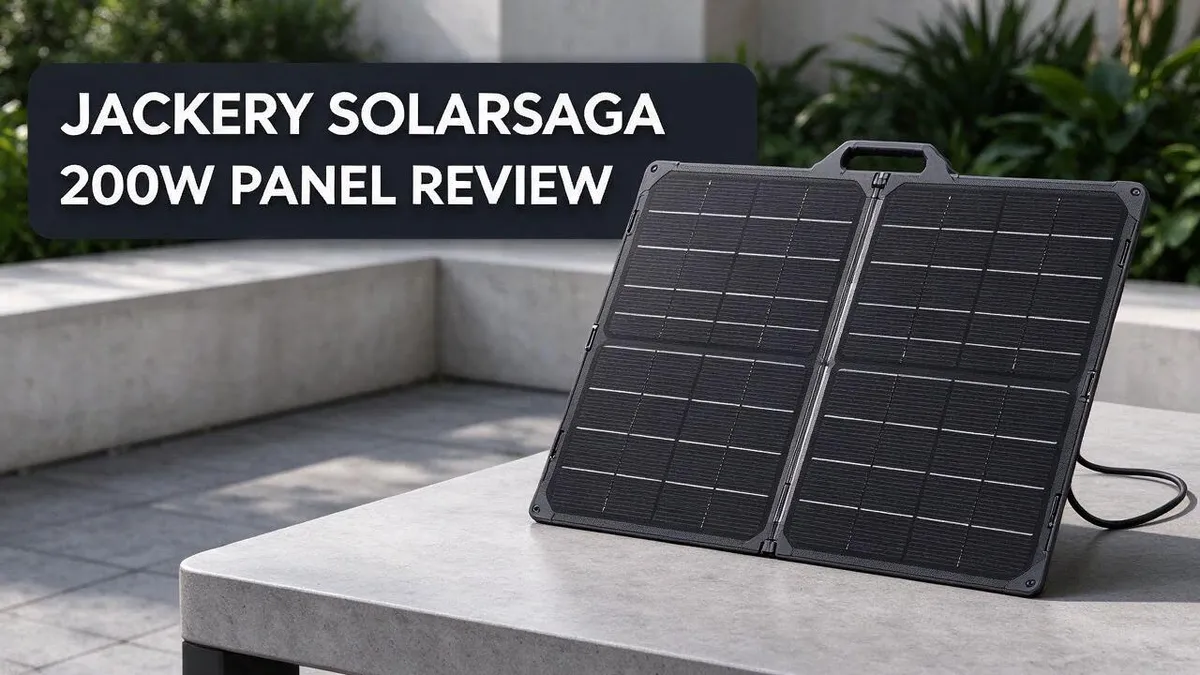
Jackery SolarSaga 200W Review: Specs, Performance, Charging Speed, and Verdict
Need a solar panel that goes wherever you go? The Jackery SolarSaga 200W could be a strong pick. It folds down into a compact shape and weighs about 8.3 kg, so it is easy to carry on a hike or to a campsite.
Setup feels quick. Three kickstands hold the panel steady, so you can aim it at the sun. Its bifacial cells also catch reflected light, which can add a little extra power.
Here is the honest part. Charging can feel slow, especially with power stations above 1,000Wh. You should also avoid mixing it with 100W panels, since that can trip your power station. Still, for camping trips or emergency backup, this panel offers a useful mix of portability and output.
In a Nutshell
-
Rugged build for outdoor life: The high IP rating helps this panel handle dust and moisture. Campers and emergency kit users can leave it outside without much worry about rain.
-
The back side adds a bonus: Bifacial cells pick up light that bounces off sand, snow, or a pale tarp. This extra input can add energy on bright days with reflective ground.
-
Check your power station first: Your station’s input limits matter before you connect anything. Mixing this panel with a 100W model can trip the station, so keep your panels matched.
-
Compare the next step up: The EcoFlow NextGen 220W offers more power for people who need faster input. Heavy users who run large loads may prefer that option.
-
The 100W sibling fits smaller setups: The SolarSaga 100W works well for lighter gear and smaller batteries. It suits people who want a simple charger for phones, lights, and small devices.
-
Overall verdict: This panel fits campers, road trippers, and backup planners well. It offers a practical mix of portability and output for everyday outdoor power needs.
Design and Build

- Bifacial Solar Conversion: Featuring bifacial solar conversion coupled with our cutting-edge IBC technology...
- Ultra Fast Solar Charging: Experience the pinnacle of solar charging efficiency with our 200W power rating...
Last update on 2026-11-05 / Affiliate links / Images from Amazon Product Advertising API
When you look at the Jackery SolarSaga 200W, the first thing you notice is its compact shape. The panel folds down into a neat package.
When closed, it measures about 61.5 by 54 by 4 centimeters. That size fits into many car trunks and gear bags.
Weight matters too, especially on long hikes. The panel weighs 8.3 kilograms. One adult can carry it without much effort.
A sturdy handle makes lifting simple. You grab it, tuck the panel under one arm, and walk to your camp.
The folding design also keeps packing simple. You fold the panel and slide it into your vehicle. Keep the panel closed while you drive. This habit helps protect the surface from bumps and scratches.
Next, look at the kickstands. The panel uses three of them to hold its angle. Each stand adds support when you set it up. Stable support helps the panel face the sun during the day.
Rain and dust matter for outdoor gear. Product sources list different IP ratings for this panel. One lists IP67, while another lists IP68. Check the label on your own unit before you rely on it in wet weather.
Cable care also matters during packing. Keep the connectors dry and clean before you fold the panel. Dirt can cause poor contact over time.
The panel also suits travelers who change spots often. You can set it up on a picnic table, a truck bed, or open ground. Flexible placement makes the design more useful than it first seems.
Think about your daily routine too. Some people set up the panel once at camp and leave it. Others unfold it each morning and fold it each night. Both habits work, but folding every day means more handling.
A simple build also makes repairs easier to plan. Keep the manual and warranty papers in your gear bag.
In short, the design balances size, weight, and portability well. It suits people who move their gear often. Good design makes the panel easier to use every day.
Solar Efficiency and Output
Sunlight drives every watt this panel makes. The Jackery SolarSaga 200W carries a 200W rating. Daily results depend on sun, angle, and weather.
Cell efficiency sets the starting point. The cells reach efficiency up to 25 percent. Research sources list slightly different figures, so check the exact model before you buy.
Angle matters more than many people expect. Lay the panel flat and output often drops. Tilt it toward the sun using the kickstands.
Check the angle every hour or two. The sun moves across the sky, so small adjustments keep input higher.
Timing changes the numbers too. Midday sun usually delivers the strongest input. Early morning and late afternoon bring lower output.
Weather plays a big role. Clouds and haze reduce output noticeably. A partly cloudy day still adds useful power.
Shade can cut output fast. Even a small shadow across part of the panel can slow charging. Keep trees, poles, and gear clear of the surface.
Heat can hold back performance. Solar cells work less efficiently when they get very hot. Leave a little space under the panel so air can flow.
Expect real results to fall below the label. Many users plan for less than the rated 200W on most days. Treat the rating as a best case, not a daily promise.
Test output before a long trip. Run the panel for one full day at home or on a short outing. Track how much charge your battery gains.
Match panel output to battery size. A large station needs more hours of sun to refill. Add extra sunny days to your plan.
Mixing panels needs care as well. Pairing this panel with 100W units without checking limits can trip your power station. Read your station manual first.
Setup and Kickstand Stability
Setting up the Jackery SolarSaga 200W takes only a few minutes. You unfold the panel on flat ground and open each leg. Most people finish the job before their snack is ready.
The three kickstands do most of the work. They hold the panel upright at a set tilt. Push each leg until it clicks into place.
Ground type changes everything. Soft sand or loose gravel can let a leg sink slowly. Place a flat board or a stone under each foot for a firmer base.
Wind is the biggest threat. Strong gusts can tip a light panel within seconds. Place the panel so the wind passes across the surface rather than pushing under it. Add rocks or sandbags to each leg for extra weight.
Check the locks before you walk away. Give each leg a gentle tug. A loose lock can slip as the day warms up and the parts expand.
Link the panel to something fixed. Run a strap or cord from the frame to a tent stake or a sturdy tree. This small step prevents a sudden tip.
Choose a clear spot first. Look for open ground away from branches and overhead wires. Falling limbs can crack the glass surface.
Route the cable with care. Keep the cable out of walking paths. A tripped cable can yank the panel off its stand and damage the connector.
Watch for soft ground after rain. Wet soil loosens quickly. Recheck the legs after a shower or heavy dew.
Pack a few spare items. Bring tent pegs or a small mallet for hard ground. Pegs work well for anchoring the legs on dirt or grass.
Practice at home. Set up the panel in your yard for ten minutes. Watch how the legs hold up in a light breeze. This helps you learn the locks before a trip.
In short, a solid base makes setup easy. Firm ground, locked legs, and a secure strap keep your panel steady all day long.
Top 3 Alternatives
Renogy 200W Solar Panel

- [Industry-Leading 25% Efficiency] 16BB N-Type cells deliver more power from the same sunlight, supporting RV...
- [Lightweight & Magnetic Design] Weighing 13.89 lb and folding to 23.72 x 22.99 x 1.97 in, this 200W panel...

Last update on 2026-11-05 / Affiliate links / Images from Amazon Product Advertising API
The Renogy 200W Solar Panel offers a simple way to add power. It uses monocrystalline cells, so it turns more sunlight into electricity. The frame feels sturdy, and the panel handles light wind with ease.
Best for: off-grid cabins, RV trips, and small backup systems. Many buyers like how easy it is to mount on a flat roof or metal rack.
EcoFlow 220W Solar Panel

- Ultra-Fast Charging, 0–80% in Just 1.13 Hours – Thanks to EcoFlow’s advanced X-Stream technology, DELTA...
- Up to 3400W Continuous X-Boost Mode – Power 99% of Appliances – With an impressive 3400W X-Boost output...
Last update on 2026-11-05 / Affiliate links / Images from Amazon Product Advertising API
The EcoFlow 220W Solar Panel gives you a bit more output in a compact size. It folds, so you can carry it to a campsite or a job site. The kickstand helps you aim the panel at the sun.
Best for: camping, road trips, and mobile work. It pairs well with many portable power stations.
BLUETTI PV200 Solar Panel

- [200W Solar Panel] - BLUETTI solar panel w/ solar connector can offer 200W solar power for solar generator...
- [High Cell Efficiency] - Built with monocrystalline solar cells, BLUETTI 200W solar panel can convert up to...
Last update on 2026-11-05 / Affiliate links / Images from Amazon Product Advertising API
The BLUETTI PV200 Solar Panel suits people who want steady home backup. It uses efficient cells and a weather resistant build for rain, dust, and heat. You can set it up on a roof or in a yard in a short time.
Best for: storm prep and emergency power. It helps keep lights, fridges, and devices running during outages.
Each of these panels works well for different needs. Pick the one that matches your power goals and your space. Read the specs carefully, so you choose the right fit.
Portability and Field Use
Pairing the panel with a power station changes how you plan a trip. Check the station’s input limits before you leave home.
Keep the 100W sibling at home. Mixing it with this panel can trip the power station. Pack one matched set so the system runs without surprises.
Charging speed matters more with larger stations. A single panel takes a long time to fill a station above 1,000Wh. Plan for a slow top up rather than a full charge in one afternoon.
Think in watt hours, not watts. Add up the devices you plan to run. Divide that total by a realistic daily yield, then add a buffer for cloudy hours.
Campsite arrival order helps too. Set the panel first, then unpack the station and tents. Sun stays on the panel while you work. A quick check of each connector saves time later.
Use a dedicated spot for the station. Place the power station in the shade under a tarp or in the tent vestibule. Heat builds fast inside a sealed car, and batteries dislike heat.
Cold air slows battery charging. Keep the station inside a warm tent on chilly mornings. A panel may need extra hours during winter camps.
Shared trips work better with clear roles. One person handles the panel while another manages the station and cables. Small teams avoid tangled lines and dropped gear. Good communication keeps everyone safe.
Overnight use adds a new twist. Morning sun may charge the station after a cold night. Many campers start the day with a low battery, so early sun helps.
Emergency backup works differently. During a power cut, you may need the panel to top up phones and lights. Keep the panel near the home door so you can set it up fast.
Test the full kit once at home. Run the setup in your yard with the station and cables. You will spot missing parts before the trail does.
Pros and Cons
Pros
- Light enough at 8.3 kg for easy hauling.
- The built-in handle makes carrying simple.
- It folds down into a compact shape.
- The bifacial cells catch light reflected from the ground.
- It offers a strong 200W output for its size.
Cons
- Charging takes a long time on larger power stations.
- One panel may not fill stations above 1,000Wh quickly.
- Fast recharges often need a second panel added to the setup.
- Its slow pace can frustrate anyone who needs power right away.
Who Should Buy It
This panel suits certain buyers best. Think about how you spend your free time and what gear you already own. The right fit matters more than any spec sheet.
Weekend campers with small stations will benefit most. A modest battery can refill during a sunny afternoon. Phones, lights, cameras, and a small fridge stay powered.
Van and overlanding travelers also make good matches. The panel can ride in a cargo area and come out at each stop. Morning sun then keeps the battery topped up.
Photographers and drone pilots carry many batteries. Charging them at a sunny base camp keeps every shoot on schedule. Spare packs stay ready for the next flight.
Remote workers at rural cabins need steady daytime power. A laptop and router can run during working hours. Keep a backup source for cloudy days.
Off grid cabin owners with a small shed can store the station indoors. They can run the panel outside during summer months. Winter sun is weaker, so expect less output.
Students and new campers can also learn the basics with this panel. It offers a gentle start for learning solar power at home, with no pressure.
Some shoppers should look elsewhere. People who need fast refills for large batteries may feel held back. Buyers who want maximum wattage could compare the EcoFlow NextGen 220W, which offers more power.
Many people should check compatibility first. They may already own panels or stations from other brands. Compare connector types and voltage ranges before you buy. This small step prevents surprises at the campsite.
Ask three quick questions first. Where will you use it? Which devices need power? How many days will you stay off the grid? Your answers point to a clear decision.
The bottom line is simple. If you camp, travel, or work outdoors on short trips, this panel makes a solid companion. Read reviews from users with similar gear, too. Match the panel to your power needs, and you will likely feel satisfied.
Final Verdict
Here is the bottom line. The Jackery SolarSaga 200W is a solid choice for the right person. It works best for light, portable charging jobs.
Think of this panel as a tool with a clear purpose. It does not try to be everything for everyone. That honesty makes the decision easier.
The biggest question is size. Match the panel to your power station. A small station will charge without fuss. A large station will need more time or another panel.
Its strengths are easy to see. The panel moves well, sets up quickly, and handles basic backup needs with confidence. Those traits matter most when you value convenience over raw speed.
Its weak spots deserve equal attention. Slow charging can test your patience. If you rely on fast refills, look at other options first.
Sunny days give the best results. Cloudy skies stretch charging times, so plan extra hours for gray weather.
Compared with EcoFlow NextGen 220W, the Jackery feels more like a portable companion. The EcoFlow panel offers more power. Your needs decide which feeling wins.
Keep the 100W sibling as a backup plan. It serves as an extra piece for lighter days, but mixing it with the 200W panel can cause trouble. Keep them separate unless your station clearly allows it.
Third party panels also deserve a look. Some may fit your gear better. Check connectors and output limits before you commit.
Here is a quick test. Write down your top three uses before you decide. Then ask how often you will move the panel and how fast you need power. Your answers point the way.
Final answer: This panel earns a place in a camping kit, a van setup, or a light backup plan. It asks for patience in return. Plan around that trade and you will likely feel satisfied with your choice.
Frequently Asked Questions
What makes the efficiency numbers differ?
Sources list the cell efficiency anywhere from 24.3% to 26.7%. The gap likely comes from different test methods and cell types. Check the product label for the official rating before you compare it with other panels. That number gives you the most reliable starting point.
How fast is the setup?
The three kickstands let you tilt the panel toward the sun. Most people finish setup in a few minutes. Choose a spot with no shade from trees or rocks. Even a small shadow can slow down the charging.
Is it weather resistant?
The panel carries an IP67 or IP68 rating, depending on which listing you read. Both ratings mean it resists dust and water. Still, bring it inside during heavy storms or strong winds. Regular care helps the panel last longer.
How do I keep it clean?
Dust, pollen, and bird droppings can block sunlight and lower output. Wipe the glass with a soft cloth and clean water. Skip harsh chemicals, because they can damage the surface. A quick wipe before each charging session keeps the panel working at its best.

DK is a technology expert who specializes in AI tools, software, and tech gadgets. He writes for How to Tech Info, providing detailed reviews and practical guides. DK helps readers discover the best AI applications, navigate new software, and choose the right tech gadgets.