
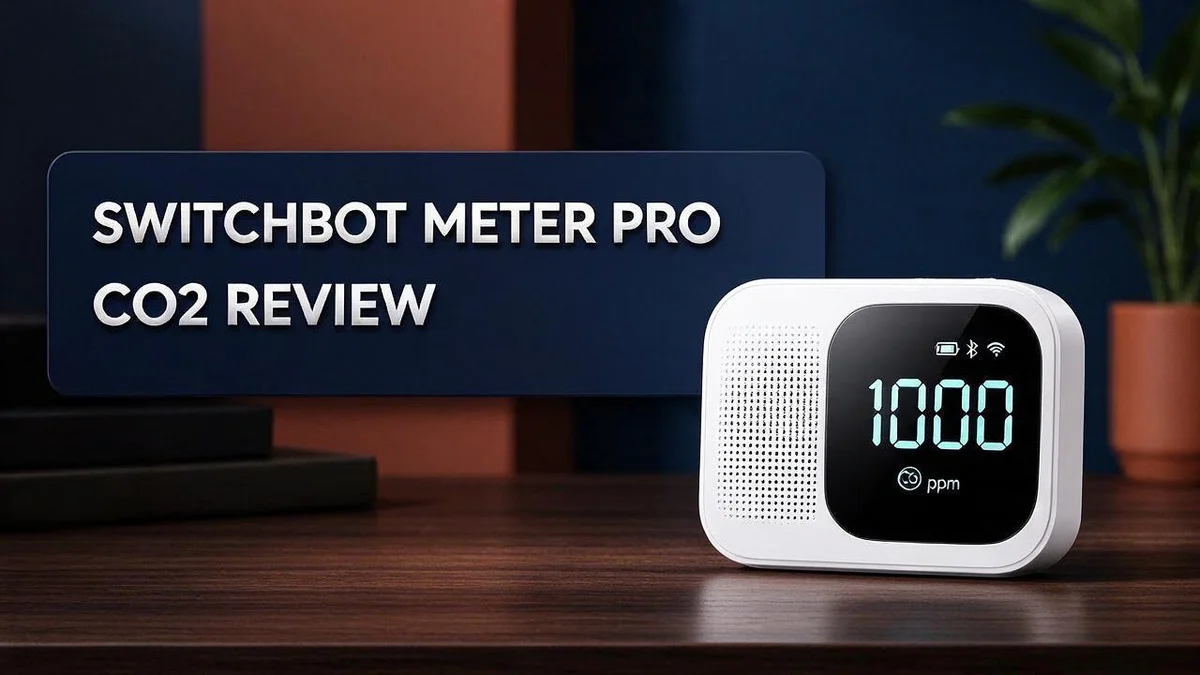
SwitchBot Meter Pro CO2 Review: Accuracy, Alarms and Smart Home Integration
Have you ever walked into a room and felt stuffy or sleepy? Stale air often causes that feeling. Most people never check their indoor air.
A good indoor air monitor changes that. It shows you what you cannot see. The SwitchBot Meter Pro CO2 aims to do exactly that.
This compact device tracks carbon dioxide, temperature, and humidity. It uses an NDIR CO₂ sensor for reliable readings. Accuracy sits at plus or minus 50 ppm across 400 to 9,000 ppm, which covers most real world conditions.
Here is the best part. The screen is easy to read from different angles. It also works as a five in one weather station. Readings can pass to Home Assistant, so smart home fans can build their own automations.
Let us explore its features, alarms, and performance. Find out if it fits your space.
In a Nutshell
-
Accurate readings you can trust: The NDIR CO2 sensor stays within plus or minus 50 ppm across 400 to 9,000 ppm. That range covers everything from fresh outdoor air to crowded rooms, so you always know where your air stands.
-
Made in Switzerland: The temperature and humidity sensor comes from Switzerland. This adds confidence to every reading, especially when you track comfort levels over long periods.
-
Smart home ready: Recent updates let the meter pass CO2 data to Home Assistant. You can then use that data to build your own automations across other devices in your home.
-
Three ways to get alerted: Alarms arrive through the app, a sound, or a flashing light. You can also confirm them remotely, which helps when nobody is home.
-
Weather station bonus: The LCD display doubles as a weather station, so you get more than air data at a glance.
-
Strong early verdict: Research found no documented drawbacks. This makes the meter a solid choice for anyone who wants reliable air data at home or at work.
CO2 Sensor Accuracy and Measurement Range

- 5-in-1 Multi-Functional Display Screen: SwitchBot Meter Pro CO2 features a 92-millimeter large screen that...
- High Precision Sensor: Built with Swiss-made NDIR sensors, this CO2 monitor accurately monitors air quality by...
Last update on 2026-11-05 / Affiliate links / Images from Amazon Product Advertising API
Carbon dioxide levels tell a clear story about your space. Outdoor air usually sits near 420 ppm. Indoor readings climb when people breathe in a closed room.
Most homes stay below 1,000 ppm. Levels around 800 ppm suggest good airflow. Readings above 1,000 ppm often mean the room needs fresh air.
Above 1,500 ppm, many people feel drowsy or foggy. Those symptoms often appear before anyone notices the stale air.
Carbon dioxide absorbs infrared light at a known wavelength. Gas molecules soak up that light, so the sensor measures how much gets blocked.
This method does not rely on a chemical reaction. Chemical sensors can drift over time, while optical sensors tend to stay steadier.
Readings respond quickly to changes. Open a window or leave a crowded room, and the number drops in real time.
Temperature and humidity shape how comfortable a room feels. Seeing all three numbers together helps you spot patterns.
Think about where you place it. Keep the meter away from vents, windows, and direct sunlight. Those spots can give misleading numbers.
Place it at breathing height on a shelf or desk. That spot gives you a fair picture of the air you breathe.
Tracking over days reveals patterns a single reading misses. Morning levels may differ from evening levels in a bedroom.
Use the numbers as a guide. Aim to keep readings under 1,000 ppm in bedrooms and offices. Lower levels usually mean better sleep and focus.
Small changes make a big difference. Crack a window for ten minutes, then watch the screen drop. Many people see the effect right away.
Remember what the sensor cannot do. It tracks CO2 rather than mold, dust, or pollen. Pair it with other tools for a full air check.
Bottom line for accuracy. The sensor gives steady numbers for everyday rooms. It helps you decide when to open a window.
Display Readability and Viewing Angles
A meter only helps when you can read it fast. Research shows the screen holds up well from side angles. That matters in real rooms, because you rarely stand directly in front of a device.
Think about where you sit during the day. Your desk may face a window, while your bed sits in a corner. Good viewing angles let you check the numbers from both spots without moving closer.
Consider a typical morning. You step out of bed and glance at the meter on a shelf across the room. Clear digits help you decide in seconds whether to open a window before work.
Shared spaces add another layer. Families, roommates, and office teams often check air quality from different seats. A screen that stays readable from many positions keeps everyone on the same page.
Readability also helps you spot trends. When you see the same numbers over time, you notice patterns faster. A clear view lets you catch a rising CO2 level before it builds up.
Glare can ruin even the best sensor. Strong sunlight or bright lamps may wash out a screen. Try placing the meter away from direct light. This simple move keeps the numbers easy to read.
Placement works hand in hand with angles. Set the meter at eye level on a shelf or desk. This height gives the clearest view from a standing or seated position.
Finally, check the screen at night. Dim light changes how bright digits appear. Run a quick test at dusk and again in the morning to confirm the display stays easy to read all day.
Good readability builds daily trust. You feel confident when the numbers stay clear from every seat you use. That quick check becomes a habit, and habits keep your home healthy.
Clear screens also make kids and guests feel included. Anyone can glance over and understand the air in seconds. Simple visuals beat complicated menus every time, and that matters for busy households.
Alarm Types and Remote Alerts
Alerts matter most when you are not in the room. The Switchbot Meter Pro CO2 sends warnings straight to your app.
You can check air quality from work, school, or a trip. This remote view gives you peace of mind.
Remote confirmation closes the loop. After an alert, you can confirm it from your phone. That tap tells everyone at home that someone is handling it.
Sound alarms suit sleeping spaces. A beep can wake a light sleeper when stale air builds up overnight. Bedrooms often feel stuffy with the door closed, so a sound alert helps catch that quiet buildup.
Flashing lights suit noisy rooms. A kitchen, garage, or workshop can hide a quiet beep. A bright flash catches the eye instead. It also helps anyone who has trouble hearing.
Mix alerts for full coverage. Use the app for distant checks. Use sound for bedrooms and light for shared rooms. Each method covers a different gap in daily life. Together, they reduce the chance of missing a warning.
Share alerts with the whole household. Parents, roommates, and older relatives may all benefit from app access. A family member can check the app and act when you are away. More people can respond fast.
Use alerts as a prompt, not a chore. When the alarm sounds, open a window or step outside for a few minutes. Fresh air helps, and a short break can reset your focus.
Keep notifications switched on. Alerts only reach you when your phone stays connected and allows notices. Check these settings after any phone update.
Test each alert after setup. Confirm that the phone buzzes and the device sounds or flashes in each room. A quick check now prevents surprises later.
Clear alerts turn a simple meter into a helpful guard. You respond faster, and fresh air returns sooner.
Top 3 Alternatives
Aranet4 Home

- RESULTS IN MINUTES: Patented ultra-low-power architecture for maximum efficiency - the only truly portable...
- BATTERY POWERED: Digital radon detector with up to 7-year lifetime using 2 AA batteries.
Last update on 2026-11-05 / Affiliate links / Images from Amazon Product Advertising API
Aranet4 Home is a great pick for people who want accurate CO2 readings. It uses a true NDIR sensor, so the numbers stay reliable over time.
The e-paper screen stays easy to read, even in bright rooms. You can also check your data on your phone through Bluetooth.
Airthings View Plus

- ALWAYS-ON AIR QUALITY SENSORS: WiFi connected indoor air quality monitor measuring radon gas, PM2.5 (air...
- ACCURATE DIGITAL RADON DETECTOR: Radon is the number one cause of lung cancer among non-smokers and kills more...

Last update on 2026-11-05 / Affiliate links / Images from Amazon Product Advertising API
Airthings View Plus does more than track CO2. It also measures radon, volatile organic compounds, and particles in the air.
This makes it a smart choice for families who care about overall air quality. The glowing LED display shows the key numbers at a glance.
Temtop M10

- Indoor Air Quality Monitor with Temperature & Humidity Tracking: Monitor CO2, PM2.5, TVOCs, temperature, and...
- Real-Time App Connectivity: Utilize the Temtop app for air quality updates, historical data analysis, and...
Last update on 2026-11-05 / Affiliate links / Images from Amazon Product Advertising API
Temtop M10 is a simple option for anyone who wants quick air checks. It tracks CO2, temperature, and humidity on an easy-to-read screen.
Setup takes only a few minutes, so you can start using it right away. It works well in bedrooms, offices, and classrooms.
Temperature and Humidity Readings
The Switchbot Meter Pro CO2 also tracks temperature and humidity. It uses a Swiss made sensor for these readings. Good data in these areas gives you a fuller picture of your home.
Humidity often hides in plain sight. Air that feels fine can still hold too much moisture. Over time, that moisture may settle on walls, window frames, and fabrics.
Mold grows best in damp corners. Watching humidity helps you catch problems early. A steady number tells you when to run a dehumidifier or open a vent.
Dry air brings its own issues. Winter heating can pull moisture from the air. Dry rooms may irritate your skin, eyes, and throat. They can also cause wooden furniture and floors to crack.
Many people aim for a humidity level between 40 and 60 percent. This range suits most homes. Your own needs may vary, so use it as a starting point.
Temperature changes the story too. A warm room holds more moisture than a cool one. That means a humid summer day can feel heavier than the numbers suggest.
Reading temperature and humidity together helps you spot patterns. Try checking the meter at the same time each morning. You may notice that the bedroom gets warmer after dinner.
Plants and pets feel these shifts too. Many houseplants prefer steady humidity. Pets can also struggle when the air turns too dry or too stuffy.
Pay attention to sudden jumps. A quick rise can point to a leak, a steamy shower, or a wet load of laundry. Spotting these spikes early saves time and stress.
Consider the spot where you place the meter. Keep it away from heaters, sunny windows, and humid bathrooms. Those spots can give false highs or lows and skew your picture of the room. Give the sensor a few minutes to settle after you move it.
Use these readings to guide small changes. Close curtains on hot afternoons. Run a fan while cooking. Small steps keep your home balanced all year long.
Pros and Cons
Pros
- Accurate CO₂ readings across a wide range of 400 to 9,000 ppm
- Screen viewing angles rated good, so the display is easy to read
- Three alarm types: app, sound, and flashing light
- Remote confirmation lets you check an alert from your phone
- Readings pass to Home Assistant for smart home fans
Cons
- No downsides are documented in current research
- No safety rating is listed in current research
- Competitor comparisons are not covered yet
- Home Assistant sharing needs a smart home setup
Who Should Buy It
The Switchbot Meter Pro CO2 suits many different people. It works best for anyone who wants clear facts about the air at home or work. Clear numbers help people make better choices each day.
Busy families with young children can benefit a lot. Kids spend long hours indoors, and one quick glance shows whether a room needs fresh air.
Parents of newborns often feel that extra care is needed. A small screen gives them a simple way to check a nursery without guessing.
People who work from home also gain a lot from this meter. A stuffy desk corner can drain focus, and the readout makes that problem easy to spot. Long days at one desk also call for regular breaks.
Older adults who live alone may like the simple setup. A glance at the screen gives a clear answer, so there is little to figure out.
Renters and first time homeowners may appreciate its flexibility. It runs as a standalone gadget, so you do not need a full smart home to start.
Teachers and small shop owners can use it in shared rooms. Classrooms and shops can fill with stale air fast when many people gather.
Students sharing a small dorm room can use it to see how quickly air changes with two people inside. Shared rooms often hold more carbon dioxide than people expect.
Hobbyists with grow tents or fermentation projects may want a precise gauge. The sensor covers a wide range, so high readings still show clearly.
Curious data fans will enjoy the numbers. Tracking CO2 across a full day reveals patterns you might otherwise miss.
Shoppers who need a safety certified device should look elsewhere. The research lists no safety rating, so this tool works best as a helpful guide, not a certified safety product.
Think about your daily routine before you decide. If you want clear air data in a simple form, this meter fits your needs well.
Final Verdict
The Switchbot Meter Pro CO2 earns a strong place in most homes. It tracks carbon dioxide, temperature, and humidity in one small device.
Our overall verdict is positive. The readings feel dependable. Most people will feel confident using it every day.
Daily habits matter most. A meter only helps when you check it often. This one makes checking easy because the screen reads well from different spots in a room.
Alerts add real value on busy days. A sound warns you from another room. A flashing light catches your eye at night.
Setup takes very little time. Place the meter at about breathing height. Keep it away from windows, vents, and cooking areas.
Give the device a day to settle. Then watch how the numbers change through the morning and evening.
The smart home link only helps if you already run a hub. Without one, you can still use the app and alerts.
Some buyers may want more information before deciding. Competitor comparisons are not part of this review yet. Compare features side by side if you want a wider view.
Also check the safety details for your needs. Current research does not list a safety rating for this device.
Our final advice is simple. Choose this meter if you want clear air data in plain language. Pair it with good ventilation habits for the best results.
Treat the readings as a helpful guide. They show trends well, but they do not replace medical advice.
Air quality changes through the day. Keep a simple log for one week. You will see your own patterns clearly.
Overall, the Switchbot Meter Pro CO2 offers accurate tracking, a readable display, and useful alerts. It suits busy homes, shared rooms, and hobby spaces well. Start tracking your air today and act on what the numbers show.
Frequently Asked Questions
Can this meter detect carbon monoxide?
No, it measures carbon dioxide only. You still need a separate carbon monoxide alarm for that gas. Think of this meter as a guide for fresh air, not a gas safety device.
What CO2 level should I aim for indoors?
Many people use about 1,000 ppm as a simple target. Readings below that level usually mean fresh air is moving well. When the numbers climb higher, open a window or step outside for a few minutes.
Why do the numbers change so fast?
CO2 rises when people breathe, cook, or sit together in one room. The level drops quickly once fresh air comes in. This is why a short window break can make a big difference.
Can I use it in a bedroom at night?
Yes, many people place it on a nightstand or shelf. Closed bedrooms often show higher numbers by morning. Crack the door or open a window a little to keep the air moving.
How often should I check the readings?
Look at the display a few times each day. Check it during busy meetings, study sessions, or cooking. Over time, you will spot patterns that show when your room needs fresh air.

DK is a technology expert who specializes in AI tools, software, and tech gadgets. He writes for How to Tech Info, providing detailed reviews and practical guides. DK helps readers discover the best AI applications, navigate new software, and choose the right tech gadgets.


