
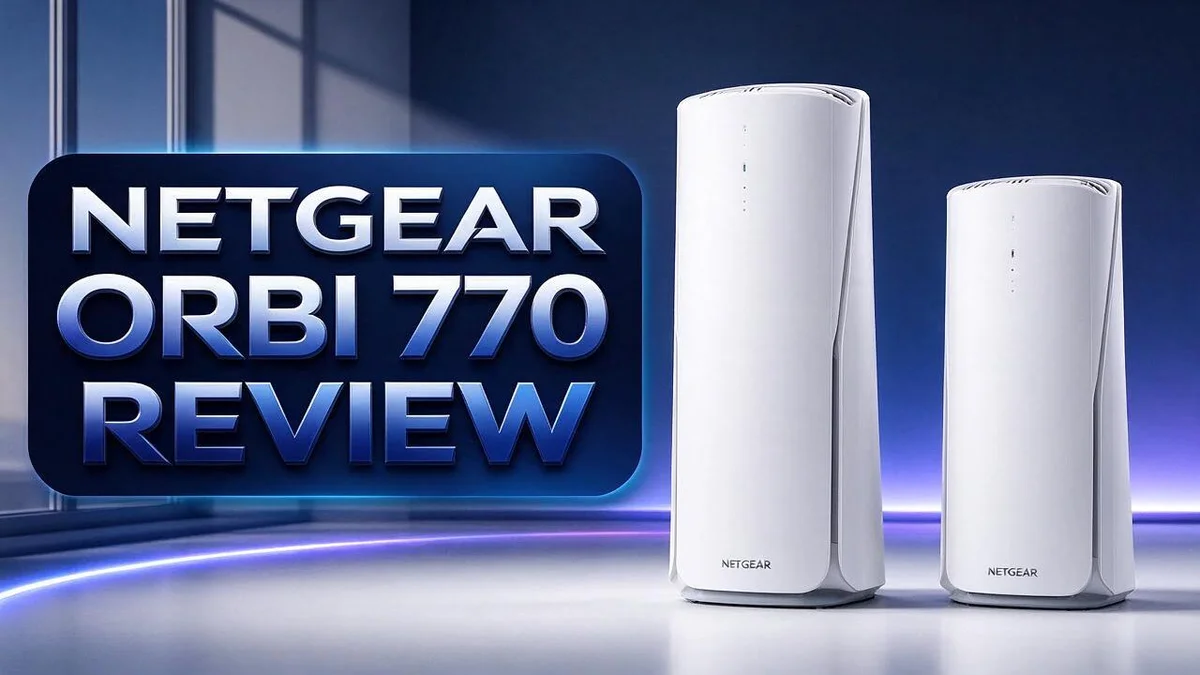
Netgear Orbi 770 Review: Wi-Fi 7 Mesh Performance, Coverage, and Verdict
Is your home WiFi slowing down every evening? Many families face dead zones, buffering videos, and laggy video calls. A strong mesh system can fix that.
The Netgear Orbi 770 (RBE773) is one of the newest options. It uses WiFi 7 and a tri band design. That means three radios work together to keep your devices fast.
Each unit has 2.5 Gbps Ethernet ports. The 6 GHz radio supports a 320 MHz channel width. Setup feels easy, and the app keeps things neat.
In this review, we look at real performance, range, and daily use. You will learn where this system shines and where it falls short. Keep reading to see if the Orbi 770 fits your home.
In a Nutshell
- Simple setup: The mesh units connect with ease. Most households can get online without special tech skills or long waiting times.
- Dedicated backhaul: A separate third band links the units together. Your main devices keep their speed, even when they sit far from the main unit.
- Lower lag: This model delivers less delay than WiFi 6 systems. Gamers and video call users often notice the difference first.
- Strong all around results: The system handles streaming, browsing, and work tasks well. Busy homes with many connected devices stay steady during peak hours.
- Handy app: The companion app keeps controls simple. You can check connected devices and adjust settings right from your phone.
- Satellite range limit: Satellite units lose strength quickly as distance grows. Place them with care so each one keeps a strong link to the main unit.
Wi-Fi 7 Speed and Throughput

- WHOLE-HOME COVERAGE WITH NO DEAD ZONES: The router plus satellites create a seamless mesh system that blankets...
- EVERYONE ONLINE AT ONCE, NO SLOWDOWNS: Tri-Band technology with Enhanced Backhaul helps deliver faster WiFi...

Last update on 2026-11-06 / Affiliate links / Images from Amazon Product Advertising API
The Netgear Orbi 770 uses WiFi 7, the newest standard for home networks. This standard moves more data at once. Speed gains show up most on busy networks.
The router uses three bands. The 6 GHz band is the star here. It gives devices a clean lane because fewer older gadgets share it.
The system also uses a wide 320 MHz channel. Wider channels carry more data per trip. Your phone and laptop can grab that extra room for big downloads.
Rated numbers look huge on paper. The 5 GHz band lists up to 4320 Mbps, while the 6 GHz band lists up to 5760 Mbps. Real speeds will land lower, since walls, distance, and device limits all matter.
Real homes rarely reach the peak numbers. Most users see strong speeds near the router. Rooms farther away will still stream and browse without trouble, though speeds drop a bit.
Device support matters too. Your gadgets must support WiFi 7 to use the full power. Older phones and laptops will still connect, but they use the older standards.
Good speed helps with 4K streaming and cloud backups. The rated 11 Gbps streaming figure suggests plenty of headroom for many devices at once. Heavy households will likely feel the benefit most.
Gaming gets a boost from the 6 GHz band too. Fewer crowded channels mean less interference during matches.
Think of the 6 GHz band as an express lane. Light traffic moves faster, and everyone gets a smoother ride.
Overall, the Orbi 770 offers a clear step up in raw speed. Its WiFi 7 features suit homes with many active devices.
Mesh Coverage and Satellite Range
Placement decides your coverage. Start with the main router in a central spot. Keep it off the floor and away from thick walls.
Satellites work best when they sit halfway between the router and the weak area. Place them too far, and the link to the router weakens fast.
Try a quick walk test first. Carry your phone from room to room. Note where the speed drops. Then move a satellite to that spot and test again.
Count the walls and floors. Each brick wall or concrete floor blocks signal. A satellite behind two walls may struggle. Pick a spot with a clear line to the router when you can.
Give fixed devices a wired link. A TV or game console can plug into a satellite. This leaves more bandwidth for phones and laptops.
Expect a shared load. Satellites use the same network path as your main router. Heavy use in one room can slow others.
Do not forget the basement. Mesh units cover inside spaces best. Patios and sheds often need a separate plan or a unit near a door.
Recheck after big changes. New furniture or a new appliance can shift signal. Run your walk test again after big changes.
Watch for the signal bars trap. Full bars on a phone do not always mean fast speeds. Run a speed test in each room for a clear picture.
Think about your daily routes. Place units along the paths people use most. Hallways and stairs often matter more than empty corners.
Small moves can make a big difference. Shift a satellite a few feet and test again. Many homes gain strong coverage this way.
Plan before you add more units. Sketch your floor plan first. This helps you choose the right number of satellites.
Setup and Companion App
Getting started takes less time than many people expect. Place the main router near your modem first. Connect the two with an Ethernet cable, then power on the unit and wait for the light to settle.
Next, open the companion app on your phone. It guides you through creating a network name and password. Pick a name that is easy to remember, because every device will ask for it later.
Satellites join the network in a different way. Plug each one into a power outlet near the main router during the first setup. Once the light turns solid, move it to its final spot. This small step helps the unit link with the main router before it goes to work.
Watch the status light before you walk away. A steady color means a strong link. A blinking or amber light often means the satellite sits too far away, so move it closer and try again.
Firmware updates often happen in the background. The app will tell you when a new version is ready. Allow the update to finish before you unplug anything, because interrupting it can cause trouble.
Use the app for daily checks too. You can see which devices are online, pause access for a child, or rename a device so it is easy to spot. Give each device a clear name to save time later.
Finally, run a quick speed test in the app. Test from a room near the satellite and another far away. The results show whether the setup works as planned. A good result near the satellite proves the link works. Keep notes of your results so you can compare them after furniture moves.
Top 3 Alternatives
eero Pro 7

- WIFI AT THE SPEED OF LIFE - eero Pro 7 brings next-generation speed and reliability to home and business...
- RELIABLE CONNECTIVITY - eero Pro 7 helps eliminate dead spots, so you stay connected across different floors...
Last update on 2026-11-05 / Affiliate links / Images from Amazon Product Advertising API
Want a simple mesh system that just works? The eero Pro 7 offers easy app-based setup and Wi-Fi 7 speeds. Its tri-band design helps keep devices connected across large homes.
Parents often like the built-in parental controls. The system also keeps video calls steady, even when many people stream at once.
TP-Link Deco BE85

- 【Ultimate BE22000 Tri-Band Wi-Fi 7 Speeds】Deco 7 Elite BE85 is designed with the latest Wi-Fi...
- 【Pro-Grade Dual 10G WAN/LAN Ports】Equipped with two 10G WAN/LAN ports—one RJ45 port and one SFPplus...
Last update on 2026-08-16 / Affiliate links / Images from Amazon Product Advertising API
Need more power for a busy household? The TP-Link Deco BE85 delivers fast Wi-Fi 7 speeds for many devices at the same time. Its tri-band mesh design reduces congestion from smart TVs, laptops, and gaming consoles.
Multiple 2.5 Gbps ports help wired devices run at full speed. This makes the Deco BE85 a good pick for gamers and home offices.
TP-Link Deco BE63

- ...
- ...
Last update on 2026-11-05 / Affiliate links / Images from Amazon Product Advertising API
Want reliable coverage without extra features? The TP-Link Deco BE63 uses Wi-Fi 7 dual-band technology for smooth browsing and streaming. It suits apartments and medium-sized homes well.
Setup takes only a few minutes through the Deco app. Each unit guides you step by step, so you can place nodes where they work best.
Wired Ports and Backhaul Design
The Orbi 770 gives each unit 2.5 Gbps RJ45 Ethernet ports. These ports let you connect cables right where you need them.
Wired devices often need steady speed more than anything else. A desktop PC, a smart TV, or a home office dock can plug straight in.
A cable skips the airwaves completely. That means fewer drops and less interference from thick walls and busy neighbors.
Satellites can also connect with a cable. This setup is called wired backhaul, and it moves data between units without using the wireless signal.
Wired backhaul frees up wireless space for your devices. Your phones and laptops can then use more of the airwaves.
Cable placement matters a lot. Run a short cable along a baseboard or through a closet. Keep it away from heavy foot traffic to avoid damage.
The 770 does not include the 10 Gig port found on the higher Orbi 970. Its wired port speed is lower than the top tier, but it still feels fast.
Most homes will find 2.5 Gbps plenty for daily tasks. Large file transfers between PCs may take longer than on a faster network.
Start with a short cable between your modem and the main router. Use a Cat 5e or Cat 6 cable for the best results. Then test each port with a quick speed check in the app.
Label each cable once it is in place. This small step saves time during future changes.
Wired ports also help during busy evenings. A gaming console on a cable can stay steady when others stream video.
Wired and wireless setups work well together. Use cables for fixed gear and WiFi for mobile phones and tablets.
Latency for Gaming and Video Calls
Latency is the delay between sending a signal and receiving a reply. For gaming and video calls, low latency often matters more than raw speed. A fast connection with high delay still feels slow.
The Orbi 770 uses Wi-Fi 7, which delivers lower latency than Wi-Fi 6. Your moves in an online match reach the server faster. Your voice also travels with less lag during a call.
Timing matters as much as the hardware. Most people game at night when many devices share the network. Streaming and large downloads compete for the same airwaves. Lag spikes often hit during these busy hours.
Jitter is another enemy of smooth calls. Jitter describes small changes in delay from one moment to the next. Video calls freeze or sound choppy when jitter rises.
Test your connection while a match or call runs. Watch the ping number in your game settings. A steady ping below 50 milliseconds usually feels good for online play.
Quality of service settings can also help. Give your gaming console or laptop higher priority. This tells the router to send that traffic first. Pause large downloads during important matches or meetings.
Restart the router once a month. This clears small glitches that can add delay. A quick reboot often brings lag back to normal.
Close background apps on your computer. Turn off cloud sync and automatic updates during calls. Your device then has more room for sending and receiving data.
Pick a time that works for everyone. Early mornings often feel quieter than evenings. Small changes in timing can make a big difference for calls and games. Low latency keeps your sessions smooth and fun.
Subscription Costs and Value
Many buyers ask what comes after setup. The Orbi 770 works without any ongoing plan for basic internet use.
Netgear also offers an optional subscription. It adds extra tools for your home network.
Extra tools may include security features. Some plans block harmful sites for every device. Others let you pause internet access at bedtime.
Parents often find these controls very useful. Smart homes may also gain device alerts.
Before you sign up, list what you really need. If your home already has strong passwords, you may not need extra protection. If children use many gadgets, controls may save time.
Read what each plan includes. Check how long it runs. Check your device list before deciding.
Renewal dates matter. Many subscriptions renew each year without a reminder. Set a calendar alert a few days before renewal. This habit keeps surprises away.
Keep the plan details in a safe place.
Also think about the hardware first. The router itself handles speed, range, and wired links. A subscription adds features on top of that. Your network still works if you skip the plan.
Households with many users gain the most. A family with teens, guests, and smart speakers may need more control. A couple with few devices may not.
Some people also like the alerts. These messages arrive by email or app. They can warn you about unusual activity.
Finally, compare the plan with your daily habits. Ask who uses the network most. Ask which devices need extra guarding.
Write down your answers. Then decide if the extra feature fits your home.
Pros and Cons
Pros
– Easy setup gets the mesh network running quickly.
– Strong all-around performance handles everyday tasks well.
– The app feels neat and simple to use.
– Three bands give the satellites a dedicated backhaul connection.
Cons
– Satellite range drops off notably.
– Wired port speed trails the higher tiers, though it stays fast.
– Power users may want more headroom for the fastest speeds.
Who Should Buy It
The Orbi 770 suits people who want a fresh start for their home network. If your old router cannot reach every room, this system can help. It spreads a strong signal from one corner of the house to the next.
Families with older routers often notice the biggest change. Many older units slow down when several screens stream at once. This kit keeps video smooth for each person in the house.
Homes with two or three floors also fit the Orbi 770 well. Walls, stairs, and metal fixtures can block signals. Units placed on each level fill those gaps.
Home offices are another strong match. A desk near a wired port can use that connection for steady, fast transfers. Large files and cloud backups move with less waiting.
Renters and people who move often also benefit. The system packs up in one box. You can set it up again in a new place without much fuss.
Hosts who often welcome guests will appreciate the steady connection. Visitors can join the network without long waits or constant drops.
Older houses with thick plaster or brick walls also gain from mesh units. Signals often weaken in those spaces. Placing units in open hallways helps the signal travel further.
On the other hand, some people should look elsewhere. A small flat with one room to cover does not need three units. Shoppers who need the strongest hardware in the family may prefer a higher model instead.
Think about your floor plan first. Count the rooms that need strong coverage. Then decide if this system fits your home.
In short, the Orbi 770 fits busy, spread out homes best. It suits people who want a clear, simple network above all.
Final Verdict
The Netgear Orbi 770 earns a spot on the shortlist for most homes. It brings Wi-Fi 7 speeds in a clean, modern package. Lower latency than Wi-Fi 6 means smoother video calls and online games.
The 6 GHz band deserves special attention. It gives your devices a quieter lane for data. Busy households often feel the difference when many gadgets compete for airtime.
Think about your internet plan before you buy. If your provider delivers modest speeds, you may never use every feature. Match the hardware to what your home truly needs.
The 2.5 Gbps ports also help with certain setups. A desktop, game console, or network storage drive can use that extra room. Wired connections stay steady even when the wireless network gets crowded.
Some shoppers may prefer the Orbi 970 instead. It offers four radio bands, a 10 Gig port, and much higher top speeds. Those who want the most future room should compare the two directly.
Future planning counts too. Wi-Fi 7 devices are arriving, and this system is ready for them. Buying now can delay the next big upgrade.
Think about the final layout too. Place the main unit near your modem for the strongest start. Give each satellite a spot with clear sight lines to the main unit. Good placement helps every room get a fair share of speed. Take a few minutes to test speeds in each room.
Overall, the Orbi 770 delivers a strong blend of speed, reach, and easy daily use. It suits most homes that want Wi-Fi 7 without extra fuss. Set realistic expectations for distant satellites, and this system will serve you well.
Frequently Asked Questions
Does the Orbi 770 work well for online gaming?
Yes, it does. The Orbi 770 shows lower latency than Wi-Fi 6 systems. Lower lag means faster responses in online games. Gamers can also connect a console to one of the 2.5 Gbps ports for the steadiest link.
Do older devices get the full speed?
Not always. Older phones and laptops cannot reach the top rated rates. The Orbi 770 lists speeds up to 5760 Mbps on the 6 GHz band, but only newer devices can use that range.
Are the rated speeds realistic for daily use?
The rated numbers are maximum lab figures. Real speeds depend on your devices, your walls, and your distance from the router. Most people will notice a clear jump in speed, even if they never reach the highest numbers.
Where should I place the satellite units?
Place each satellite halfway between the main router and the dead zone. Avoid putting it inside a closet or behind a large appliance. Clear open space helps the signal travel farther and keeps the connection steady.

DK is a technology expert who specializes in AI tools, software, and tech gadgets. He writes for How to Tech Info, providing detailed reviews and practical guides. DK helps readers discover the best AI applications, navigate new software, and choose the right tech gadgets.


