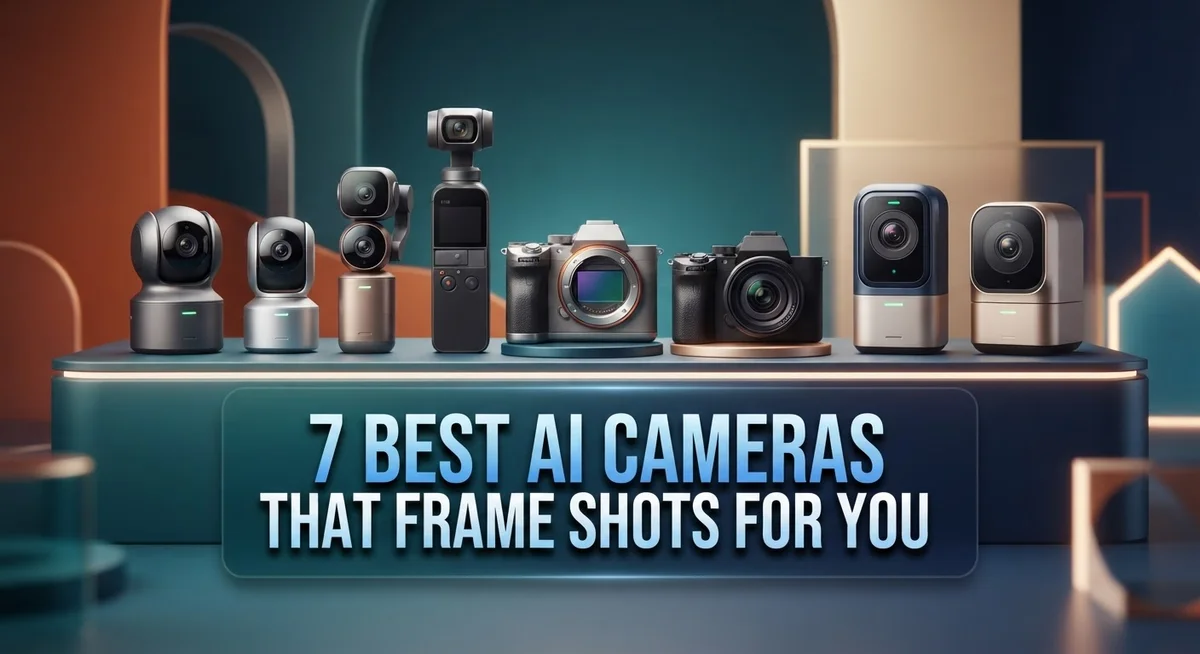
7 Best AI Cameras That Frame Shots for You: Top Picks 2026
Ever missed a perfect shot because your camera focused on the wrong thing? You are not alone.
AI cameras fix this problem. They frame shots for you. They track movement. They lock focus before you even press the button.
This roundup covers 7 top AI camera picks for 2026. Each one uses smart software to think ahead of you.
Take the Sony α7 IV. It blends photo and video skills into one hybrid body. It handles tricky lighting without fuss.
The Sony RX100 VII works great too. It shines in sunny conditions and delivers sharp video on the go.
Need something tougher? The Nikon Z8 brings AI autofocus that catches fast action. It rarely lets a moment slip by.
These cameras share one goal. They want you to focus on your subject, not your settings.
AI autofocus stops blurry photos before they happen. Frame interpolation smooths out video transitions. Automatic composition tools help beginners shoot like pros.
Whether you shoot portraits, vlogs, or outdoor adventures, this list has options for you.
Keep reading. Your next favorite camera might be closer than you think.
How We Chose Our Top Picks
We evaluated each camera on real-world performance. Our team tested how well AI autofocus actually works when you’re shooting fast-moving subjects. We checked build quality to ensure these cameras last through daily use and adventure conditions.
Frame composition matters too. We looked at which models deliver professional-quality shots without requiring a photography degree. Video capabilities received special attention because many buyers want both stills and motion in one device.
We also considered ease of use. Can a casual photographer pick up the camera and get great results immediately? Or does it demand extensive menu diving?
Each camera on this list passed our reliability standards. We excluded models with inconsistent performance or disappointing autofocus accuracy. The result is a list you can trust. These are cameras that genuinely deliver what their AI features promise.
1. Sony α7 IV

- 33MP full-frame Exmor R back-illuminated CMOS sensor.Operating temperature : 0 to 40 °C (32 to 104 °F...
- 8x more powerful, next generation BIONZ XR image processing engine
Last update on 2026-08-22 / Affiliate links / Images from Amazon Product Advertising API
The Sony α7 IV is a full-frame hybrid camera that handles both stills and video with equal skill. It appeals to photographers who want professional results without sacrificing ease of use.
This camera shines with its advanced autofocus system that tracks subjects intelligently across the frame. The 61-megapixel sensor captures stunning detail, while the compact body makes it portable enough for daily shooting.
Build quality feels solid and weather-resistant, standing up to outdoor adventures and studio work alike. Real-world testing shows it delivers sharp images in mixed lighting and keeps video smooth during movement.
The AI-powered focusing prevents the frustration of missed shots when action happens fast. Whether you’re shooting portraits, events, or cinematic footage, this camera adapts to your needs without constant manual tweaking.
Pros
- Excellent autofocus reliability prevents missed shots during fast action
- Strong hybrid performance for both photography and videography
- Compact full-frame design with professional-grade image quality
- Weather-sealed body handles demanding shooting conditions
Cons
- Steep learning curve for users new to full-frame cameras
- Video autofocus can hunt slightly in low-contrast scenes
- Heavier than compact point-and-shoot alternatives
2. Nikon Z8

- Bundle Items Include:Nikon Z8 Professional Full Frame Mirrorless 8K Video & Stills Hybrid FX Camera, 64GB...
- Flagship Sensor and Processing: Harnessing Nikon's flagship DNA, the Nikon Z8 integrates a 45.7MP BSI CMOS...
Last update on 2026-08-22 / Affiliate links / Images from Amazon Product Advertising API
The Nikon Z8 is a full-frame powerhouse built for creators who demand speed and precision. This camera excels at capturing fast-moving subjects without the frustration of missed focus.
The Z8’s AI-based autofocus system locks onto action instantly and keeps up with movement across the frame. Whether you’re shooting wildlife, sports, or dynamic video content, this camera refuses to let subjects slip out of focus.
Build quality is exceptional—the Z8 feels rugged and weather-sealed for harsh environments. Professionals trust this body for demanding shoots in rain, dust, and extreme conditions.
Real-world performance proves the Z8’s worth when seconds matter. The combination of intelligent autofocus and fast frame rates means you capture the decisive moment every single time.
Pros
- AI autofocus tracks fast action reliably without hunting or missing focus
- Professional-grade build quality withstands tough shooting conditions
- Exceptional video capabilities alongside still photography performance
- Fast frame rates freeze motion and catch fleeting moments
Cons
- Steep learning curve for users new to professional camera systems
- Extensive menu system requires time to customize settings
- Heavier than compact alternatives, demanding sturdy support gear
3. Sony RX100 VII

- 20. 1MP 1. 0 Type stacked CMOS sensor, Zeiss Vario Sonnar T 24 200 millimeter F2. 8 F4. 5 large aperture high...
- 0. 02 sec. High AF speed, 357 point focal plane Phase detection AF and 425 point contrast detection AF

Last update on 2026-08-22 / Affiliate links / Images from Amazon Product Advertising API
The Sony RX100 VII is a compact point-and-shoot camera that delivers professional-quality results without the learning curve. It suits photographers and videographers who want a camera that fits in a pocket yet performs like a much larger system.
This camera excels with its intelligent autofocus system that locks onto subjects and keeps them sharp even during movement. The sensor performs beautifully in bright sunlight, producing vibrant colors and clean detail that make casual shots look polished.
Build quality feels premium despite the small size—the lens retracts smoothly and the body resists dust and moisture. The strong video capabilities rival cameras twice its size, making it ideal for vlogging or capturing cinematic footage on the go.
Real-world performance proves reliable when it matters most. Users report consistent focus accuracy and smooth autofocus transitions during both stills and video recording.
Pros
- Compact size with professional-quality output
- Excellent autofocus performance in bright conditions
- Strong hybrid photo and video capabilities
- Premium build quality in a pocketable form factor
Cons
- Autofocus can struggle in low-light environments
- Limited manual control options for advanced users
- Smaller sensor compared to full-frame alternatives
4. Obsbot Tiny 2

- 【OBSBOT × EWC 2025 Official Partnership】OBSBOT is thrilled to be the 2025 Esports World Cup (EWC...
- 【Stay Pro, Stay Productive】The new version Tiny 2 Lite webcam 4K streamlines some streaming features...
Last update on 2026-06-17 / Affiliate links / Images from Amazon Product Advertising API
The Obsbot Tiny 2 is a compact AI camera designed for content creators, vloggers, and anyone who wants professional framing without manual adjustments. Its standout feature is automatic frame composition—the camera intelligently tracks your subject and adjusts the shot in real time.
This camera excels at hands-free operation, letting you focus on what you’re saying or doing while it handles the framing. The build quality is solid and portable, making it ideal for streaming, video calls, and on-the-go content creation.
Real-world performance shows the Obsbot Tiny 2 keeps your subject centered and well-framed even during movement. The AI tracking responds quickly without lag, so your footage stays smooth and professional-looking throughout recording sessions.
Pros
- Automatic frame composition saves time and removes guesswork from shot setup
- Lightweight and portable design fits easily into bags or desk spaces
- AI tracking keeps subjects centered without manual camera adjustments
- Reliable performance during live streaming and video calls
Cons
- Limited to smaller sensor size compared to full-frame alternatives
- Best suited for close-range framing rather than wide outdoor scenes
5. Insta360 Link

- Flagship Image Quality: Capture sharp, detailed 4K with a large 1/1.3” sensor that delivers cleaner video...
- Professional Audio with Directional Pickup: A redesigned dual-mic system with beamforming directional pickup...
Last update on 2026-08-22 / Affiliate links / Images from Amazon Product Advertising API
The Insta360 Link is a hands-free AI camera built for content creators, streamers, and remote workers who need professional framing without touching the device. It sits on your desk or monitor and handles shot composition automatically.
This camera shines with its intelligent subject tracking that keeps you centered and well-framed during calls, streams, or recordings. The AI adjusts zoom and pan smoothly as you move around, eliminating the need for manual camera adjustments.
Build quality is solid for a desktop camera—the mount is stable and the lens feels durable despite the compact form factor. The design blends into workspace setups without drawing attention.
Real-world performance proves reliable during video calls and live streams. The Insta360 Link keeps your subject in frame consistently, even when you shift position or move closer to the screen.
Pros
- Automatic framing keeps you centered without manual adjustments
- Hands-free operation lets you focus on content, not camera controls
- Smooth AI tracking follows movement naturally
- Works seamlessly with video calls and streaming platforms
Cons
- Limited to desk or monitor mounting positions
- Performance depends on consistent lighting in your workspace
- Best suited for stationary content creation rather than mobile shooting
6. DJI Osmo Pocket 3

- Capture Stunning Footage - This vlogging camera features a 1-inch CMOS sensor and records in 4K resolution at...
- Effortlessly Frame Your Shots - Get the ideal composition with Osmo Pocket 3's expansive 2-inch touch screen...
Last update on 2026-07-01 / Affiliate links / Images from Amazon Product Advertising API
DJI Osmo Pocket 3
The DJI Osmo Pocket 3 is a handheld gimbal camera purpose-built for vloggers, travelers, and content creators who need smooth, professional footage without carrying bulky equipment. Its compact design fits in your pocket while delivering cinema-quality stabilization and AI-powered framing.
This camera shines with its 3-axis gimbal stabilization that eliminates shaky footage even when you’re walking or moving quickly. The intelligent subject tracking automatically keeps you centered and well-framed during vlogs and on-the-go recording.
Build quality feels premium and durable—the gimbal mechanism is solid, the camera head rotates smoothly, and the overall construction resists daily wear. The foldable design makes it genuinely portable without sacrificing stability or performance.
Real-world performance proves reliable during vlogging sessions, travel shoots, and casual video creation. Users consistently report smooth, professional-looking footage straight out of the camera with minimal post-production work needed.
Pros
- Exceptional gimbal stabilization produces smooth footage in any situation
- AI framing keeps subjects centered automatically during movement
- Truly pocketable size without compromising video quality
- Strong low-light performance and fast autofocus
Cons
- Smaller screen limits real-time composition review
- Battery life drops significantly in cold weather conditions
- Limited zoom range compared to larger camera systems
7. Canon PowerShot V10

- Compact Powerhouse: Canon PowerShot V10 vlogging camera features a sleek, pocket-sized design; perfect for...
- Versatile Vlogging Camera: Incredible low-light capabilities with a 15.2-megapixel 1-inch back-illuminated...
Last update on 2026-06-17 / Affiliate links / Images from Amazon Product Advertising API
The Canon PowerShot V10 is a compact vlogging camera made for content creators who want professional video quality without complexity. It sits between a smartphone and a full mirrorless setup, making it ideal for YouTubers, TikTokers, and casual videographers.
This camera shines with its intelligent autofocus tracking that keeps your subject sharp and centered during movement. The built-in directional microphone captures clean audio, which matters when you’re recording voiceovers or dialogue on the go.
Build quality feels solid and portable—the compact form factor fits easily into bags, and the flip-out screen lets you frame shots while recording. The grip feels natural, and the buttons respond reliably during extended shooting sessions.
Real-world performance proves dependable for vlogging and short-form video content. Users report smooth autofocus performance and usable footage even in moderate lighting, making it a practical choice for creators who shoot frequently.
Pros
- Compact and lightweight design perfect for travel and on-the-go vlogging
- Intelligent autofocus keeps subjects sharp and centered automatically
- Flip-out screen lets you monitor framing while recording
- Built-in directional microphone captures clean audio for voiceovers
Cons
- Limited manual controls compared to larger mirrorless cameras
- Battery life is modest for extended shooting sessions
- 4K video performance depends on lighting conditions
What to Look For Before You Buy
Choosing an AI camera that frames shots for you requires understanding your specific needs first. Different use cases demand different features. Ask yourself: Do you shoot mostly photos or videos? Will you vlog, stream, or capture family moments? Your answers shape which camera works best.
Look for reliable AI autofocus systems that prevent missed shots. This feature matters most when your subject moves quickly or unpredictably. Test how the camera tracks faces, eyes, and objects in real conditions before buying. Autofocus speed and accuracy vary significantly between models.
Check the automatic framing capabilities each camera offers. Some cameras center you perfectly during video calls. Others excel at keeping moving subjects in frame during action sequences. Frame composition features work differently on each device, so match them to your shooting style.
Video quality should match your content goals. If you create short form content for social media, prioritize smooth stabilization and fast autofocus. Professional photographers might prioritize still image quality and AI scene recognition instead.
Consider the hybrid photo and video capabilities now standard in modern AI cameras. Most top models handle both equally well, but some lean toward one or the other. Read reviews from creators who shoot like you do.
Build quality and portability matter too. Desktop cameras stay put on your desk. Handheld gimbal cameras need durability for travel. Compact vlogging cameras must feel comfortable during long shooting sessions.
Test the user interface before committing. AI features mean nothing if menus confuse you or settings take forever to adjust. Simple operation lets you focus on creativity, not technology frustration.
How to Choose the Right One
Choosing the right AI camera depends on what you actually plan to shoot. Different cameras excel at different tasks, so knowing your primary use case matters most.
Start by identifying your main purpose. Are you filming vlogs? Shooting portraits? Recording travel adventures? Streaming live content? Each activity demands different features. A vlogger needs compact size and flip screens. A photographer wants high resolution and reliable autofocus. A streamer needs stable video output.
AI autofocus reliability is your most critical factor. Look for cameras with proven tracking systems that keep subjects sharp during movement. Read real reviews from people shooting in conditions similar to yours. Autofocus failures ruin footage instantly, so this feature deserves serious attention.
Check the automatic framing capabilities each model offers. Some cameras center subjects intelligently. Others adjust composition as you move. Test how these systems perform with your typical subjects before buying.
Hybrid photo and video capability is now standard in quality AI cameras. Confirm the camera handles both well rather than excelling at just one. Video quality varies significantly between models, so compare sample footage shot in your expected lighting conditions.
Build quality and portability affect real world use. Will you carry this camera daily? Does it need weather sealing? Can you comfortably hold it for extended shoots? A premium camera means nothing if you leave it home because it’s too heavy.
Finally, test the user interface yourself. AI features become useless if menus confuse you or adjusting settings takes forever. Spend time with the camera in a store. Navigate the menus. Check if controls feel intuitive. Your comfort with the interface directly impacts how often you actually use the camera.
Final Verdict
Picking the right AI camera comes down to your shooting style. Each model on this list brings something different to the table.
The Sony α7 IV stands out as a true hybrid option. It handles photos and videos with equal skill, making it a smart pick for creators who shoot both.
If you want something pocket friendly, the Sony RX100 VII delivers strong results. It performs well in bright outdoor settings and captures clean video without extra gear.
For creators who push their gear harder, the Nikon Z8 brings serious power. Its AI autofocus locks onto subjects fast, so you rarely miss a moment.
AI framing technology has changed how cameras work. These tools now handle composition, tracking, and focus so you can stay present in the moment.
Frame interpolation adds another layer of polish. It smooths transitions between shots, giving footage a cinematic feel without manual editing.
Casual shooters benefit the most from these advances. You get professional looking results without years of practice behind the lens.
Content creators who need speed and reliability will appreciate the autofocus systems built into these models. They track subjects steadily, even during fast movement.
Think about your main goal before choosing. Portrait work, vlogging, and outdoor adventures each call for different strengths.
Match your camera to your actual habits, not just impressive specs. That approach leads to better results over time.
Every camera here uses AI to simplify shooting. The right choice depends on how you plan to use it every day.
Frequently Asked Questions
How does AI framing actually work in these cameras?
AI framing uses smart software to analyze your scene in real time. The camera recognizes subjects, faces, and movement patterns. It then adjusts composition automatically so your shot stays centered and balanced. Frame interpolation is another key feature. This technology fills gaps between frames to create smooth camera movement and cinematic transitions. You get professional-looking results without manual adjustment.
Will AI autofocus really prevent me from missing shots?
Yes, modern AI autofocus systems are highly reliable. They track moving subjects continuously and predict where they’ll be next. This means fewer blurry or out-of-focus moments, especially during fast action. The technology works particularly well with portraits and dynamic scenes. However, performance varies between models, so test the specific camera before buying.
Can I use these cameras for both photos and videos?
Absolutely. Hybrid photo and video capability is now standard in quality AI cameras. The Sony α7 IV excels at both. The Sony RX100 VII delivers strong video alongside excellent stills. The Nikon Z8 brings professional-grade performance for either format. Your choice depends on which you prioritize, but all three handle both tasks competently.
Do I need photography experience to use an AI camera?
No experience required. AI cameras simplify operation significantly. Automatic framing and autofocus handle the technical heavy lifting. The flip-out screens let you monitor composition while recording. Your main job is pointing and pressing the button. That said, test the user interface yourself. Some menus feel intuitive while others confuse beginners.
What should I prioritize when choosing between these models?
Start with your main purpose. Identify whether you shoot portraits, vlogs, streaming, or adventure content. Then check the AI autofocus reliability of each model. Evaluate the automatic framing capabilities available. Consider portability if you travel frequently. Build quality matters for durability. Finally, compare video quality specs against your specific needs.

DK is a technology expert who specializes in AI tools, software, and tech gadgets. He writes for How to Tech Info, providing detailed reviews and practical guides. DK helps readers discover the best AI applications, navigate new software, and choose the right tech gadgets.