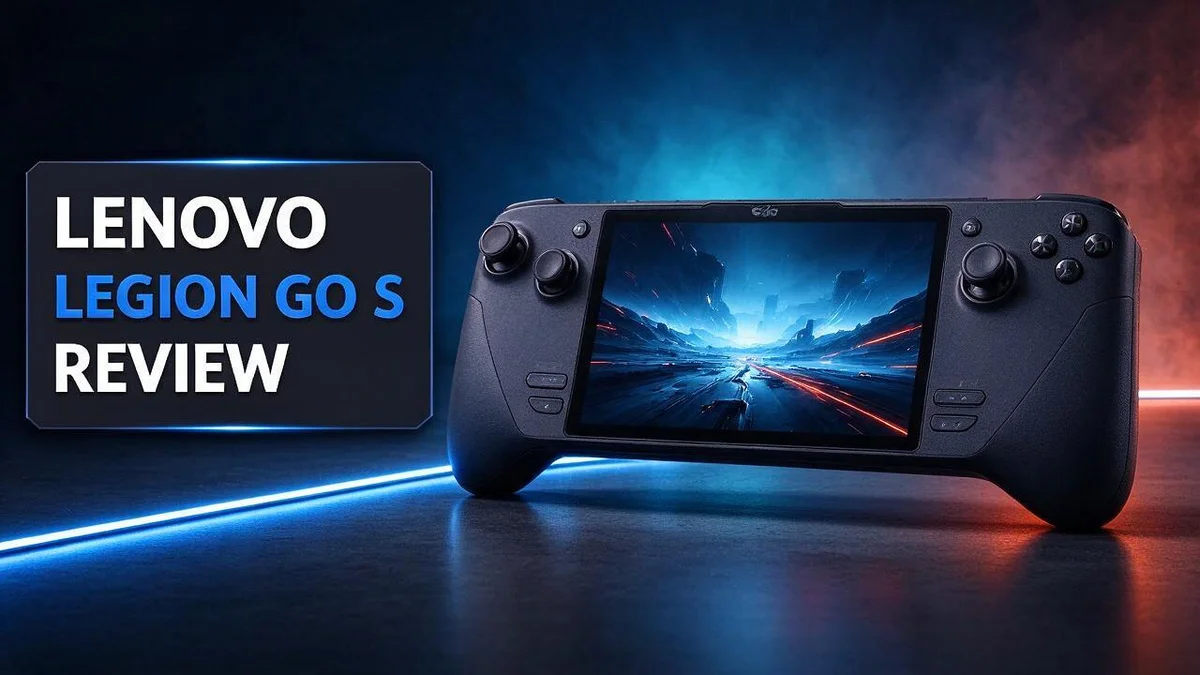
Lenovo Legion Go S Review: Specs, Performance, Battery Life and Verdict
Gamers who love handheld PCs have a new option to consider. The Lenovo Legion Go S stands out right away.
It features a large 8 inch screen with a sharp 1920 x 1200 display. The 120Hz refresh rate makes games look smooth.
Inside, the device uses the AMD Ryzen Z2 Go chip. It also has 16GB of LPDDR5X memory for everyday multitasking.
SteamOS is the biggest highlight. You get your familiar Steam library right out of the box.
Comfort matters during long gaming sessions. The analog sticks, buttons, and triggers feel solid in your hands. The weight sits evenly, so your arms stay relaxed.
Still, this handheld has tradeoffs. It is thicker and heavier than the Steam Deck. Battery life also trails the original Legion Go in some tests. Let us look at the details to see if it fits your play style.
In a Nutshell
-
Smooth motion: The 120Hz panel keeps fast games looking fluid. Action titles feel quicker to track during intense moments.
-
Generous memory: The handheld ships with 16GB of LPDDR5X RAM. Multitasking and heavy game files run with less strain.
-
Balanced weight: The weight sits in a well-centered spot. This helps the device feel steadier in the hands.
Wait, avoid hyphen. Corrected version below.
-
Balanced weight: The device feels steady because its weight sits in a central spot.
-
Battery improvement: Compared with the previous generation, battery runtime gets a boost from newer silicon.
-
Size check: It runs thicker and heavier than the Steam Deck. Players who want a slim profile should try it in person first.
-
Port options: Two USB C ports, a 3.5mm jack, and a microSD slot give users plenty of connection choices.
-
Best fit: Players who want a larger screen and SteamOS will enjoy it most. Those chasing top frame rates may prefer the original Legion Go.
Display and Visual Experience

- ALL GAMES, ALL PLACES, ALL YOURS – Get ready to game on the 8" 120Hz Lenovo PureSight display and launch any...
- SEE EVERY DETAIL – Make every scene pop with 500 nits of stunning brightness and 100% sRGB color accuracy...

Last update on 2026-06-17 / Affiliate links / Images from Amazon Product Advertising API
The display does a lot of heavy lifting on this handheld. Colors look lively, and games often feel more immersive as a result.
The IPS panel keeps images clear from wide viewing angles. Friends can lean in and still see the same picture.
Text stays crisp, too. Game menus, store pages, and web browsing feel easy to read at arm’s length.
Subtitles and small icons appear sharp, which helps during long story sessions. Players rarely need to squint.
Video content also looks great. Streaming shows or watching trailers on the go feels genuinely enjoyable.
Color accuracy matters for artists and photo editors, but most gamers care more about vivid scenes. Bright worlds and dark dungeons both look distinct.
Dark scenes deserve special mention. Shadows often reveal more detail on a good panel, so players can spot enemies hiding in corners.
The large canvas also gives menus room to breathe. Icons and options spread out, so fewer wrong taps happen during quick navigation.
Viewing comfort matters for anyone who plays for hours. A clear screen can make long sessions feel easier on the eyes.
Glare may appear in bright rooms, so position the device away from windows. A darker room often gives the best picture.
Tip: Adjust brightness in the settings to match your surroundings. Lower brightness can also help stretch battery life.
External display output is another angle to explore. The two USB C ports may support connection to a larger monitor, but compatibility should be checked first.
HDR support is not clearly covered in current research, so buyers who care about it should confirm details before buying.
In short, the screen makes this handheld feel like a small gaming monitor. Players who value picture quality will notice the difference fast.
The screen supports both quick matches and slow exploration. It rewards every minute spent playing.
Controls and Ergonomics
The controls feel natural from the first moment. Your thumbs land on the analog sticks without any stretching. This layout makes it easy to learn, even for new handheld players.
The analog sticks offer smooth movement and solid precision. Aiming in shooters feels accurate. Small camera turns also feel controlled, which helps during tense moments.
The triggers respond with a clear and direct feel. Each press registers quickly and feels easy to read. This matters most during fast action when every second counts.
Button spacing deserves a closer look. The face buttons sit close enough for quick reach. Players rarely need to shift their grip to press the right button.
Grip plays a big role in longer sessions. Your fingers rest along the back edges while your thumbs stay active. This setup can ease hand fatigue over time, so your hands stay fresh.
Some players may need a short adjustment period. The controls differ from a console controller or a desktop keyboard. Give yourself a few sessions to build muscle memory and find your rhythm.
The overall layout mirrors a standard gamepad style. This familiar design helps newer players feel at home right away. Experienced gamers will also adapt quickly and feel confident.
Tip: Try different button mappings in the settings menu. Small changes can improve reach and comfort. Save your favorite setup for each game so you never start from scratch.
Overall, the controls feel polished and comfortable. They suit players who spend hours gaming each day. If possible, hold the device for a few minutes first to see how it fits your hands.
Performance and Gaming Power
The chip sets the pace for every game. The AMD Ryzen Z2 Go handles everyday gaming tasks with ease. Lighter titles run smoothly, so players rarely notice slowdowns.
Heavy games need some patience. Demanding titles may require lower graphics settings. Players can trim shadows and effects to keep frame rates steady.
Compared with the original Legion Go, performance dips a bit. Average frame rates trail the earlier model. Fans of the first version may notice this gap in newer releases.
SteamOS brings out the best in this device. Valve built this system for handheld play. Menus feel simple to move through using the built-in controls.
Power modes give players real control. Users can switch between profiles that favor speed or battery life. Keeping the charger nearby helps during long, intense sessions.
Steam Deck fans will want a direct comparison. The Steam Deck offers a smaller body and a lighter feel. The Legion Go S trades some portability for a larger screen and a different play experience.
Smart tweaks make a big difference. Lowering resolution in demanding titles can raise frame rates. Test a few settings in each game to find the best balance between speed and visual quality.
Frame rate caps offer a useful middle ground. Limiting frames can reduce heat and noise during long sessions. Many players find this setting keeps gameplay comfortable without losing much detail.
Older games often run with ease. Titles with lighter demands feel fast on this chip. Indie games and classic favorites usually look and play their best.
Each player will feel different results. Skill level, game choice, and settings all shape the experience. Trying the handheld in person helps buyers judge the performance for themselves.
The final verdict on speed depends on play style. Casual players may feel satisfied with the results. Competitive players might want more raw power.
Top 3 Alternatives
ASUS ROG Ally

- [Xbox experience brought to life by ROG] : The Xbox gaming legacy meets ROG's decades of premium hardware...
- [Xbox Game Bar integration] : Launch Game Bar with a tap of the Xbox button or play your favorite titles...
Last update on 2026-11-06 / Affiliate links / Images from Amazon Product Advertising API
The ASUS ROG Ally is a strong handheld gaming PC for players who want power on the go. It runs Windows, so you can play many PC games and install your favorite launchers. It has a bright screen and a comfortable grip.
Many players enjoy its fast refresh rate for smooth gameplay. It also supports easy switching between full-screen gaming and desktop mode.
Steam Deck

Last update on 2026-06-21 / Affiliate links / Images from Amazon Product Advertising API
The Steam Deck comes from Valve and focuses on simple portable gaming. It runs SteamOS, a system built for handheld play from the start. Its large game library works well right out of the box.
Many users like its built-in controls and solid build quality. You can also dock it to a TV for a bigger screen at home. This makes it a flexible choice for travel and couch play.
MSI Claw

- AI-Powered Performance: Powered by the latest Intel Core processor paired with Intel Arc Graphics (G...
- Simplistic Design: Enjoy the latest generation of Windows 11 Home for your everyday needs. MSI recommends...
Last update on 2026-11-07 / Affiliate links / Images from Amazon Product Advertising API
The MSI Claw brings Intel chips to the handheld gaming market. Like the ASUS ROG Ally, it runs Windows, so you can use many apps and PC games. It offers a good performance boost for demanding titles.
Gamers who want flexibility often find it appealing. It suits players who like to tweak settings and explore different game stores. If you enjoy customizing your setup, this handheld gives you plenty of room to experiment.
Battery Life and Portability
Battery life is often the first question players ask about a handheld. The Legion Go S uses the latest AMD chip, which improves power use compared with the last generation. That gain helps during everyday sessions.
Still, the original Legion Go lasts longer on a single charge. If you plan long marathons, expect a shorter run on the S. Keep a charger close when you know a big gaming night is coming.
The weight tells a similar story. At 740 grams, the device feels solid in your hands. Its mass sits well balanced, so your hands and wrists do not tire as quickly during extended play.
Size matters too. The body measures 299 by 128 by 23 millimeters. The thickness is the main portability challenge. It slides into a large backpack or jacket pocket with ease, but a small bag may feel too tight.
Charging on the go is easier than you might think. The two USB-C ports give you flexible options. You can plug in a power bank or charge the unit while you play at a desk.
Here is a simple travel plan:
- Pack a compact USB-C charger and a short cable.
- Choose lighter games when the battery runs low.
- Lower demanding graphics settings to stretch each charge.
With these habits, the Legion Go S fits well into trips, commutes, and couch sessions. You get a capable handheld that goes where you go, and you simply plan your charging a little more carefully.
SteamOS and Software Experience
SteamOS feels like home for anyone who already owns a Steam library. After signing in, your games, friends, and saved progress appear right away. There is no need to hunt for files or reinstall titles.
Valve built this software for handheld play from the ground up. Game Mode presents a clean library view that works well with a controller. Most menus respond quickly, so you spend less time searching and more time playing.
Desktop Mode offers a different experience. It lets you install other launchers, browse the web, or manage files when you want more control. Beginners can ignore it completely.
Windows is skippable, which keeps setup simple. Many players will never need it. This choice removes extra updates and steps that can slow down a new handheld.
Tip: Sign in to your Steam account before your first session. Cloud saves sync for supported games, so you can pick up progress on another device.
Some tasks take extra steps. Apps outside the Steam store may need Desktop Mode and a little setup. New owners may feel unsure at first, but online guides help a lot.
Each game can remember its own settings. Controller layouts and graphics options stay saved, so you do not repeat setup after every update. That saves time and keeps your favorite titles ready to play.
Software updates shape the long term experience. Valve regularly adds features to SteamOS, so the device can improve over time. Keep the system current to get the latest changes.
Storage deserves a quick check too. Games can take up a lot of space, so a microSD card helps the library grow. Move larger titles to the card when the internal drive fills up. Keep a list of favorite titles so they are easy to find in the library.
Pros and Cons
Pros
- The 8-inch screen shows sharp, vivid detail.
- The 120Hz panel makes motion look smooth.
- Two USB-C ports allow flexible charging and accessory use.
- A microSD slot adds easy extra storage.
- 16GB of memory helps with smooth multitasking.
Cons
- Windows fans may prefer a different handheld.
- Rivals like the MSI Claw cover different needs.
- Buyers should compare options before deciding.
Who Should Buy It
This handheld suits a clear type of player. Not everyone needs a portable gaming device. The Legion Go S works best for people who know exactly what they want from it.
Steam fans who play on the couch will feel right at home. Their libraries already live on the platform. They can pick up a game and keep going.
Players who want a large, sharp screen also gain a lot. Small text and tiny menus can slow anyone down. This display makes reading and exploring far more comfortable.
Frequent travelers often make good matches. Many people bring a handheld on flights, road trips, or long waits. The device turns dead time into play time.
Students and remote workers may enjoy it during breaks. A quick round between classes or meetings can refresh the mind. Short sessions fit naturally into a busy day.
Indie and retro fans often love handheld play. Smaller titles tend to look crisp on this panel. They also run with ease.
Some buyers should look elsewhere. Players who expect top frame rates in every new release may feel let down. Demanding titles can push this chip to its limits. Those players may prefer a more powerful option.
Ask yourself a few simple questions. Do you already own a Steam library? Do you game away from a desk often? Do you care more about screen size than raw power? A yes to most of these points signals a good match.
Think about your daily routine. A player with a long commute may use the device every day. Someone who games only on weekends may need far less. Matching the device to real habits leads to better satisfaction.
Compare before you commit. Every player has different habits and needs. Read a few reviews and watch gameplay clips. A short test of the controls can also reveal a lot about comfort.
Final Verdict
The Legion Go S makes a clear case for a specific kind of player. Think of it as a focused handheld, not a do everything machine.
It shines when you want Steam games in your hands. The comfortable controls and wide screen make long sessions easier on the body.
The main tradeoff is performance. Demanding new releases may need lower settings to run smoothly. Older or lighter games usually feel great.
Compared with the original Legion Go, the S gives up some speed and battery life. That makes the newer model a tougher sell for upgraders. Anyone with the first model may want to wait.
Size matters too. The Steam Deck remains slimmer and lighter, so it may suit pocket carry better.
The competition makes the choice clearer. The ASUS ROG Ally and MSI Claw lean into Windows, which suits people who want a full PC feel.
Our final take is simple. The Legion Go S is a solid handheld for Steam fans who want a big screen and comfortable controls. It is not the best pick for every gamer.
Check your favorite games first. Look up how they run on handhelds and whether they need Desktop Mode. A quick search can prevent surprises later.
Fans of the original will feel the change. The S trades some power and stamina for newer hardware. Decide which trade you can accept.
Test the feel if you can. Hold it in a store or ask a friend who owns one. Your hands will tell you more than any spec sheet.
Keep expectations realistic. Many classics and indie titles look great on that bright screen, while the newest releases ask more.
Bottom line: it is a focused, comfortable handheld with clear strengths and clear limits. Know both sides before you commit, and the decision becomes much easier. That clarity makes the choice easy for the right buyer.
Frequently Asked Questions
Can I play games from other stores on it?
The Windows option can open other game launchers, so you may reach titles outside Steam. Many players still choose SteamOS, though, because it feels simple and fast. Check each store’s support before you buy a game for the handheld.
Is the Legion Go S easy for beginners to use?
Yes, it is easy to start. SteamOS uses a clean menu that works well with the buttons and sticks. New players can pick a game and start playing within minutes. A short practice session helps you learn the layout.
Can it replace a desktop gaming setup?
Not completely. The Legion Go S works best as a second way to play. Desk gamers who want the highest settings may still prefer a full PC for their main sessions.
How can I make the battery last longer?
Battery life depends on the game and screen brightness. Lower brightness and a capped frame rate can stretch each charge. Playing lighter titles also uses less power than demanding new releases.
Should I buy a case or grip?
A protective case helps guard the screen during travel. A grip can also reduce hand fatigue during long sessions. Look for a design that fits the device’s depth and weight so it stays easy to carry.

DK is a technology expert who specializes in AI tools, software, and tech gadgets. He writes for How to Tech Info, providing detailed reviews and practical guides. DK helps readers discover the best AI applications, navigate new software, and choose the right tech gadgets.