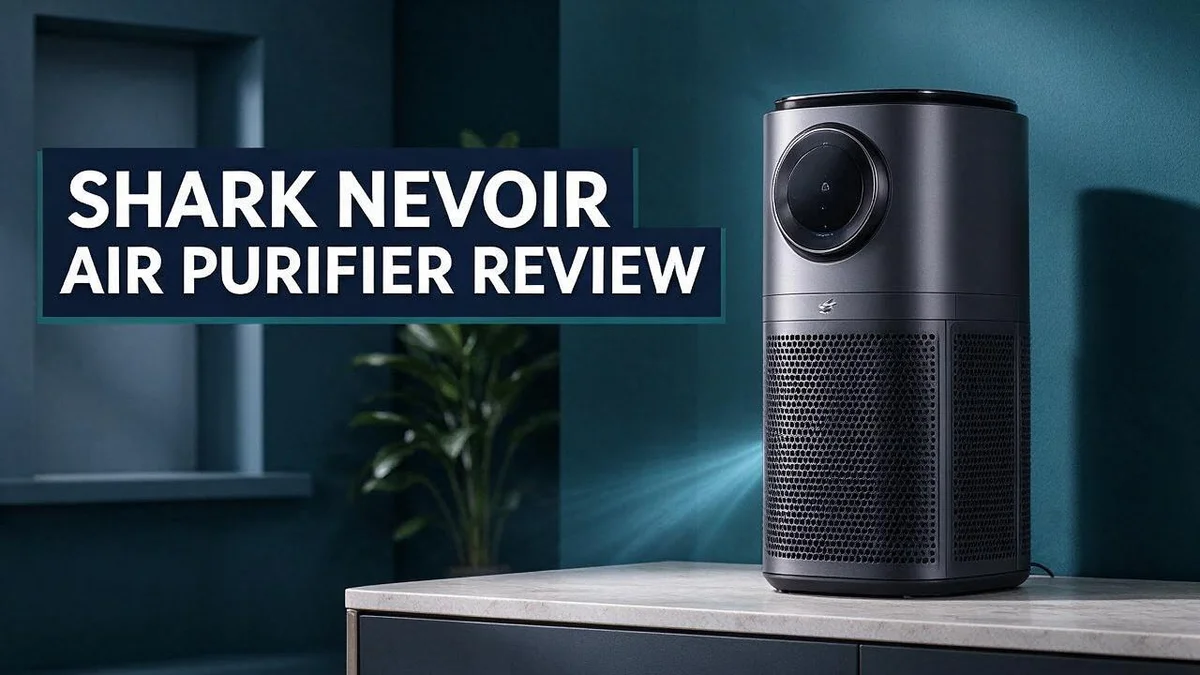
Shark Nevoir Air Purifier Review: Tested Performance, Coverage and Verdict
Clean air matters more than most people realize. Indoor air can hold dust, pollen, and tiny particles that you cannot see. If you want a simple way to improve your home, an air purifier can help.
The Shark Nevoir is a model many shoppers consider. Our research points to the Shark NeverChange HP302, which appears to be the same unit. It covers up to 1,400 square feet and offers five fan speeds, including Max.
In one test, PM2.5 levels dropped from 114.2 to 0.1. That result stands out. Reviewers also describe it as one of the quietest purifiers available, though that claim still needs a closer look.
In this review, we walk through performance, noise, design, and filter life. We also point out where the data is unclear. You will get a clear picture before you decide.
In a Nutshell
- Large coverage: The unit claims to clean rooms up to 1,400 square feet. That means it can refresh the full air about once every hour.
- Smaller rated room: The ENERGY STAR rating covers a room of 316 square feet. This makes it a strong pick for a bedroom, home office, or small living area.
- Strong airflow: It moves about 240 CFM. Dust gets 216 CFM and pollen gets 235 CFM, so both allergens get strong attention.
- Five fan speeds: You can choose from five settings, including Max. Use the lower speeds at night and the top speed on busy days.
- Compact height: The unit stands 22.5 inches tall. Its height suits most corners, so it fits beside a desk, bed, or sofa without much trouble.
- Research note: Sources list this model as the Shark NeverChange HP302, and the weight figures do not match. Check the official spec sheet for the final numbers before you decide.
Air Cleaning Performance

- See Your Air Improve: With CleanSense IQ, watch the display as your air quality adjusts in real time. No...
- Exceeds HEPA Standards: Anti-Allergen* NanoSeal captures more micropollutants than HEPA standards require...

Last update on 2026-11-07 / Affiliate links / Images from Amazon Product Advertising API
Airflow matters just as much as the filter. The Shark model lists separate numbers for dust and pollen. Dust airflow reaches 216 CFM, while pollen airflow rises to 235 CFM.
That small gap helps more than it seems. Pollen particles are larger and drift in through open windows. Dust settles on rugs, so steady pull near the floor matters.
The unit aims for about one air change per hour. In its largest rated space, that means the full room air passes through the filter once every hour. Real results still depend on furniture, doors, and how often people open windows.
Test data also shows strong results. One review reports a 92 percent air quality improvement.
The test lists PM2.5 in ppm, but the unit is likely micrograms per cubic meter. Readers should check units before comparing other brands.
One review gave the unit scores between 8.9 and 9.2 out of 10. The average score across 104 products is not stated, so the context stays limited. Readers should compare it with similar models.
Placement affects results more than many people expect. Keep the unit away from walls and curtains. Give it open floor space so air can enter from all sides.
Daily use matters too. Running the unit on a lower setting keeps air moving without strain. Switch to a higher setting after cooking, cleaning, or guest visits to clear stale air fast.
Who benefits most from this kind of airflow? Allergy sufferers, pet owners, and families with lots of dust often notice the biggest change. Those households often feel the difference most.
Coverage, Airflow and Room Size
Room size tells only part of the story. Measure your room before you buy. Multiply the length by the width, then by the ceiling height.
This number shows the total air volume the unit must clean.
Open floor plans need extra thought. A kitchen joined to a living room forms one large zone. Think about the full area the air must travel across.
Closed doors change the math. A bedroom with the door shut keeps its air separate from the hallway.
Many families run the purifier in one bedroom at night. This creates a steady clean zone while everyone sleeps.
Fan speed works alongside airflow. Choose a low setting when the air feels calm.
Switch to a higher setting after cooking, vacuuming, or a pet walks through the room. This pushes particles through the filter faster.
Ceiling height also matters. Tall rooms hold more air than standard rooms. If your ceiling sits high, choose a unit with spare capacity. Extra power gives you a buffer for busy days.
Rated numbers assume ideal conditions. Heavy furniture, thick rugs, and open windows can slow the air movement. Treat the rated size as a starting point, not a promise.
Pet hair and lint can build up near the intake. A quick wipe each week keeps the airflow strong. This simple habit helps the unit perform as expected over time.
Sizing up is often the safer choice. A slightly larger unit can run on lower speeds and still keep the air fresh. That balance helps the room feel calm and steady all day.
Noise and Fan Speeds
Noise often decides whether a purifier stays switched on. Many people turn off a unit that hums too loudly. The Shark model is described as one of the quietest purifiers, although that claim has not been verified yet.
Fan speeds shape the sound level. Lower settings run softly and suit quiet hours. Higher settings move more air, so they become easier to hear. Plan your speeds around your daily routine.
Speed changes also affect how often people adjust the unit. A quiet setting invites you to keep it running all day. A loud setting may push you to switch it off early. Consistent use keeps the air cleaner over time.
Start on the lowest setting first. Run the unit on low for a few hours. Then listen from your bed or your desk. If the hum stays in your head, it may bother you during sleep.
Watch for rattling or buzzing. A fan that rattles often has loose parts or trapped debris. Check the outer casing and wipe away dust. A steady whir is normal, but sharp clicks deserve a closer look.
Noise also depends on the room itself. Hard floors and bare walls reflect sound. Open shelves and hard surfaces may add some echo. Rugs, curtains, and soft furniture can soften the hum a little.
Sensitivity to sound differs from person to person. Light sleepers may notice even a soft hum. Others barely register it at all. Your comfort matters more than any written claim.
Test the unit in your own space. Pick a calm time, such as early evening. Run it for one full evening before you decide. Note which speed feels comfortable and which one feels distracting. That simple test reveals more than any rating can.
Top 3 Alternatives
Levoit Core 300

- WHY CHOOSE AHAM VERIFIDE AIR PURIFIERS: AHAM (Association of Home Appliance Manufacturers) is an...
- HIGH-PERFORMANCE AIR PURIFICATION: A powerful 56W high-torque motor and 143 CFM CADR delivers fast, effective...
Last update on 2026-06-09 / Affiliate links / Images from Amazon Product Advertising API
Looking for a compact option? The Levoit Core 300 fits small rooms like bedrooms, nurseries, and home offices. It uses a True HEPA filter to trap dust, pollen, and pet dander. The unit runs quietly, so it works well overnight. Its auto mode adjusts fan speed based on the air around you. Simple controls make setup easy for anyone new to air purifiers.
Coway Mighty Air Purifier

- Coway Mighty (AP-1512HH) is designed to accommodate room sizes up to 361 sq. ft (CADR: Dust 246 / Pollen...
- 4 Stage Filtration System (Pre-filter, Deodorization filter, True HEPA filter, Vital Ion) captures and reduces...
Last update on 2026-06-09 / Affiliate links / Images from Amazon Product Advertising API
The Coway Mighty is a strong choice for medium rooms. It includes a True HEPA filter and an activated carbon layer to reduce odors from cooking and pets. A small light shows the air quality in real time, so you always know what is happening. Eco mode saves energy when the air is already clean. Many owners also like the filter change reminder, which keeps the unit working well.
Blueair Blue Pure 211+

- BLUEAIR’S TOP-PERFORMING AIR PURIFIER LINE: Blue family’s new Pure Max series with our proprietary...
- LET’S CLEAR THE AIR QUIETER: Quiet Mark certified (23-53dB); Cleans up to 3,048 sqft space in...
Last update on 2026-06-09 / Affiliate links / Images from Amazon Product Advertising API
Need coverage for a larger living room? The Blueair Blue Pure 211+ handles bigger spaces with ease. Its washable fabric filter catches large particles first, which helps the main filter last longer. Then a particle filter with activated carbon cleans fine particles and smells. The unit feels light and simple to move between rooms. It suits families who want steady, everyday clean air.
Design and Physical Footprint
The Shark Nevoir stands about 22.5 inches tall. That height fits neatly beside a sofa, desk, or bedside table.
Many shoppers check height first. A tall, slim shape often fits better than a wide box in a tight room.
The research does not list width or depth. Measure the floor space before you buy. A simple tape measure takes only a minute.
Remember the space above the unit too. Shelves, ceilings, and window ledges can block the airflow path.
Leave open space around the sides as well. Clear room helps the unit pull in and push out air evenly.
Cord reach deserves a check. Plan where the plug sits before you pick the spot.
Avoid stretching the cord across walkways. Trips cause accidents, and extension cords add risk.
A tower shape keeps the unit off the floor. Toddlers and pets are less likely to knock it over.
Visual fit matters too. A slim profile blends into most rooms without drawing attention.
Think about daily access as well. You need to reach the unit for checks and cleaning. Pick a spot where you can reach it without moving furniture.
Bedrooms often have less space. A slim tower can fit in a narrow gap by the bed or wardrobe. Measure that gap first.
Kitchens and hallways need care too. Keep the unit away from stove splatter and heavy foot traffic.
Plan for the long run. A unit that fits your space today should still fit after you rearrange the room.
Take a photo of the spot with your phone. Compare it with the product size when you shop.
Filter Lifespan and Upkeep
Filter life tells you how long the unit keeps working well. Many buyers check the filter claim first. Still, real results depend on how you use the unit every day.
The 5-year filter claim needs a closer look. One review questions this promise, but it gives no final verdict. Treat the number as a guide, not a guarantee.
Dust, pet hair, and cooking smoke load the filter faster. Homes with pets or frequent cooking may need filter changes sooner than expected. Pet owners often notice this change first. Check the filter every few months to see how it looks.
Set a simple check schedule. Write the install date on your calendar or phone. Look at the filter during each monthly cleaning session. A heavy gray layer of dust is a clear sign it needs attention. Note the date each time you clean or replace it.
Wipe the outside of the unit too. This keeps loose dust from drifting back to the filter area. Use a soft brush on the vents. Turn the unit off and unplug it before cleaning.
Keep the model details in one place. Store the model number and purchase date together. This helps when you need a replacement filter or want support help. Many owners also keep the box for warranty questions.
Never wash a filter unless the manual says it is safe. Water can damage some filter types. Always let every part dry fully before you put it back in the unit.
A dirty filter wastes energy and slows clean air delivery. The research shows strong test scores, but a clogged filter cannot match that pace. Keep the schedule steady, and your room stays fresh for years to come.
Ratings and Review Consensus
Ratings offer a quick view of how reviewers feel about this model. One review gives it a score between 8.9 and 9.2 out of 10. That is a strong result, but it comes from a single source.
The research does not state the average score across 104 products. Without that benchmark, it is hard to know how this model ranks against others. Readers should keep that gap in mind.
Test data adds more weight to the praise. In one test, PM2.5 levels dropped from 114.2 to 0.1. The reading lists the unit as ppm, but the number most likely means micrograms per cubic meter.
A separate review reports a 92 percent air quality improvement. Both results point in the same direction. Still, each test uses its own room setup, so results at home may vary.
Reviewers also describe this unit as one of the quietest purifiers. The research includes this claim, but the snippet offers no proof. Treat it as a promising point, not a confirmed fact.
The research lists no major cons. That sounds positive, but silence is not the same as approval. A wider mix of reviews would give a fuller picture.
Shoppers can read reviews with a clear plan. Look for owners who tested the unit in rooms similar to theirs. Check whether they mention how the filter performs over time.
Strong test scores and high ratings make this model worth a closer look. Still, a few more independent reviews would help confirm the overall consensus.
Pros and Cons
Pros
– – Strong test results show PM2.5 falling sharply in testing.
– – Coverage reaches up to 1,400 sq ft at about one air change per hour.
– – Five fan speeds, including Max, suit different needs.
– – Reviewers often call it one of the quietest purifiers.
– – One review gives it 8.9 to 9.2 out of 10.
Cons
– – The 5-year filter claim is questioned by at least one review.
– – Weight figures conflict between sources, so check the spec yourself.
– – The quiet noise claim still needs independent proof.
– – Few independent reviews exist yet to confirm the test data.
Who Should Buy It
Shoppers with seasonal allergies often feel the biggest difference. Pollen can make the nose itchy and the eyes watery. A steady unit in the main living area can help during those tough weeks.
First time buyers who feel unsure about air purifiers will find this model easy to start. Setup takes little effort. The fan speeds give clear control, so you can choose a gentle setting at night and a stronger one during busy afternoons.
Renters and students in shared apartments may also appreciate this unit. A standalone design needs no installation work. You can pack it up and take it to your next home without fuss.
Home office workers can benefit from cleaner air during long days. Place the unit near your desk, but leave open space around it so air can move freely. A fresher room often makes focus feel easier.
Parents of young children should think about placement first. Set the unit where little hands cannot reach the controls. Keep cords out of walking paths to prevent trips and tugs.
Some buyers should look elsewhere. People who need to clean a large open plan space may need a bigger machine. Anyone who wants a long track record should wait too. Few independent reviews exist yet, so reading more sources before deciding is wise.
Think about your room size, your health needs, and your daily routine. A clear picture of those three things makes the decision much simpler. Your answers will show whether this model fits your home.
Final Verdict
The final verdict leans positive for most shoppers. Solid test results and a flexible fan range make this model easy to recommend. Still, a few smart checks help before you buy.
Shoppers searching for Nevoir will find this unit sold as the HP302. Confirm the model name on the box before you order. That step keeps your purchase clear and simple.
Start by measuring your room. The ENERGY STAR room size of 316 square feet gives a realistic target. Match the unit to the space you use most, and skip the largest coverage claim.
Think about daily routines next. Many people run a purifier in the bedroom overnight. Use lower fan speeds for calm nights, then switch to Max during cooking or cleaning.
Consider your household size too. A couple may need less airflow than a family with pets. Pick the setting that matches how many people share the space.
Run a short trial at home. Watch for dust on shelves and notice how the air feels after a few days. Real results in your space tell you more than any spec sheet.
Also note where the unit sits. Keep it away from walls and curtains so air flows freely.
Keep your options open. Compare two or three other reviews before you commit. Check the return window too, so you can send the unit back if it does not fit.
Here is the bottom line. The HP302 shows strong promise and earns a spot on your shortlist. Give it a fair trial in your own room, then decide with confidence. Trust your own findings above all else. That choice should feel comfortable and clear.
Frequently Asked Questions
Can this unit help with pet dander?
The research does not test pet dander directly. Fine particles fall fast in testing, so the unit may help. Run it on a higher speed after brushing pets or cleaning the litter box.
What does the CFM number mean for me?
CFM measures how much air the unit moves each minute. The research lists about 240 CFM overall, with 216 for dust and 235 for pollen. More air moving through the filter each minute can clear a room faster.
Can I run it all day?
The research does not list energy use, so check the manual before you leave it on nonstop. Many people use a lower speed at night and a higher speed during busy hours. This routine keeps the air clean without extra effort.
How will I know when to change the filter?
The 5-year filter claim is questioned, so do not rely on it alone. Check the manual for the filter indicator. Inspect the filter every few months, especially if you live near heavy dust or pets.
Does it remove smoke or cooking odors?
The research only reports particle results for PM2.5. It does not test odors or gases. Test it yourself during a week of cooking and note whether the smell fades.

DK is a technology expert who specializes in AI tools, software, and tech gadgets. He writes for How to Tech Info, providing detailed reviews and practical guides. DK helps readers discover the best AI applications, navigate new software, and choose the right tech gadgets.