
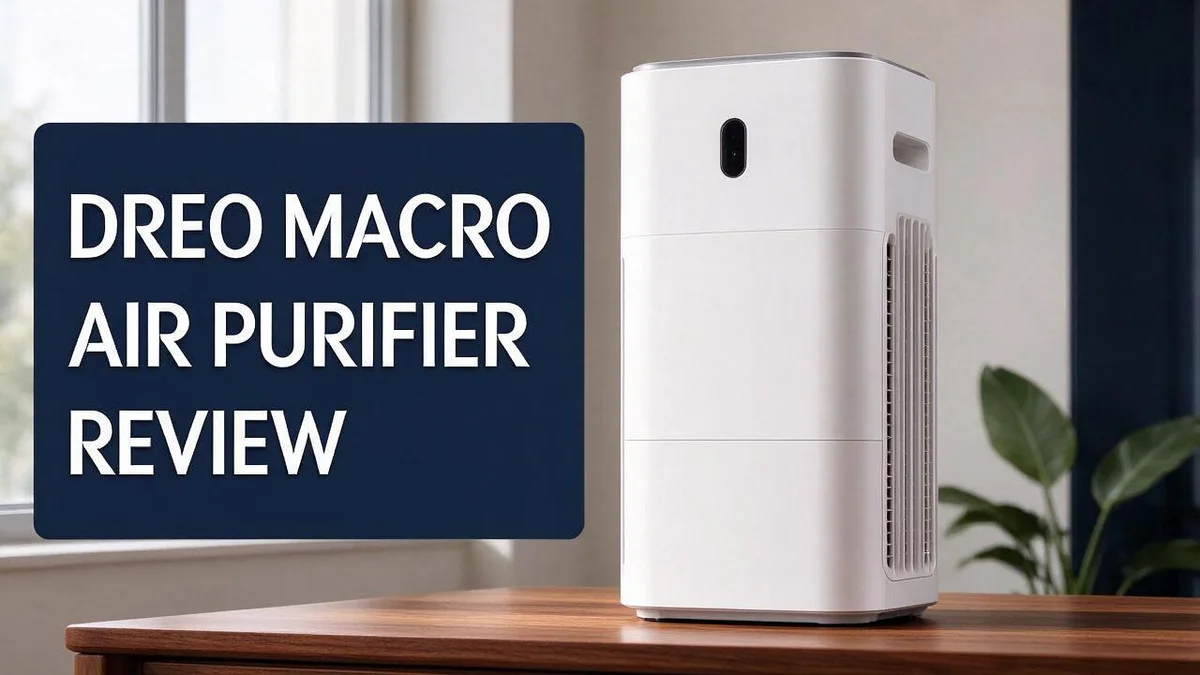
Dreo Macro Pro Air Purifier Review: HEPA 13 Filtration, Room Coverage and Power Use
Is the air in your home really clean? Most people never think about it. Yet dust, smoke, and pet hair build up fast.
The Dreo Macro Pro aims to fix that problem. It uses a HEPA 13 filter and activated carbon. Together, they capture dust, smoke, and everyday odors.
This purifier moves up to 110 m³/h of air. It covers rooms up to 26 m², and it can run in auto mode. Its design also keeps power use low at 40 W.
This review explores how it performs in real life. We look at its specs, pros, and cons. You will also see how it compares with the Alen BreatheSmart 75i and Levoit EverestAir.
Ready to see if this purifier fits your space? Keep reading.
In a Nutshell
- Energy use stays modest: This unit draws a maximum of 40 W. That is less than the Levoit EverestAir at 49 W, so it runs lighter on power during long days.
- Filters tackle dust and smoke: A HEPA 13 filter works with an activated carbon layer. The brand claims it removes 99.97% of dust and smoke from the air.
- Room size matters most: The Macro Pro covers up to 26 m². If you need to clean a larger area, the Alen BreatheSmart 75i may suit you better.
- Carbon capacity runs smaller: The carbon layer holds 0.3 lb, while the Alen offers 0.5 lb. Heavy cooking or pet odors may wear it down faster.
- Scores land in the middle: The reviewer gave it an energy efficiency score of 3.5 and an overall score of 3.9.
- Auto mode handles the settings: The auto setting lets the purifier respond to the room, so you spend less time adjusting controls.
- Replacement filters are easy to track: The DR-HAP002 filter uses MERV 13 and weighs 450 g, so you can plan your refills with confidence.
Filtration Performance

- 𝐀𝐇𝐀𝐌 𝐕𝐞𝐫𝐢𝐟𝐢𝐞𝐝 𝐏𝐞𝐫𝐟𝐨𝐫𝐦𝐚𝐧𝐜𝐞: AHAM Verified...
- 𝐅𝐚𝐬𝐭𝐞𝐫 𝐀𝐢𝐫 𝐑𝐞𝐟𝐫𝐞𝐬𝐡𝐦𝐞𝐧𝐭: Refresh your air faster by...

Last update on 2026-11-07 / Affiliate links / Images from Amazon Product Advertising API
Good filtration starts with the path air takes. The Macro Pro pulls room air through its filters and pushes cleaner air back into the room.
Each pass matters. Air cycles through the unit again and again, so particles get caught over time.
The HEPA 13 layer does the heavy lifting for tiny particles. It traps fine dust and allergens before they settle on your furniture and floors.
The manufacturer claims 99.97 percent removal of dust and smoke. Real results depend on room size, airflow, and how often you run the unit.
Smoke and odors need a different kind of help. Activated carbon grabs gases and smells that HEPA cannot catch. Cooking smells and pet odors often fade faster with this extra layer.
Setup changes how well it works. Keep doors closed while the unit runs. This helps the purifier clean one space instead of fighting air from the hallway.
Think about your daily routine. A home with cooking, pets, or a smoker will test the filters harder. Light use in a quiet bedroom feels much easier for the unit to manage.
The steady flow keeps particles moving through the filter instead of drifting around the room. Fine particles need consistent airflow to get caught.
Filter care keeps results steady. A clogged filter lets less air pass through, which lowers performance over time. Check the filter status often and swap it on schedule.
Many people want quick results. In a small bedroom, you may notice cleaner air within a few hours. Larger open spaces take longer, so patience helps.
Keep windows shut during heavy outdoor pollen days. Outdoor air brings new particles inside and can offset the gains. Closed windows let the filters keep up.
Compared with rivals, the Dreo handles everyday particles well. Heavy smoke or strong odors may push any unit harder, so set your expectations realistically.
In short, this filtration setup targets everyday air problems. It works best in rooms that match its coverage and get regular filter care.
Room Coverage and Sizing
Finding the right room size is the first step. Many buyers skip this part and regret it later. The Macro Pro works best in rooms that match its rated space. Measuring first saves time.
Measure your room by multiplying length by width. Then compare that number with the rated area. A room slightly larger can still benefit, but the unit needs more time to clean the air.
Think about open floor plans too. A living room that flows into a kitchen counts as one large zone. Plan for the full open area, not just the couch corner.
The 400 square foot rating from AHAM gives a helpful benchmark. Because it follows a standard test, you can compare it with other models. Still, real homes rarely match test conditions.
Ceiling height also changes the math. Taller ceilings add more air to every room. The purifier must cycle that extra air, so bigger spaces may take longer to feel fresh.
Compare the room to the competition. The Alen BreatheSmart 75i covers about 538 square feet. Larger homes may prefer that extra reach from a single unit.
Placement matters as much as size. The unit measures about 386 by 250 by 250 mm and weighs 3.3 kg. That compact frame lets you move it between rooms with ease.
Try a few spots before you settle. Place the unit where air can flow freely. Keep it away from walls and heavy furniture. Clear space around the intake and outlet helps the air move well.
Think about who spends time in each space. Pets, kids, and allergy sufferers may need cleaner air sooner. A bedroom often makes a smart first choice because people spend hours there.
A quick sketch of your floor plan helps too. Mark the windows, doors, and furniture. This simple map shows where the purifier can work best.
Power Use and Efficiency
Power draw shapes how you use a purifier every day. The Macro Pro peaks at 40 watts.
That draw sits below the Levoit EverestAir, which pulls 49 watts.
Run both units for 24 hours. The Macro Pro uses about 0.96 kilowatt hours.
The EverestAir uses about 1.18 kilowatt hours over the same day.
Clean air delivery per watt tells a different story.
The Macro Pro scores 6.5, while the EverestAir reaches 7.3.
This means the EverestAir moves more clean air for every watt it uses.
Lower draw helps, but efficiency per watt shows how well the fan and filters work together.
Both numbers give you a fuller picture of energy use.
Think about your daily schedule first.
A bedroom unit that runs eight hours at night uses far less energy than a living room unit running all day.
Match the runtime to the hours you spend in each space.
Long runs make power numbers matter more.
If you leave the unit on most of the week, small differences grow over time.
Check which fan speed you use most, since higher speeds pull more power.
Smart planning helps here. Run the unit at a steady pace rather than switching speeds often.
Homes with pets, cooking smoke, or heavy dust push the fan harder.
That extra work pulls more power from the outlet each day.
A tidy space with few airborne particles needs less effort.
Small habits add up too. Turn the unit off when you leave a room that stays clean.
Compare the numbers side by side before you decide. Lower draw and higher clean air per watt both count.
Bottom line for energy use: The Macro Pro draws less power than the EverestAir.
It trails in clean air per watt, though.
The Macro Pro suits people who value a lower power draw above all else. Shoppers who want the most clean air per watt may lean toward the EverestAir.
Top 3 Alternatives
Levoit Core 300

- WHY CHOOSE AHAM VERIFIDE AIR PURIFIERS: AHAM (Association of Home Appliance Manufacturers) is an...
- HIGH-PERFORMANCE AIR PURIFICATION: A powerful 56W high-torque motor and 143 CFM CADR delivers fast, effective...
Last update on 2026-06-09 / Affiliate links / Images from Amazon Product Advertising API
This compact purifier fits well in bedrooms and small offices. It uses a True HEPA filter to trap dust, pollen, and pet dander. It runs quietly on low speed, so it works well for sleep. The controls stay simple, and a filter light tells you when to replace the filter.
Best for: people who want an easy setup in a small space.
Coway Airmega 400

- [Coverage] Designed to clean spaces up to 3,120 sq. ft. in 60 minutes.
- [HyperCaptive Filtration System] Combination of a pre-filter, deodorization filter, and HEPA Filter reduces...
Last update on 2026-11-07 / Affiliate links / Images from Amazon Product Advertising API
This model suits larger rooms and open living areas. It cleans a wide area with steady airflow. A smart air quality sensor adjusts the fan speed for you. Many owners like its sleek look and reliable performance. Its filters capture fine particles and odors, which helps households with allergies.
Best for: families who need strong coverage in a big room.
Blueair Blue Pure 211+

- BLUEAIR’S TOP-PERFORMING AIR PURIFIER LINE: Blue family’s new Pure Max series with our proprietary...
- LET’S CLEAR THE AIR QUIETER: Quiet Mark certified (23-53dB); Cleans up to 3,048 sqft space in...
Last update on 2026-06-09 / Affiliate links / Images from Amazon Product Advertising API
This purifier feels light and easy to move from room to room. A washable outer layer catches large particles before they reach the main filter. The HEPASilent filter traps tiny particles, and activated carbon helps reduce odors. It runs very quietly, which makes it a good match for busy homes.
Best for: people who want a portable unit that works in several rooms.
Build, Size and Filter Maintenance
The Macro Pro has a compact body that fits many spaces. It measures 386 by 250 by 250 millimeters. The footprint stays small, so it fits beside a bed or in a tight corner.
At 3.3 kilograms, the unit feels light. You can carry it from room to room without strain. This makes moving it easy for people who rearrange their homes often.
The build feels practical rather than fancy. Clean lines make wiping dust off the surface quick. A flat, stable base keeps the unit steady on a side table or shelf.
Filter care keeps the unit working well over time. The replacement filter is rated MERV 13 and weighs 450 grams. Buy a spare before the current one wears out. This habit prevents gaps in clean air.
Check the filter by eye every few weeks. Homes with pets or frequent cooking may need checks more often. A visible layer of gray dust is a clear sign that it needs attention.
Handle the used filter with care. Seal it in a bag before you throw it away. This keeps trapped dust from drifting back into the room.
Dust the outer grille regularly with a soft brush or a vacuum. A blocked grille slows airflow and makes the fan work harder. Wipe the body with a dry cloth each month. Never spray liquid directly onto the vents.
Keep a simple log of filter changes. Write the dates on a calendar or a note on your phone. This small step helps you stay on track. It also shows you how quickly your home builds up dust and particles.
Lifting the unit makes cleaning underneath easy, too. Pick a spot near a power outlet so the cord stays out of walkways. A little planning now saves effort later.
Pros and Cons
Pros
– HEPA 13 and activated carbon work together in one unit.
– The unit claims 99.97% removal of dust and smoke.
– Auto mode keeps things running without constant adjustments.
– It earns an overall score of 3.9 in the reviewer formula.
– Its energy efficiency score of 3.5 shows solid performance.
Cons
– The carbon layer is light at 0.3 lb, so strong odors may need extra attention.
– The 99.97% claim comes from the maker, so independent testing is limited.
– Top-tier rivals like the Coway Airmega ProX sit at a higher level.
Who Should Buy It
The Macro Pro suits a specific kind of shopper. Fit matters more than features for most buyers, so start with your room size and your air concerns.
Single rooms are the best match. The maker rates it for rooms up to about 400 square feet. That makes it a solid pick for a bedroom, a home office, or a small living area. Rooms larger than that may feel less covered.
People with dust or pollen concerns can benefit from the filter. The HEPA 13 layer targets fine particles that float around a room. This grade suits people who sneeze often at home.
Busy households will appreciate the simple controls. Auto mode adjusts the fan for you. You can set the unit up once and get on with your day. This makes daily use easy for most households.
Homes with occasional smoke can give it a look. The unit targets smoke along with dust. It works well as an extra layer of clean air, not a replacement for good ventilation. Keep windows closed while it runs for the best results.
New buyers can start with confidence. You do not need technical knowledge to run it. Most people can set it up in minutes. Place it in the room, pick auto mode, and let it work.
Shoppers with big open spaces should look elsewhere. The Alen BreatheSmart 75i covers more floor area. If you plan to use a unit in a large living room, this matters most.
Full house coverage needs more than one unit. Homes with several floors or many rooms will need a unit in each key space. This keeps the air fresh in the places you use most.
Compare the ratings side by side before you decide. Look at the room size rating first, then the other details. Match each model to your space. This simple check helps you choose with confidence.
In short, the Macro Pro fits one room well. It serves people who want cleaner air in a small or medium space without fuss. Start with your room size, and the right choice becomes clear.
Final Verdict
Our final verdict is simple. The Dreo Macro Pro is a sensible air purifier for one room at a time. It pairs a compact frame with a clear focus on fine particles.
Power use is where this model shines. It draws 40 watts at most, which beats the Levoit EverestAir at 49 watts. Lower draw means the unit can run for long stretches with less strain.
Clean air per watt tells a different story. The Macro Pro reaches 6.5, while the EverestAir hits 7.3. In plain terms, the Levoit moves more clean air for every watt it uses.
The carbon filter is the other trade-off. The Alen BreatheSmart 75i carries 0.5 pounds of carbon, while the Dreo offers 0.3 pounds. Homes with strong cooking smells or pets should weigh that gap before deciding.
Who should buy this model? Light users with one room will find it easy to live with. It suits a bedroom, a home office, or a small living area.
Setup takes little effort. Place the unit where you sit or sleep, and keep the vents clear of curtains and furniture. Good airflow helps the purifier do its job.
Who should skip it? Households that need heavy odor control should compare other models first. Strong kitchen smells call for a closer look at rival machines.
Our overall take leans positive. The Macro Pro earns solid marks for efficiency and simplicity. It is a practical pick, not a flashy one, and it does its job without drama.
If your space is one room and your needs are basic, this purifier makes a strong case. Keep a simple filter log after setup, so the unit keeps performing well for years.
Frequently Asked Questions
Is the Dreo Macro Pro easy to move?
Yes, it is light and compact. At 3.3 kg, you can carry it from room to room with little effort.
Where should I place it in the room?
Place it where air can move freely. Keep it away from walls, curtains, and heavy furniture. A spot near the center of the room works well for even airflow.
What does the MERV 13 rating mean?
MERV 13 is a rating that shows how well a filter catches tiny particles. The replacement filter, DR-HAP002, carries this rating. Always match the exact code when you order a new one.
How do I know when to replace the filter?
Check the filter by sight and by smell. If it looks dark or dusty, or if odors return, it may be time for a new one. Keeping an eye on these signs helps the unit work at its best.

DK is a technology expert who specializes in AI tools, software, and tech gadgets. He writes for How to Tech Info, providing detailed reviews and practical guides. DK helps readers discover the best AI applications, navigate new software, and choose the right tech gadgets.


