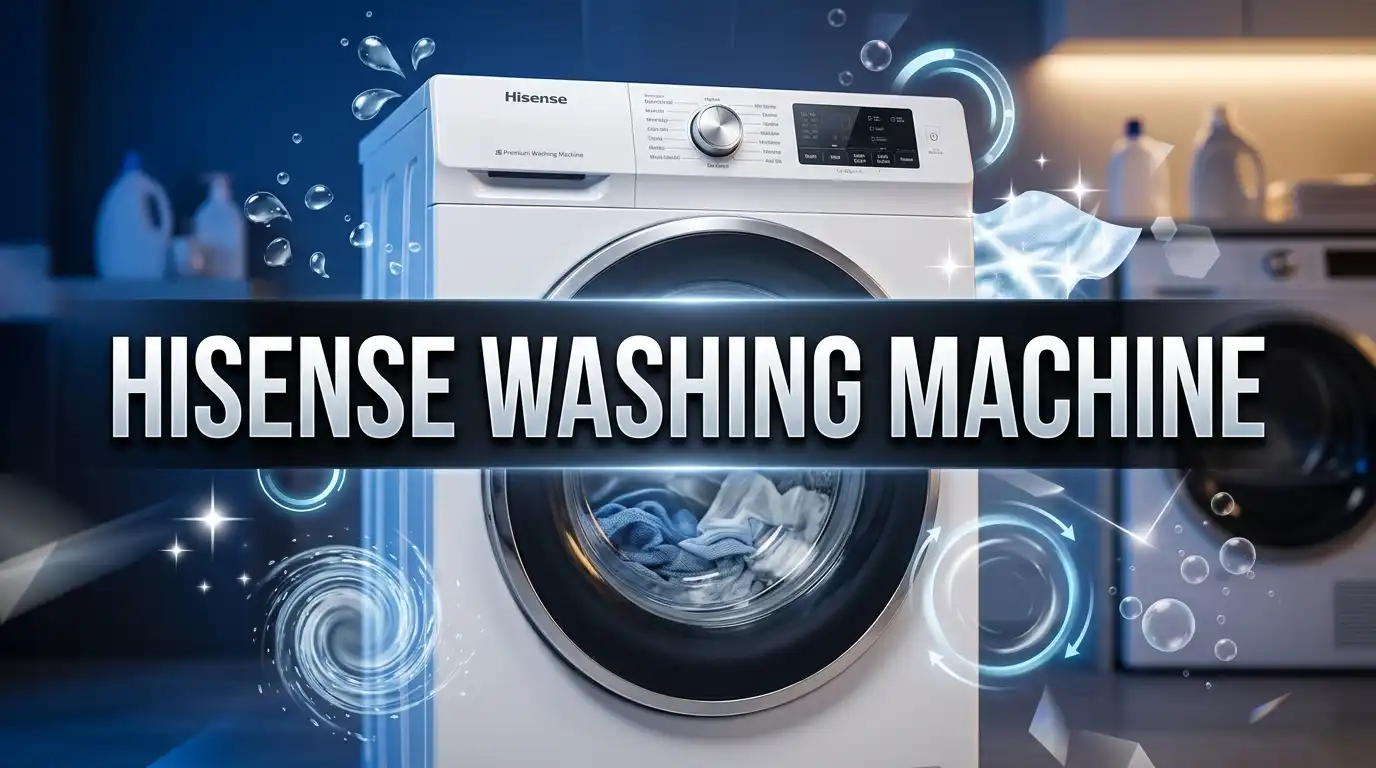
Hisense Washing Machine Review 2026: Worth Your Money?
Laundry day should be simple. Your machine should fill, wash, spin and stop without drama. Hisense promises exactly that at a price that leaves money in your pocket, and thousands of buyers have taken the deal. But does the brand hold up after a year of towels, school uniforms and muddy socks?
This review answers that question in plain language. I looked at real owner feedback, tested specs, independent lab style reviews and long term reliability reports. You will learn what Hisense does well, where it slips, and which model fits your home. By the end, you will know whether a Hisense washer belongs in your utility room or whether your money belongs elsewhere.
In a Nutshell
Short on time? These points cover the whole review.
- Value is the headline. Hisense sells washers with features you normally find on machines costing far more. Steam programs, inverter motors and app control appear on budget models.
- Wash quality is genuinely good. Owners report clean results on everyday soil. The Jet Wash spray system and heated cycles handle stains that older budget machines leave behind.
- Cycles run long. The eco program can pass three hours. This is common across all modern washers, yet Hisense owners mention it often. The 15 minute quick wash saves the day for light loads.
- Noise levels impress. Brushless inverter motors keep most models near 72 dB at full spin. Many owners install these machines in kitchens and open plan homes without complaint.
- Reliability is mixed but fair. Most units run for years. A minority report control panel faults, drain issues and slow service response. Buy from a seller with strong return support.
- Best for families on a budget. If you want 8 kg to 10 kg capacity, an A energy rating and smart features for a mid range price, Hisense makes a strong case.
Hisense Washing Machine Overview
Hisense builds appliances at massive scale. The company started with televisions and now produces refrigerators, air conditioners and laundry appliances sold in more than 100 countries. That scale keeps prices low.
The laundry range splits into simple tiers. Entry models offer 7 kg or 8 kg drums with basic dials. Mid tier machines add steam, inverter motors and WiFi. Flagship units reach 10 kg to 12 kg with auto dosing and 1400 rpm spins.
Most models share the same core hardware. You get a stainless steel drum, a brushless inverter motor and a 1200 rpm or 1400 rpm spin. Energy ratings usually land at A or B under the current European scale.
Hisense also uses a splittable tub on several models. This matters more than it sounds. A splittable tub means a technician can replace worn bearings instead of scrapping the whole machine. Repairability adds real years to an appliance.
The brand covers most models with a two year warranty, and some regions offer longer motor coverage. Parts availability is good in the UK, Australia, South Africa and Nigeria. Availability in the United States is thinner, so American buyers often choose alternatives.
Overall, Hisense positions itself as the sensible middle ground. It sits above no name brands and below Bosch or Miele. For many households, that spot is exactly right.
Hisense 3 Series WFQA8014EVJM Washing Machine
No products found.
This 8 kg model is the machine most people mean when they say “Hisense washer.” It spins at 1400 rpm, carries an A energy rating and costs less than most rivals with the same numbers.
The drum suits a household of three or four. You can fit a full double duvet inside, which owners repeatedly mention as a win over older 6 kg machines.
Performance holds up well. The Eco 40 to 60 cycle cleans thoroughly and sips energy at roughly 0.475 kWh per run. Water use sits near 45 litres per cycle, which is respectable for this capacity.
The star feature is the 15 minute quick wash. Reviewers found it clean enough for lightly worn clothes, which turns it into the default program for busy weeks. An Auto cycle weighs the load and adjusts settings, finishing in about an hour.
Steam features help too. The anti allergy program uses steam to reduce dust mite residue and pollen, which matters for asthma households.
There are gaps. This model skips a dedicated delicates or handwash cycle. The wool program covers most soft items, but silk owners will notice the omission.
Noise stays low at around 72 dB during peak spin. The brushless motor hums rather than roars. For the price, this is one of the best value washers you can buy today.
Hisense WFQA1014EVJM 10 kg Washing Machine
No products found.
Bigger families need bigger drums. This 10 kg model handles roughly 22 lbs of laundry per load and still spins at 1400 rpm.
The extra capacity changes how you plan laundry. Two large loads replace three medium ones. That saves water, electricity and about an hour of your weekend.
You get 15 programs here. The list covers anti allergy, baby care, dark laundry, sports, drum clean, quick 15, wool, mixed fabrics and a 68 degree hygiene wash. The baby care cycle runs extra rinses, which parents value for sensitive skin.
Steam support appears again and works two ways. It boosts stain removal at the start of a wash and relaxes creases at the end, which cuts ironing time noticeably.
The inverter motor drives efficiency and quiet running. Inverter motors skip carbon brushes, so there is less friction, less heat and less wear. This is the single biggest reason modern washers outlast old ones.
Build quality feels solid. The door glass is thick, the hinge is metal and the detergent drawer slides without wobble. The digital display shows remaining time clearly.
The main drawback is size. At around 60 cm wide and up to 61 cm deep, it needs a proper alcove. Measure your space twice before ordering, especially in older kitchens with tight plumbing runs.
Top 3 Alternative for Hisense Washing Machine
Hisense availability varies by country, and some shoppers simply want a different brand. These three models are widely stocked, well rated and cover three very different needs.

- Large 4.8 Cu. Ft. Capacity : Wash more in fewer loads—perfect for families and busy households with heavy...
- UltraFresh Vent System with OdorBlock: Helps eliminate excess moisture after each wash cycle, keeping your...

Last update on 2026-08-10 / Affiliate links / Images from Amazon Product Advertising API

- The full-automatic washing machine equipped with Heavy, Soft, Normal, Rapid, and Soak 5 programs and 3 water...
- This top load compact washing machine with only 18.1 inches in width, 17.7 inches in-depth, and 31.5 inches in...
Last update on 2026-06-09 / Affiliate links / Images from Amazon Product Advertising API

- 15.4 LBS. OF LAUNDRY PER LOAD—Wash up to 15.4 lbs. of laundry per load with this superior BLACK+DECKER best...
- IMPRESSIVE FUNCTIONALITY—With your new washer machine (79.4 lbs.) you have 3 water level choices for small...
Last update on 2026-08-10 / Affiliate links / Images from Amazon Product Advertising API
The first option is the GE UltraFresh front load washer with a 4.8 cu ft drum. It targets larger homes and includes a vent system that dries the gasket after each wash. That single feature stops the musty smell that plagues front loaders.
The second option is the COMFEE’ portable washing machine at 0.9 cu ft. It rolls to a sink, connects with a quick adapter and drains into a tub. Apartment renters, students and RV owners choose this constantly.
The third option is the BLACK+DECKER 2.0 cu ft portable washer with a 15.4 lb capacity. It bridges the gap between tiny portables and full machines, offering six cycles and a transparent lid.
Each alternative solves a specific problem. Choose the GE for family volume, the COMFEE’ for tight spaces and the BLACK+DECKER for a middle path. Match the machine to your floor space first, then compare features.
Design, Drum and Build Quality
Hisense keeps the styling simple. White or titanium silver cabinets, a large round door and a chunky control dial. Nothing shouts for attention, which suits most kitchens.
The control layout deserves credit. One dial selects the program. Separate buttons handle temperature, spin speed, delay start and extra options. You can learn the whole panel in five minutes.
Inside, the stainless steel drum uses dimpled walls. These dimples create a thin water cushion so fabric slides instead of scraping. Delicate items survive longer as a result.
Door seals are generous and thick. This helps prevent leaks but also traps moisture, so wipe the gasket regularly.
Cabinet rigidity is where budget machines usually fail. Hisense uses a full metal back panel on most current models rather than thin pressed steel. Better rigidity means less walking during a 1400 rpm spin.
Weight tells a similar story. Heavier concrete counterweights hold the tub steady. Hisense units typically weigh 60 kg to 70 kg, which sits in normal territory for the class.
The detergent drawer includes three compartments for prewash, main wash and softener. Some models add auto dosing tanks that hold weeks of detergent and release the right amount per load.
Fit and finish will not fool anyone into thinking this is a premium German machine. Panel gaps are slightly wider and plastics feel lighter. Yet nothing feels fragile, and that is the honest summary.
Wash Performance in Real Homes
Specs matter less than results. So how clean do clothes actually come out?
Owner feedback across forums and review sites points the same direction. Everyday soil disappears reliably. Sweat, food marks, grass and general grime come out on standard cotton programs.
Tough stains need help. Wine, oil and old set stains respond better with a prewash or a stain remover applied first. This is normal for every washer under premium price levels.
The Jet Wash spray system deserves a mention. It recirculates water through a spray nozzle so detergent reaches fabric faster. Wash results improve most on large, tightly packed loads.
Rinsing is thorough. Detergent residue complaints are rare, which is good news for anyone with sensitive skin. An extra rinse option adds another cycle when you need it.
Spin performance rates around B on the current label. Clothes come out damp but not dripping. Expect a shorter tumble dryer run or faster line drying.
Steam models handle odour well. Sports gear that smells after a normal wash usually comes out fresh after a steam cycle.
One caution appears in owner reports. Overloading hurts results badly on any front loader, and Hisense is no exception. Fill the drum to about three quarters and leave a hand width of space at the top.
Overall, wash quality lands close to machines costing considerably more. That is the strongest argument for the brand.
Wash Programs and Cycle Times
Program counts range from 12 to 16 across the lineup. More important than the count is which ones you will actually press.
The quick 15 is the most used program in most homes. It handles light loads, gym kit and school shirts in a quarter of an hour.
The Eco 40 to 60 cycle delivers the official energy rating. It washes cottons and synthetics together at low temperature over a long period. Expect two to three hours.
The Auto program weighs the drum and picks settings for you. It finishes in about an hour and suits people who never want to think about laundry settings.
The anti allergy cycle uses steam and higher temperatures to reduce allergens. Families with asthma or eczema report real benefits.
The drum clean program runs hot and empty to clear residue and bacteria. Run it monthly to prevent smells.
Other useful options include baby care, dark wash, wool, mixed fabrics, sports, duvet and a 20 degree cold wash.
The common complaint is cycle length. Long cycles are the price of low energy use, because heat costs more than time. If speed matters more than efficiency, use the quick wash or add the speed option.
Pause and Add is quietly brilliant. Press pause mid cycle, drop in the sock you missed and restart. It saves a full extra wash every single week.
Energy Use, Water Use and Running Costs
Energy labels changed in 2021 and became much stricter. An A rating today is genuinely hard to earn.
Most Hisense front loaders sit at A, B or C. The 8 kg models commonly achieve A with roughly 47 kWh per 100 cycles on the eco program.
Water use lands near 42 to 47 litres per cycle depending on model and load size. Load sensing helps by reducing fill volume for small loads.
Translate that into money. At average electricity prices, an A rated 8 kg machine costs roughly the price of a coffee per week for four eco washes. Hot cotton programs cost several times more, because heating water dominates the bill.
Three habits cut running costs sharply. Wash full loads. Use lower temperatures. Choose the eco program when you are not in a hurry.
Inverter motors help too. They draw less current, run cooler and adjust speed smoothly instead of switching hard between settings.
Spin speed also affects your total bill. A faster spin removes more water, so tumble dryer time falls. A 1400 rpm spin can shave meaningful minutes off drying compared with 1000 rpm.
Do not judge running cost by purchase price alone. A cheap machine with poor efficiency costs more across ten years than a slightly pricier A rated unit.
Noise Levels and Vibration
Noise is the reason many people replace an old washer. Hisense handles this area better than its price suggests.
Wash noise typically measures around 50 to 55 dB. That is quiet conversation level. You can hold a phone call in the next room without effort.
Spin noise measures around 72 to 76 dB depending on model. The 3 Series sits near the low end, which reviewers describe as remarkably quiet for a machine at this price.
The brushless inverter motor drives this result. Without carbon brushes, there is no grinding contact and far less mechanical whine.
Vibration control depends heavily on installation. Level the machine properly using the adjustable feet and check with a spirit level across both axes.
Remove the transit bolts before the first wash. Forgetting them causes violent shaking and can damage the suspension permanently. This is the single most common installation mistake.
Floor type matters as well. Solid concrete absorbs vibration. Suspended timber floors amplify it, so anti vibration pads help a lot.
A few owners report noise increasing after two or three years. That usually points to worn drum bearings or a small object caught in the outer tub. Coins and bra wires are the usual culprits.
Check pockets before washing. It sounds obvious, yet it prevents the most expensive repair a washer can suffer.
ConnectLife App and Smart Controls
Many current Hisense washers connect to WiFi through the ConnectLife app. Smart laundry sounds like a gimmick until you use it.
Setup is straightforward. Connect the machine to your home network, scan the code and pair it in the app.
The app does four useful things. It starts and schedules washes remotely. It sends a notification when the cycle ends. It suggests programs through a guided wizard. It reports faults with plain explanations.
Remote scheduling pairs well with cheap overnight electricity tariffs. Set the wash to finish just before you wake and you save money without effort.
The self diagnosis feature is the sleeper hit. Instead of a cryptic error code, the app tells you what went wrong and what to check first. That saves callout fees.
Alexa support works on several models. Voice commands cover starting, pausing and checking status.
App reliability draws mixed reviews. Most users connect without trouble, while some report dropouts on 5 GHz networks. Hisense machines generally expect a 2.4 GHz connection, so split your network bands if pairing fails.
You lose nothing by ignoring the app entirely. Every function remains available on the physical panel. Smart features here are a bonus rather than a crutch, which is exactly how it should be.
Pros and Cons of Hisense Washing Machines
Here is the balanced summary after weighing specs, testing notes and owner reports.
Pros
- Strong price to feature ratio, with steam, inverter motors and WiFi at budget level prices
- Genuinely quiet operation, with many models near 72 dB at full spin
- Fast 15 minute quick wash that handles real loads rather than a token rinse
- Good energy ratings, with A rated 8 kg models available well below premium brand pricing
- Large capacity choices from 7 kg up to 12 kg, covering couples through to big families
- Splittable tub design on several models, which makes bearing replacement possible
- Simple control panel that anyone in the household can operate without a manual
- Useful extras including Pause and Add, anti allergy steam, drum clean and auto dosing
Cons
- Standard and eco cycles run long, often two to three hours
- Some models skip dedicated delicates and handwash programs
- Service response quality varies by region, and a minority of owners report slow repairs
- Reports exist of control panel faults and drain problems on a small share of units
- Availability in the United States is limited, so parts and support are harder to source there
- Build finish feels lighter than premium brands, with thinner plastics on trims and drawers
- App connectivity can be fussy on mixed band WiFi networks
The pattern is clear. You trade some polish and speed for excellent value and quiet performance.
Common Problems, Error Codes and Simple Fixes
No appliance is perfect. Knowing the common faults helps you fix small issues before they become callouts.
Water inlet errors are the most reported problem. The machine cannot fill fast enough. Check that both taps are fully open, straighten kinked hoses and clean the small mesh filter at the hose connection.
Drain errors come second. A blocked pump filter is almost always the cause. Open the small hatch at the bottom front, place a towel and shallow tray underneath, then unscrew the filter and remove debris.
Door lock errors appear when the latch does not engage. Check for clothing trapped in the seal and make sure the door closes with a firm click.
Unbalanced load warnings happen when a single heavy item bunches on one side. Open the door, redistribute the load and restart the spin.
Excess foam faults trigger when you use too much detergent. Modern machines need far less than people expect. Halve your dose and see if the problem disappears.
Persistent electrical faults or repeated error codes need a qualified technician. Do not open the cabinet yourself while the machine is connected to power.
Keep your model number and purchase receipt in one place. Warranty claims move much faster when you have both ready.
Installation, Care and Maintenance Tips
Good installation prevents most early failures. Follow these steps and your machine will run smoothly for years.
Remove all transit bolts first. They sit at the rear and hold the drum steady during shipping. Keep them in a drawer for future moves.
Level the machine carefully. Adjust the feet until the cabinet does not rock at any corner, then tighten the lock nuts.
Leave a small gap behind the machine so hoses are not crushed. A crushed drain hose causes fill and drain faults that look like serious failures.
Run a drum clean cycle monthly with a machine cleaner or a hot empty wash. This clears detergent buildup and bacteria.
Wipe the door seal after every wash. Pull back the rubber lip and dry the fold where water collects. This is where black mould starts.
Leave the door slightly open between washes. Airflow stops odours before they form.
Clean the detergent drawer every few weeks. Softener residue turns thick and blocks the flow channels.
Check the pump filter every three months even without symptoms. You will be surprised what appears.
Use the correct detergent type. Front loaders need low foaming formulas, and pods work well because dosing is fixed.
Small habits beat expensive repairs. Ten minutes of care each month easily adds years of trouble free service.
Price, Warranty and Value for Money
Price is where Hisense wins most arguments. Entry models start remarkably low, mid range 8 kg machines with steam and WiFi sit comfortably below premium competitors, and even large 10 kg to 12 kg units stay under the price of a basic Bosch.
Compare the value directly. A Hisense 8 kg A rated machine with steam and app control often costs less than a Bosch model with fewer features and a lower spin speed.
Warranty coverage typically runs two years on the full machine. Several regions extend motor coverage to ten years, which reflects confidence in the inverter design.
Extended warranties are worth considering if your region has weak service coverage. Read the terms carefully because some plans exclude wear parts.
Resale value is modest, as with all mid tier appliances. Buy Hisense to use it, not to trade it.
Long term cost matters more than sticker price. An A rated machine that runs eight years costs less overall than a cheap C rated unit replaced after four.
The value verdict is straightforward. If your budget stops well short of premium brands, Hisense delivers more usable features per pound or dollar than almost anything else at the same price.
Just buy from a retailer with a solid returns policy. That single decision protects you from the small share of units that arrive with faults.
Final Verdict: Should You Buy a Hisense Washing Machine?
Yes, for most households, with clear eyes about the trade offs.
Hisense builds washers that clean well, run quietly and cost far less than the feature list suggests. The inverter motors are efficient, the steam programs work and the quick wash genuinely saves time.
The weak points are honest and predictable. Cycles run long. Finish quality trails premium brands. Service experiences vary depending on where you live.
Buy a Hisense if you want strong everyday performance at a mid range price. Buy one if you need 8 kg or larger capacity without stretching your budget. Buy one if quiet operation matters because the machine sits in a kitchen or near a bedroom.
Look elsewhere if you own many delicate garments and need dedicated handwash cycles. Look elsewhere if you live in a region with thin Hisense service coverage. Look elsewhere if you want the longest possible lifespan and can afford a premium brand.
My recommendation is simple. The 8 kg 3 Series suits most families of three or four. The 10 kg models suit larger households and anyone who washes bulky bedding often.
Set expectations correctly and Hisense delivers real satisfaction. You get a capable, quiet, efficient machine, and you keep several hundred pounds or dollars for something else.
Frequently Asked Questions
Are Hisense washing machines reliable?
Most Hisense washers run reliably for years. The inverter motors carry long warranties and the splittable tubs allow bearing repairs. A minority of owners report control panel faults and drain issues, so buy from a retailer with good returns support.
How long do Hisense washing machines last?
Expect eight to twelve years with regular maintenance. Monthly drum cleaning, filter checks and correct detergent dosing extend life significantly. Overloading is the fastest way to shorten it.
Why does my Hisense washing machine take so long?
Eco programs use low temperatures and longer times to save energy. This is normal across all modern washers. Use the 15 minute quick wash or the Auto program when you need faster results.
Is Hisense better than Beko or Bosch?
Hisense generally beats Beko on quick wash speed and noise levels at similar prices. Bosch offers better build finish and longer expected lifespan, but costs considerably more. Hisense sits between the two on value.
Do Hisense washing machines have WiFi?
Many current models connect through the ConnectLife app. You can start washes remotely, schedule cycles, receive notifications and read fault diagnoses. Alexa voice control works on selected models.
What does the Hisense drum clean cycle do?
It runs a hot empty wash that clears detergent buildup, limescale and bacteria from the drum and hoses. Run it once a month to prevent odours and keep wash results consistent.
Can I stack a Hisense washer and dryer?
Some Hisense models support stacking with a manufacturer stacking kit. Never stack without the official kit, because the machine can shift during spin cycles and fall.
What capacity Hisense washing machine should I buy?
Choose 7 kg for one or two people, 8 kg for three or four, and 10 kg or larger for five or more. Add capacity if you wash bulky duvets or pet bedding often.

DK is a technology expert who specializes in AI tools, software, and tech gadgets. He writes for How to Tech Info, providing detailed reviews and practical guides. DK helps readers discover the best AI applications, navigate new software, and choose the right tech gadgets.