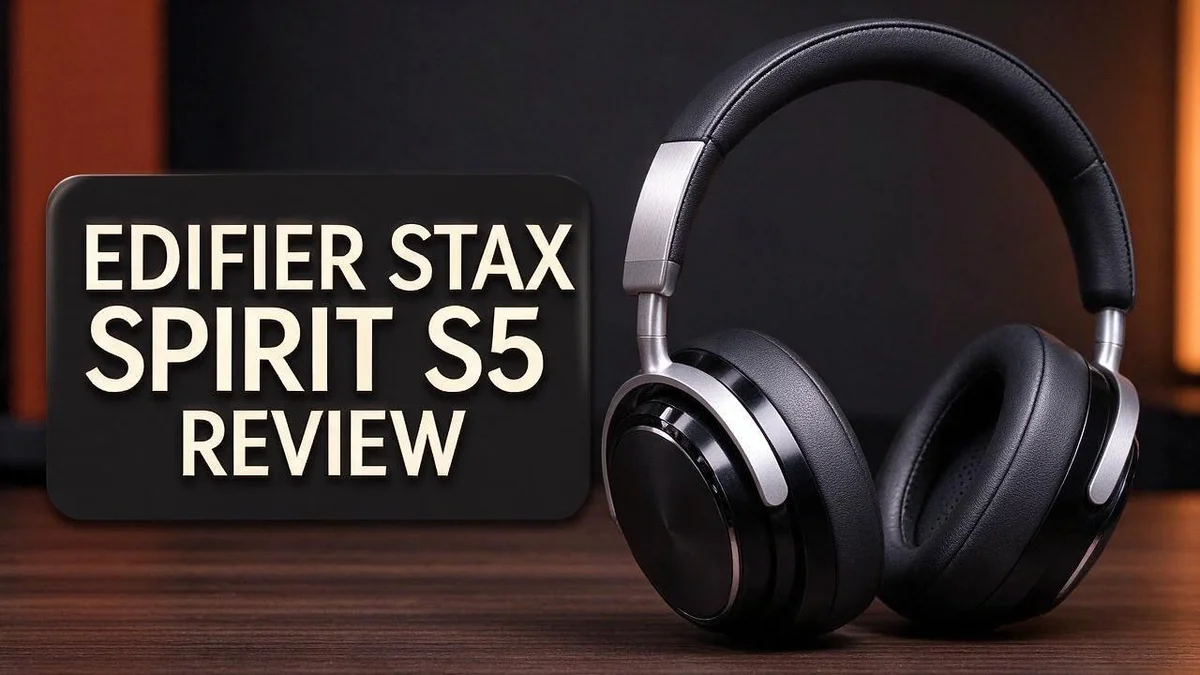
Edifier Stax Spirit S5 Review: Planar Magnetic Wireless Headphones Tested
Looking for headphones that sound rich and full? The Edifier Stax Spirit S5 could be the pick you need. It brings planar magnetic drivers into a wireless design.
Planar tech often delivers accurate, detailed audio. Many listeners notice a neutral yet dynamic tone with strong midrange and treble.
The headphones also pack useful extras. You get a dual microphone system for clearer calls, multipoint connection, and easy switching between music and video. One user review even cites about 80 hours of battery life.
Still, there are some compromises. The S5 lacks active noise cancellation, and it feels heavy during long sessions. Keep reading to see if this pair suits your listening style.
In a Nutshell
- Clear voice on calls: A dual-mic system helps your voice come through during phone calls and video meetings, so you sound clear to the other person.
- Easy device switching: Multipoint connection lets you move between two devices, so you can jump from your laptop to your phone without reconnecting every time.
- Music and video modes: You can switch between music and video, so the sound suits whatever you watch or play.
- Long battery life: One user review cites about 80 hours of use, so you can go days between charges on a busy schedule.
- Works with almost anything: The headphones pair well with nearly any audio source, including phones, laptops, tablets, and TVs.
- Heavy frame and no ANC: The headphones feel weighty, and some reviewers notice discomfort after long sessions. Since there is no active noise cancellation, outside sounds like traffic or office chatter can reach your ears. If quiet travel matters most, compare the rivals on this list first.
Planar Magnetic Sound Performance

- [Upgraded Planar Magnetic Driver] STAX SPIRIT S5 utilizes planar magnetic drivers with EqualMass diaphragm for...
- [CD Loseless Audio for Audiophiles] Powered by Qualcomm QCC5181 Bluetooth SoC platform and Qualcomm Snapdragon...
Last update on 2026-11-06 / Affiliate links / Images from Amazon Product Advertising API
Planar magnetic drivers work differently from standard headphone drivers. A thin diaphragm sits between magnets, and the whole surface moves together.
This design helps the Edifier Stax Spirit S5 deliver a neutral yet dynamic sound. Music often feels open, clean, and easy to follow.
The midrange stands out first. Vocals and guitars sound natural and close, so singers feel like they stand right in front of you.
Treble brings crisp detail to the mix. Cymbals and high notes shine with clarity, adding sparkle without losing control. Strings sound smooth and airy too.
Dynamics add energy to every track. Quiet passages stay clear, while loud moments hit with real impact.
Layering is another strength. You can pick out separate instruments in busy songs, which suits jazz, orchestral pieces, and layered electronic music.
Good sound starts with good files. A lossless stream or high quality track lets the drivers show their full range.
Try a mix of genres before you decide. Pop, rock, and film scores each reveal a different side of the tuning.
Some listeners may want more bass punch. Planar designs usually favor clarity over heavy low end, so bass fans might prefer a bit more weight.
Instrument placement feels clear too. You can picture where each sound sits in the mix, which adds depth to familiar songs.
Who gets the most from this sound? Listeners who enjoy detail, vocals, and dynamic energy will likely feel right at home.
Casual listeners may still enjoy it. The tuning stays easy to follow, even when you play background music at a low volume.
Many wireless headphones sound good, but planar sound gives the Edifier Stax Spirit S5 a clear identity.
Sound preferences vary from person to person. Test the headphones with songs you know well so you can judge the tuning fairly.
Overall, the sound offers a detailed and balanced listen. Planar tech rewards careful listeners who value clarity above all, and that makes this model worth a close look.
Comfort and Build Quality
Comfort starts with the ear pads. The soft pads cushion your ears and help the headphones sit gently around your head. Many people feel at ease within minutes of putting them on.
Try a quick fit check first. Put the headphones on and sit still for ten minutes. Notice whether the pressure stays comfortable or slowly builds. This simple test tells you a lot before a long listening session.
Clamping force matters too. A snug grip seals the earcups for better sound. Too much force can feel tight on the sides of your head. Adjust the headband until the pressure feels even on both sides.
Mind the space around your ears. Larger ears may need more room inside the earcups. Check that your ears sit fully inside the pads without folding over the edges.
Glasses wearers should pay close attention to fit. Arm pieces of eyeglasses can press against the pads and create small pressure points. Take short breaks during movies or calls to let your head relax.
Watch for warmth during long use. Soft pads can trap heat around your ears. Lift the headphones off now and then to let fresh air reach your skin.
Build quality feels solid in hand. The overall construction feels sturdy and ready for daily use. Careful handling helps the headphones stay in top shape for years.
Storage makes a difference. Keep them in a soft pouch when you travel. Store them flat or with the earcups facing outward so the pads keep their shape.
Wipe the pads with a dry cloth now and then. This simple habit keeps them fresh and comfortable. Avoid tossing them into a crowded bag where the earcups can bend or get scratched.
Good comfort depends on your head shape and listening habits. Test the fit with your own ears before using them for long sessions. Once you find the right position, the headphones can become a dependable companion for everyday listening.
Multipoint Connectivity and Source Compatibility
Setting up the Edifier Stax Spirit S5 takes only a few minutes. Pair your first device as usual. Then add your second device using the same pairing mode.
Once both devices connect, the headphones keep both links active. Pause music on one device before you start a call on the other. This small habit avoids confusion about which sound plays.
Calls use the dual microphone system. It helps reduce background noise for the person you speak with.
Test call switching once at home. Start music on your laptop, then answer a call on your phone. You will learn how your devices behave before you rely on them.
Think about your daily routine before you set up. Many people use a phone for messages and a laptop for work. Multipoint fits that mix well.
Pick the two devices you use most. Pairing a rarely used tablet can crowd the list. Keep the connection focused on your main phone and laptop.
Source compatibility depends on your Bluetooth version. Newer devices usually offer more stable links and smoother reconnection.
Keep older devices updated. Software updates often fix pairing issues. Check your phone or laptop settings if a second device drops out.
Forget old pairings you no longer use. A crowded list can slow reconnection. Remove unused entries from your Bluetooth menu for a smoother connection.
Power matters too. Keep both devices charged so the link stays steady during long work sessions. A low battery on either device can interrupt the connection.
Try a quick check after each update. Play a short song, make a test call, and switch sources. This takes only a minute and confirms everything works.
Simple setup leads to better daily use. Once you learn the steps, switching devices feels natural. Your music and calls stay in one place.
Overall, the Edifier Stax Spirit S5 fits people who move between devices all day. Clear setup steps and smart habits make the experience smooth from the first day.
Top 3 Alternatives
Hifiman Sundara
No products found.
If you want a comfortable open-back headphone, the Hifiman Sundara is a strong pick. It uses planar magnetic drivers that create a wide soundstage and clear midrange. It feels light on the head, so long listening sessions stay easy.
Many listeners enjoy its natural and airy sound. It works well with a desktop amplifier. It also pairs nicely with acoustic music, jazz, and vocal tracks.
Audeze LCD-X

- THE PROFESSIONAL: Many of the current hit recordings you’ve heard have been mixed on Audeze headphones - the...
- PLANAR MAGNETIC DRIVERS: Large ultra-thin 106 mm diaphragms with Audeze’s proprietary Fazor elements and...
Last update on 2026-11-06 / Affiliate links / Images from Amazon Product Advertising API
The Audeze LCD-X offers a refined feel and very detailed sound. Its planar magnetic drivers reveal subtle textures in recordings that many headphones miss. Many people love the soft pads and balanced build.
This model suits focused listening at home. You will want a good headphone amplifier to get the best out of it. Its deep bass and smooth highs make it a favorite among dedicated audiophiles.
Stax SR-L300

- Supercharged AI Performance: Powered by NVIDIA Jetson Orin NX 16GB, delivers up to 157 TOPS in MAXN Super Mode...
- Advanced Thermal Engineering for Full-Power Operation: Equipped with a vacuum copper heat pipe system...
Last update on 2026-11-19 / Affiliate links / Images from Amazon Product Advertising API
The Stax SR-L300 brings electrostatic sound to a more accessible setup. Electrostatic headphones are known for fast transients and an airy presentation. This model needs a separate energizer amplifier to run.
It is a good choice if you enjoy a gentle, open sound with plenty of space. Plan for the extra gear, and you get a unique listening experience that many fans find addictive.
Call Quality and Microphone Performance
Clear voice pickup matters most on calls. The Edifier Stax Spirit S5 uses a dual microphone system to capture your speech. This system focuses on your voice. It also works to reduce some background sound around you. This helps the other person hear you more easily.
Background noise is the real test. Busy streets, cafes, and open offices bring many sounds. Keep your expectations realistic in loud places.
Here is a key point to know. The headphones lack active noise cancellation, so they do not block outside sound for your ears. You will still hear traffic or chatter while you talk.
Because of that, your position matters a lot. Speak at a steady volume and keep your mouth close to the microphones. Small changes in distance can shift how clear you sound.
Keep the earcups seated gently during calls. A loose fit can shift the microphone position and change your voice level.
Wind can also cause rumbling on outdoor calls. Step into a calm spot or move away from strong breezes when you talk outside.
Pause between sentences on busy calls. Short pauses help the microphones separate your words from background sound.
Quiet rooms usually give the best results. A home office or closed room lets the microphones focus on your voice.
Sound on your end matters too. The strong midrange can make voices feel lively and natural in your ears, so you hear callers with good presence.
Try a short recording test. Record a brief message, then play it back. This shows how your voice may sound to callers.
If callers say you sound distant, check your position first. Then adjust your distance and try again.
Battery life also helps during long calls. A user review cites 80 hours, so long meetings should not drain the headphones quickly.
Good call quality comes from good habits. Test the microphones in your usual spaces. Then you can make calls with confidence.
Pros and Cons
Pros
- Neutral yet dynamic sound with strong midrange and treble.
- Planar magnetic drivers deliver rich, detailed audio for music lovers.
- User reports cite around 80 hours of battery life.
- It works with almost any audio source you own.
- Switching between music and video playback feels simple.
Cons
- There is no active noise cancellation, so outside sounds can reach your ears.
- The frame feels heavy during long listening sessions.
- Some reviewers report discomfort after many hours of use.
- Planar tech suits serious listeners more than casual users.
Who Should Buy It
Home listeners come first. This headset suits people who listen at a desk, on a sofa, or in a reading nook. Sound lovers who enjoy calm, focused listening will feel right at home.
Audiophile newcomers make good buyers. If you own a basic wireless pair, this model offers a clear step up. You do not need expert gear to enjoy it.
Its solid build feels reassuring during daily use.
Movie fans may enjoy it too. Many people mix songs, podcasts, and films each evening. A flexible headset helps with that routine.
Commuters should look elsewhere. Busy trains and crowded buses bring constant noise. Without active noise cancellation, that noise can break into your listening.
Frequent travelers may want stronger isolation. A model with dedicated isolation features will serve you better on the move.
Light wearers may feel hesitant. Some people want a very light fit for long days. If that matches you, try other styles first.
Compare these alternatives first. Shoppers who need noise cancellation can check the Sennheiser Momentum 5 or the Edifier W820NB. Fans of the Edifier family can also compare the STAX Spirit S3 for a related feel.
Ask yourself a few simple questions. Do you listen mainly at home? Do you value sound detail over travel comfort? Do you want one headset for music and video?
If you answer yes, this model deserves a spot on your shortlist.
Test it in a store or during a return window if possible. Bring your favorite tracks and watch a short film during the test. Hands on experience helps you judge fit and sound with confidence.
Final Verdict
The Edifier Stax Spirit S5 closes our review on a positive note. It offers a clear sound signature that many listeners will enjoy.
Our final take is simple: this headset rewards focused listening. Planar drivers reveal fine details that basic pairs often blur.
The trade-offs are clear too. You gain excellent audio quality, but you accept a lack of active noise cancellation and a heavier frame.
Think about where you plan to use it most. If you mostly listen at home, those drawbacks matter far less.
Home listeners and desk workers will likely feel right at home with this model. It pairs well with a quiet room and a steady playlist.
Shoppers who want a fully portable companion should look at other options. Crowded routes call for stronger isolation.
Compare it with rivals before you decide. The Sennheiser Momentum 5 and the Edifier STAX Spirit S3 are worth a look.
Do not expect perfection in comfort. Long sessions may bring some fatigue, so test the fit in person if possible.
Still, the strengths outweigh the weak spots for many people. A strong build, solid features, and rich sound make a convincing case.
Audio fans often ask whether the S5 feels like a real upgrade from a basic wireless set.
For most listeners, the answer is yes. The clearer mids and detailed highs make everyday songs feel fresh.
Still, a short trial period helps you judge comfort. Wear the headset for an hour and notice how the pressure feels.
Pay attention to how you use your sound at night. Movies, podcasts, and music all benefit from this balanced tuning.
Our verdict: this is a strong pick for serious home listeners. Choose it when sound quality tops your list of needs.
Read the full specs and check recent reviews before buying. Your own listening habits should guide the final choice.
Final thought: pick the S5 when you want depth, warmth, and detail at home. Look elsewhere when you need quiet on busy streets.
Frequently Asked Questions
Does the Edifier Stax Spirit S5 connect to two devices at once?
Yes, it supports multipoint connection. You can link a laptop and a phone at the same time. Switching between them during a busy day feels smooth.
Can I take phone calls with it?
Yes. A dual-mic system helps your voice come through clearly on calls. It works well for quick chats, but it does not block outside sound from reaching your ears.
Which rivals should I compare it with?
Start with the Edifier STAX Spirit S3 if you like the same design family. Then look at the Sennheiser Momentum 5 and the Sennheiser Accentum Wireless. Each option offers a different balance of comfort, features, and sound.
Is it a good pick for a noisy commute?
Not really. Because it lacks active noise cancellation, train chatter and road noise can still reach you. If you ride often, look for a model with stronger isolation features.

DK is a technology expert who specializes in AI tools, software, and tech gadgets. He writes for How to Tech Info, providing detailed reviews and practical guides. DK helps readers discover the best AI applications, navigate new software, and choose the right tech gadgets.