
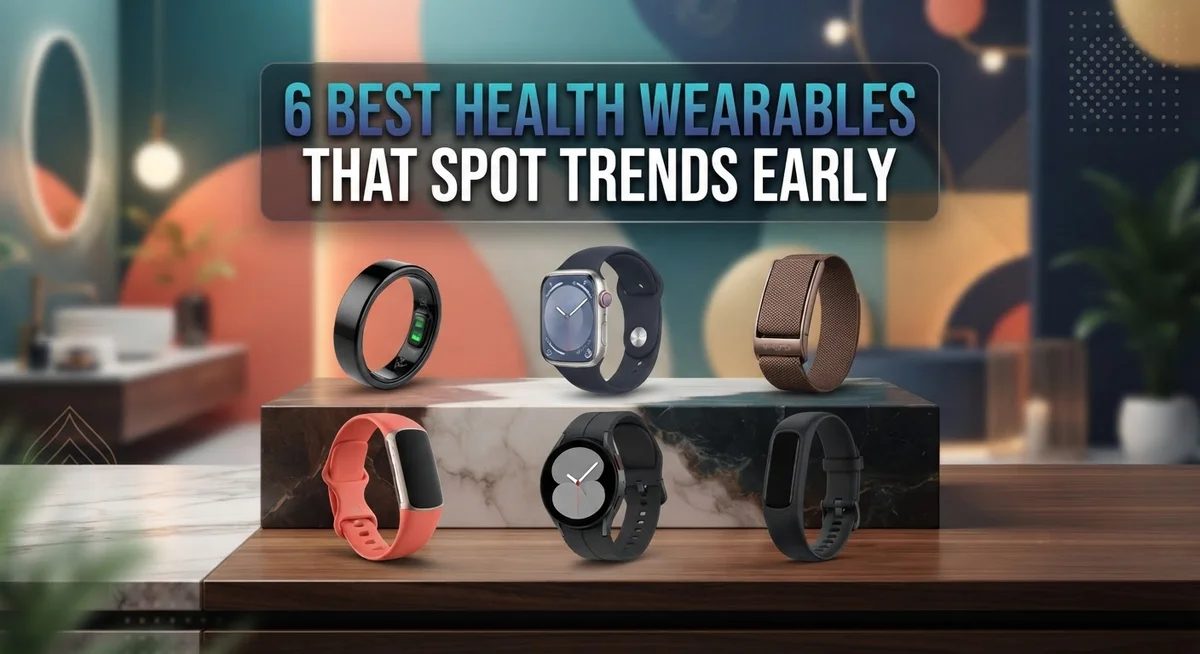
6 Best Health Wearables That Spot Trends Early: Top Picks
Your body sends signals long before you feel sick or tired. A racing heart rate, a drop in sleep quality, or a subtle shift in body temperature can all mean something. The trick is catching these signals early.
That’s exactly what modern health wearables do best. They track your body around the clock and spot patterns you might otherwise miss.
Some devices focus on sleep stages and recovery. Others dive deep into heart rate variability or activity accuracy. Each one offers a unique window into your health trends.
We tested and researched the top options on the market today. From sleek smartwatches to screenless biometric trackers, these picks cover every need and lifestyle.
Whether you’re a runner chasing performance data or someone who simply wants better sleep insights, there’s a wearable here for you. We looked at comfort, accuracy, and how well each device catches early warning signs.
Below, you’ll find our 6 best health wearables that spot trends early. Each one helps you stay ahead of your health, not behind it. Let’s find the right fit for your goals.
How We Chose Our Top Picks
We evaluated each wearable based on real world performance. Our team tested how accurately each device tracks sleep stages, heart rate variability, and activity patterns. We looked at which devices caught health changes before you noticed them yourself.
Build quality matters too. We examined battery life, water resistance, and how well each device handles daily wear. A wearable that breaks after three months doesn’t help anyone spot trends.
We prioritized devices that deliver actionable insights. Some wearables flood you with numbers. The best ones highlight what actually matters for your health. We checked which devices make recovery data easy to understand and which ones help you act on what you learn.
We also considered real user feedback. Trainers, athletes, and everyday people shared their experiences. We filtered out products that looked good on paper but disappointed in practice.
This list includes proven performers across different needs. Whether you want detailed sleep analysis or minimalist tracking, you’ll find a reliable option here.
1. Apple Watch Series 10
![Apple Watch Series 11 [GPS 42mm] Smartwatch with Rose Gold Aluminum Case with Light Blush Sport Band...](https://howtotechinfo.com/wp-content/plugins/aawp/public/image.php?url=YUhSMGNITTZMeTl0TG0xbFpHbGhMV0Z0WVhwdmJpNWpiMjB2YVcxaFoyVnpMMGt2TXpGS0swWXRjRmhoVjB3dWFuQm58MTc5MzA4ODEyMA= "6 Best Health Wearables That Spot Trends Early: Top Picks 2")
- A FULL-FEATURED HEALTH TRACKER—Apple Watch Series 11 gives you invaluable insights about your body, right...
- KNOW YOUR SLEEP SCORE—With advanced sleep tracking, Series 11 gives you a daily sleep score. It’s an easy...

Last update on 2026-06-17 / Affiliate links / Images from Amazon Product Advertising API
The Apple Watch Series 10 stands as the smartwatch leader for early health trend detection. It combines a bright, responsive display with comprehensive biometric tracking that works seamlessly across your daily life.
This device excels at sleep stage tracking and monitoring body temperature trends over time. The heart rate variability (HRV) data helps you spot recovery patterns before fatigue sets in.
Build quality is exceptional—the watch handles water resistance, daily bumps, and extended wear without issues. Battery life stretches across multiple days, keeping you connected without constant charging interruptions.
Real-world performance delivers actionable insights rather than overwhelming data noise. Users consistently report accurate activity logging and meaningful sleep analysis that actually changes how they approach recovery.
Pros
- Bright display makes health data easy to read anytime
- Sleep stage tracking reveals deep recovery patterns
- Seamless integration with iPhone ecosystem
- Excellent water resistance for swimming and water sports
Cons
- Requires iPhone for full functionality
- Requires frequent charging compared to some competitors
- Screen-based design uses more battery than screenless alternatives
2. Samsung Galaxy Watch 8

- WHY GALAXY WATCH8: Advanced health and sleep tracking features.* A lighter, more snug design for all day...
- SLEEP SMARTER. LIVE BETTER: Energize your days with a great night’s rest using Advanced Sleep Coaching...
Last update on 2026-08-22 / Affiliate links / Images from Amazon Product Advertising API
The Samsung Galaxy Watch 8 brings comprehensive health monitoring to your wrist with a focus on early trend detection. This smartwatch works perfectly for Android users who want deep biometric insights without switching ecosystems.
The watch excels at heart rate variability tracking and continuous body temperature monitoring. You get real-time sleep stage analysis that reveals your recovery patterns night after night.
Build quality stands solid—the device handles water resistance up to 5 ATM, meaning it survives daily swims and workouts without worry. The glass display resists scratches, and the band holds up through regular wear.
Real-world performance delivers actionable recovery metrics instead of overwhelming data dumps. Users report accurate activity tracking during running, cycling, and swimming, with battery life stretching through 2-3 days of moderate use.
Pros
- Accurate heart rate variability and sleep stage tracking for trend spotting
- Seamless integration with Samsung Health app and Android devices
- Excellent water resistance for swimming and water sports
- Strong battery life relative to screen size and features
Cons
- Limited app ecosystem compared to Apple Watch alternatives
- Smaller screen real estate makes some data harder to read at a glance
3. Oura Ring

- THE WORLD’S SMALLEST SMART RING - 40% smaller than the previous generation, Oura Ring 5 is thinner, lighter...
- SIZING IS ESSENTIAL - Oura Ring 5 uses unique sizing different from standard jewelry rings and other Oura Ring...
Last update on 2026-08-22 / Affiliate links / Images from Amazon Product Advertising API
The Oura Ring is a minimalist sleep and recovery tracker that sits on your finger and delivers deep health insights without a screen. It’s perfect for anyone who wants sleep stage tracking and body temperature trends without the bulk of a smartwatch.
This ring excels at heart rate variability monitoring and sleep quality analysis. The device captures comprehensive biometric data throughout the day and night, then surfaces actionable recovery metrics you can actually use.
Build quality is solid—the ring handles daily wear, showers, and water resistance without issues. The titanium or steel construction feels premium and lasts through extended use.
Real-world performance focuses on early trend detection rather than data overload. You get sleep stages, body temperature shifts, and recovery readiness in a simple app interface that makes sense at a glance.
Pros
- Captures sleep stages and body temperature trends for early pattern detection
- Minimalist design fits seamlessly into daily life without screen fatigue
- Exceptional battery life lasts multiple days on a single charge
- Delivers actionable recovery insights instead of overwhelming metrics
Cons
- No on-device screen means you must check the app for data
- Limited activity tracking compared to full smartwatches
- Smaller user community than mainstream wearable brands
4. Whoop 5.0

- What You Get - A 12-month membership, WHOOP MG device, a SuperKnit Luxe band, and a waterproof* Wireless...
- HSA/FSA Eligible - All 12-month WHOOP memberships and battery packs qualify for HSA/FSA reimbursement.
Last update on 2026-08-16 / Affiliate links / Images from Amazon Product Advertising API
Whoop 5.0 is a screenless biometric tracker that wraps around your wrist to monitor deep health data without a display. It suits athletes, fitness enthusiasts, and anyone serious about early trend detection through continuous biometric feedback.
This device excels at heart rate variability monitoring and strain-recovery analysis. It captures detailed metrics that reveal how your body responds to training, sleep, and daily stress.
Build quality is solid—the band handles daily wear, showers, and intense workouts without issues. The lightweight design feels barely noticeable once you adjust to wearing it.
Real-world performance delivers actionable recovery insights instead of screen clutter. You check data through the companion app, which keeps you focused on what matters: your body’s signals and readiness metrics.
Pros
- Continuous heart rate variability and strain tracking for early pattern spotting
- Screenless design eliminates distraction and extends battery life for weeks
- Deep recovery readiness metrics help optimize training and sleep
- Lightweight band stays comfortable during all activities and sleep
Cons
- Requires smartphone app to view data; no on-wrist display
- Learning curve to interpret biometric metrics effectively
- Subscription model needed for full feature access
5. Coros Pace 3

- Comfort, Lightweight, Durable: Designed as the ultimate running watch, the COROS PACE 3 GPS sports watch...
- Always-On 1.2" Transflective Touchscreen: COROS PACE 3 GPS sports watch features a touchscreen experience...
Last update on 2026-08-22 / Affiliate links / Images from Amazon Product Advertising API
The Coros Pace 3 is a sports-focused running watch built for athletes who want serious performance data without unnecessary extras. It suits runners, trail athletes, and endurance competitors who demand accuracy and reliability.
This watch excels at GPS tracking precision and provides detailed running metrics that help you spot training patterns early. The display is sharp and responsive, making workouts easy to navigate on the go.
Build quality is rugged and dependable—the watch handles extreme conditions, sweat, rain, and occasional water immersion with ease. Durability matches what serious athletes expect from a training companion.
Real-world performance delivers clean, actionable workout data without overwhelming your screen with clutter. The battery lasts weeks on a single charge, so you train without constant charging interruptions.
Pros
- Exceptional GPS accuracy for route tracking and distance verification
- Multi-week battery life keeps up with heavy training schedules
- Lightweight design feels natural during long runs and races
- Detailed running metrics help identify training trends and progress
Cons
- Limited health metrics compared to all-in-one smartwatches
- Smaller screen appeals to runners but feels minimal for casual users
- Fewer smart features like messaging or app notifications
6. Fitbit Inspire 3

- Inspire 3 is the tracker that helps you find your energy, do what you love and feel your best – all you have...
- Move more: Daily Readiness Score, Active Zone Minutes, all-day activity tracking and 24/7 heart rate...
Last update on 2026-06-09 / Affiliate links / Images from Amazon Product Advertising API
The Fitbit Inspire 3 is a straightforward wearable band designed for anyone starting their health tracking journey. It suits people who want essential wellness data without overwhelming features or complicated interfaces.
This device excels at continuous activity and sleep monitoring with a compact, lightweight design that feels natural on your wrist. The AMOLED display is bright and responsive, making it easy to check your stats on the go.
Build quality is solid—the band resists daily wear, sweat, and splashes during workouts or showers. Real-world performance delivers consistent heart rate tracking and sleep stage detection that helps you spot patterns early.
Battery life runs for about 10 days per charge, keeping you connected without constant recharging interruptions. The device syncs seamlessly with the Fitbit app to give you a clear picture of your health trends over time.
Pros
- Simple, intuitive interface perfect for beginners
- Reliable heart rate and sleep stage tracking
- Long battery life between charges
- Water resistant for swimming and water activities
Cons
- Screen is smaller than some competitor models
- Limited advanced metrics compared to premium wearables
- Fewer customization options for watch faces
What to Look For Before You Buy
Before you buy a health wearable, focus on what matters most to your daily life. Identify your primary goal first. Do you want sleep insights, workout metrics, recovery data, or general activity tracking? Different devices excel at different things.
Consider the form factor that fits your lifestyle. Smartwatches with screens give you quick access to notifications and data. Screenless trackers like rings offer simplicity and longer battery life. Sports watches prioritize GPS accuracy and training metrics. Choose based on what you’ll actually use every day.
Check the accuracy of metrics you care about most. If sleep tracking matters, research how each device measures sleep stages. If heart rate variability interests you, verify that the wearable captures continuous HRV data. Not all devices track the same metrics with equal precision.
Battery life affects your experience significantly. Devices lasting weeks need less frequent charging than those requiring daily or every few day attention. Think about your charging habits and travel schedule.
Look at the data platform and app interface. Can you export your data? Does the app show trends over time? Some devices make pattern spotting easy, while others bury insights in menus. Test the app before buying if possible.
Water resistance matters if you swim or shower regularly. Check whether the device handles chlorine, saltwater, or just freshwater. Build quality and durability determine how long your investment lasts through daily wear and intense activity.
Finally, consider ecosystem compatibility. Does it work with your phone, fitness apps, and other health devices? Seamless integration saves frustration and helps you spot trends across multiple data sources.
How to Choose the Right One
Choosing the right health wearable depends on understanding your specific needs first. Ask yourself what data matters most to you. Do you want sleep insights, activity tracking, or recovery metrics? Different wearables excel at different things.
Consider your lifestyle and activities. Athletes who run outdoors need GPS accuracy and rugged construction. Swimmers benefit from water resistant designs. People focused on sleep and recovery prefer devices with advanced biometric tracking. Casual fitness enthusiasts may want something simple and lightweight.
Form factor plays a big role in daily wear. Smartwatches with screens offer convenience and quick glances at your data. Rings and screenless trackers stay invisible throughout your day. Think about what you’ll actually wear consistently. A device you forget to put on provides no useful data.
Battery life impacts your routine significantly. Watches needing daily charges interrupt your tracking. Devices lasting 7 to 10 days require less frequent charging. Some wearables go weeks between charges, which matters for continuous sleep monitoring.
Check the app experience on your phone. Good wearables sync data seamlessly and display information clearly. Poor apps make excellent hardware frustrating to use. Review how the wearable integrates with your smartphone ecosystem.
Water resistance matters if you swim, shower regularly, or live an active lifestyle. Some devices handle splashes only. Others survive full submersion during swimming.
Finally, prioritize accuracy for metrics you’ll actually use. Heart rate tracking matters less if you ignore that data. Sleep stage detection becomes valuable only if you act on sleep insights. Match the wearable’s strengths to your genuine health goals, not just impressive feature lists.
Final Verdict
Picking the right health wearable comes down to your personal goals. Each device on this list earns its spot for a different reason. Your choice should match your body and your routine.
If you want deep sleep insights and recovery scores, the Oura Ring stands out. Its minimalist design tracks trends without pulling you into constant screen checking.
Runners and swimmers benefit more from the Coros Pace 3. It focuses on sports metrics and gives athletes clear performance data they can trust.
For those who want an all-in-one smartwatch experience, the Apple Watch Series 10 and Samsung Galaxy Watch 8 both deliver strong health tracking alongside smart features like notifications and apps.
The Whoop 5.0 and Whoop MG suit people who prefer a screenless approach. These devices focus purely on biometric data like HRV and strain, helping you spot early health trends without distraction.
The Amazfit line rounds out this group with consistent accuracy across several health metrics. It works well for users who want dependable numbers without complexity.
No single wearable fits everyone. Think about how you sleep, train, and recover. Then match that lifestyle to the device that tracks it best.
Early trend detection is the real value here. Spotting small changes in your body before they become bigger issues helps you stay ahead of your health. Choose the wearable that gives you the clearest picture of your own patterns. That is the true measure of a good health tracker.
Frequently Asked Questions
Can health wearables really detect health trends before I notice symptoms?
Yes, they can. Health wearables track patterns over time that your body shows before you feel sick. Heart rate variability drops when illness approaches. Sleep quality dips before fatigue hits hard. Body temperature shifts signal infection early. The key is consistent tracking, not single data points. Wearables like the Oura Ring and Whoop 5.0 excel at this because they measure these metrics every single day without interruption.
Which wearable gives the most detailed health data?
The Whoop 5.0 and Whoop MG focus entirely on biometric depth. They skip the screen and concentrate on what matters: strain, recovery, and sleep stage breakdowns. The Apple Watch Series 10 and Samsung Galaxy Watch 8 offer broad data but split attention between health and smartwatch features.
For sleep specifics, the Oura Ring delivers exceptional detail in a minimalist package.
Do I need a smartwatch or can a ring tracker work alone?
It depends on your lifestyle. A ring or band works great if you only want health data. The Oura Ring and Whoop trackers excel here. A smartwatch like the Coros Pace 3 gives you notifications, apps, and health tracking combined. Choose a ring if simplicity matters. Choose a watch if you want everything in one device.
How accurate are these wearables for detecting real health changes?
Accuracy varies by brand and metric. Heart rate and sleep tracking are generally reliable across all major brands. Body temperature and HRV readings depend more on consistent wear and proper placement. Test the wearable for 2 to 3 weeks to see if its data matches your real experience. Trainer feedback confirms most top models deliver trustworthy readings.

DK is a technology expert who specializes in AI tools, software, and tech gadgets. He writes for How to Tech Info, providing detailed reviews and practical guides. DK helps readers discover the best AI applications, navigate new software, and choose the right tech gadgets.


