
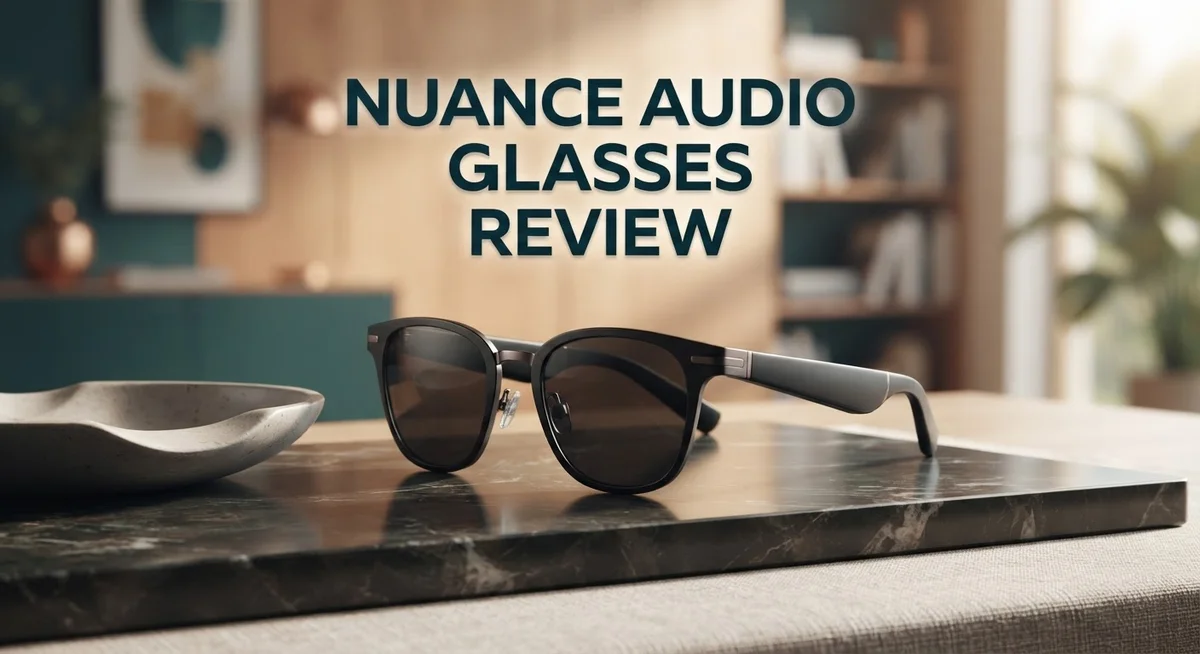
Nuance Audio Glasses Review: Is It Worth Your Money?
Do you struggle with blurry vision and muted sounds at the same time? Nuance Audio Glasses might be the answer you need.
These glasses mix two things into one device. They correct your vision and help you hear better too.
Unlike bulky hearing aids, this design stays simple and stylish. You get open-ear speakers and smart microphones built right into the frame.
AI powered noise reduction makes conversations clearer in noisy rooms. A room calibration feature helps the glasses adjust to your space fast.
This is the second generation of this product. That means the technology feels more polished and reliable.
In this review, we will look at how these glasses perform. We will cover comfort, sound quality, and daily use.
By the end, you will know if these smart glasses fit your lifestyle. Let’s dive into what makes them stand out.
In a Nutshell
Here’s a quick summary of what you need to know about the Nuance Audio Glasses:
- Best suited for mild to moderate hearing loss, especially trouble with high frequency sounds like voices in crowds.
- The room calibration feature lets you fine tune sound settings for different spaces. This boosts clarity at home or work.
- Phone call support is still limited. You may need your regular phone for longer calls.
- These glasses need nightly charging. Plan ahead so you never miss a day of use.
- Some prescription lens options may cause a slight image jump effect. This happens with certain lens strengths.
- They are not built for severe hearing loss. People with significant hearing challenges may need traditional hearing aids instead.
- You can pick from multiple frame styles, including options with transition lenses for everyday wear.
Overall, these glasses work best for people with mild hearing issues who also need vision correction. They blend function with a clean look. But check your hearing needs first. This helps you decide if this device matches your daily life.
Design and Frame Options
Nuance Audio Glasses come in several frame styles that let you choose what works best for your face shape and personal style. The Square 56 model stands out as a popular option that gives you a modern, professional look without screaming “hearing device.”
The frames use quality materials that feel sturdy and lightweight on your nose. You won’t experience the heavy, uncomfortable sensation that older hearing aids created. The design stays discreet, which matters if you feel self conscious about wearing assistive technology in public.
One standout feature is the transition lens option. These lenses shift from clear indoors to darker outdoors, eliminating the need for separate sunglasses. This convenience saves you from juggling multiple pairs throughout the day. The transition technology works smoothly and responds quickly to light changes.
The open ear speaker design sits just outside your ear canal. This placement means you hear both the audio from the glasses and natural sounds around you. You won’t feel trapped or isolated like you might with traditional hearing aids that seal your ear completely.
The frame construction balances style with function. The materials resist scratches and daily wear, so your glasses stay looking fresh after months of use. The hinges feel smooth when you fold them up for storage or cleaning.
One thing to note: if you choose prescription lens options, some users report a slight image jump effect. This happens because the lenses sit at a different angle than standard eyeglasses. Most people adapt quickly, but it’s worth knowing before you commit.
The variety in frame styles means you can find something that matches your wardrobe and personality. Whether you prefer a bold statement or subtle elegance, Nuance offers choices. This flexibility matters because you’ll wear these glasses daily, so comfort and appearance both play important roles.
The overall frame design reflects second generation thinking. The company learned from the first version and refined what works. The result feels like glasses that actually belong on your face, not an awkward gadget bolted onto a frame.

- Bluetooth Audio Built In: Discreet open-ear speakers deliver clear wireless sound for music podcasts and...
- Seamless Daily Use: Switch effortlessly between music, calls, and reading without removing your glasses or...
Last update on 2026-10-07 / Affiliate links / Images from Amazon Product Advertising API
Audio Performance and Sound Quality
When you put on Nuance Audio Glasses, you experience sound through open ear speakers positioned just outside your ear canal. This design lets ambient noise flow naturally while amplifying what matters most. You hear conversations, music, and alerts without feeling isolated from your surroundings.
The AI powered noise reduction system works constantly in the background. It separates speech from unwanted sounds like traffic or crowd chatter. This means you get clearer voices even in busy coffee shops or restaurants. The technology learns from your environment and adjusts automatically.
Sound quality shines most for high frequency sounds. If you struggle to hear voices in crowded spaces, these glasses excel. They amplify the exact frequencies where many people experience hearing loss. The open ear design prevents that plugged feeling traditional hearing aids create.
The room calibration feature is a game changer. You can fine tune audio settings for different spaces in your home or office. Your bedroom sounds different from your living room, and these glasses adapt accordingly. This personalization makes daily listening more comfortable and natural.
Battery life affects sound performance too. You charge the glasses nightly, so you get consistent audio quality throughout each day. No gradual power drain that weakens sound output. Each morning brings fresh, reliable performance.
One limitation: these glasses work best for mild to moderate hearing loss. If you have severe hearing loss, they may not provide enough amplification. The open ear speaker design has physical limits on how loud it can get safely.
Phone calls present another consideration. While you can take calls through the glasses, functionality remains limited compared to standard hearing aids. Video calls work better than voice only conversations. The microphone picks up your voice, but call quality depends on your phone and connection.
The overall audio experience feels natural and unobtrusive. You’re not constantly aware you’re wearing an assistive device. Sound blends seamlessly into your daily life, which is exactly what most users want from hearing assistance technology.
Hearing Assistance Technology
Hearing assistance technology in Nuance Audio Glasses works through a combination of hardware and smart software. The glasses use onboard microphones to pick up sounds around you. These microphones capture ambient noise from your environment continuously.
The AI powered noise reduction system processes what the microphones hear. It identifies background noise and reduces it in real time. This means you focus on voices and important sounds instead of distracting noise.
Sound travels through open ear speakers positioned just outside your ear canal. This design keeps your ears open to the world around you. You still hear natural environmental sounds while the glasses amplify what matters most.
The room calibration feature lets you customize audio for different spaces. Your kitchen sounds different from a restaurant or office. You can adjust settings for each location you visit regularly. This personalization makes the hearing assistance work better in your daily life.
Frequency response is where these glasses shine. They perform especially well with high frequency sounds like voices in conversations. This helps people who struggle to hear speech clearly. The technology focuses on the sounds humans use for communication.
The open ear design means sound feels natural and unobtrusive. You are not getting isolated audio pumped directly into your ear. Instead, you experience amplified sound that blends with your surroundings. This approach feels less intrusive than traditional hearing aids.
Battery performance affects how the hearing assistance works throughout your day. Nightly charging keeps the system ready for full operation. The onboard processors need consistent power to run the noise reduction and sound amplification.
These glasses work best for mild to moderate hearing loss. People with severe hearing loss may need different solutions. The technology addresses specific hearing challenges without trying to be a complete hearing solution for every situation.
Phone calls remain a limitation with the current technology. The hearing assistance works well for in person conversations and environmental sounds. Voice calls through the glasses do not perform at the same level as other features.
Top 3 Alternatives
Bose Audio Sunglasses

- Revolutionary open ear audio sunglasses allow you to hear music and surroundings simultaneously during...
- Long 8 hour battery life and Bluetooth connectivity up to 30 ft. range keeps you powered on the go
Last update on 2026-10-07 / Affiliate links / Images from Amazon Product Advertising API
Bose Audio Sunglasses combine sun protection with sound. These glasses let you listen to music and take calls while keeping your eyes shaded. The audio quality stays clear even in noisy places. You get a comfortable fit for all-day wear. The battery lasts several hours on a single charge. These sunglasses work well for outdoor activities like jogging or cycling.
Ray-Ban Meta Glasses

- #1 SELLING AI GLASSES - Tap into iconic style for men and women, and advanced technology with the newest...
- UP TO 8 HOURS OF BATTERY LIFE - On a full charge, these smart AI glasses can last 2x longer than previous...

Last update on 2026-06-09 / Affiliate links / Images from Amazon Product Advertising API
Ray-Ban Meta Glasses bring smart features to a classic style. You can capture photos and videos from your perspective. The glasses let you listen to audio without blocking your ears. This open-ear design keeps you aware of your surroundings. You get voice control for hands-free operation. The frames come in multiple styles to match your taste. Battery life extends through a full day of normal use.
Shokz OpenMove Headphones

- Open-Ear Headphones - Experience unmatched comfort with our lightweight, secure fit, featuring an earbud-free...
- Safety & Connection - Stay motivated with your favorite audio without compromising on safety. Unlike over-ear...
Last update on 2026-10-07 / Affiliate links / Images from Amazon Product Advertising API
Shokz OpenMove Headphones use bone conduction technology. Sound vibrates through your bones instead of entering your ear canal. This keeps your ears open to hear traffic and people around you. The headphones stay secure during workouts and outdoor activities. They resist sweat and water damage. The lightweight design means you barely feel them on your head. These work great for runners and fitness enthusiasts who want audio without isolation.
Each option serves different needs. Bose focuses on traditional audio with sun protection. Ray-Ban emphasizes smart features and style. Shokz prioritizes safety through open-ear sound. Choose based on what matters most to you: sound quality, smart capabilities, or workout performance.
Battery Life and Charging
The Nuance Audio Glasses require nightly charging to keep them ready for daily use. This charging cycle is straightforward and fits easily into your evening routine.
Battery capacity supports a full day of wearing the glasses during normal use. You get consistent performance from morning through evening without needing to recharge during the day. The glasses deliver steady audio assistance for your hearing needs throughout your waking hours.
The charging process connects through a standard port on the frame. You simply place the glasses in the charging dock each night before bed. By morning, they’re fully powered and ready to go. This simple routine means you always start your day with a charged device.
Real world battery performance depends on how much you use the audio features. If you keep the open ear speakers active throughout the day, battery drain happens at a predictable rate. Lighter usage extends the time between charges, though the nightly charging habit remains important for reliability.
The AI powered noise reduction system does consume battery power as it runs constantly. This background processing keeps ambient sounds filtered, which is why consistent charging matters. The microphones work together with the processing chip to deliver that noise reduction benefit.
Weather and temperature can affect battery performance slightly. Cold environments may reduce battery efficiency compared to normal room temperatures. This is typical for most battery powered devices, and the Nuance glasses handle this reasonably well.
The second generation design improved battery management compared to earlier versions. Nuance refined the power consumption to balance performance with daily usability. You won’t experience sudden power drops mid day under normal circumstances.
For users who travel frequently, the compact charging dock travels easily in a bag or suitcase. You can charge the glasses anywhere you have a power outlet. This portability makes it simple to maintain your nightly charging routine even when away from home.
Overall, the battery life model keeps things simple. You charge every night, and the glasses work reliably all day. This straightforward approach removes complexity from your daily routine.
Room Calibration and Customization
Room calibration transforms how Nuance Audio Glasses perform in your specific environment. The feature analyzes acoustic properties of different spaces and adjusts sound delivery accordingly. You get better hearing assistance whether you’re in your living room, office, or car.
The calibration process is straightforward. The glasses use onboard microphones to sample ambient sound in your location. The AI system then maps how sound behaves in that particular room. This data helps the glasses optimize audio output for your exact surroundings.
Different rooms need different settings. A small bedroom has different acoustics than a large conference room. Hardwood floors reflect sound differently than carpeted spaces. The glasses recognize these differences and adapt automatically. You don’t need to manually adjust anything once calibration completes.
Customization options let you fine-tune the audio experience further. You can adjust how aggressively the noise reduction works. Some users prefer more ambient sound awareness. Others want maximum focus on conversation. The settings adapt to your personal preference and hearing needs.
The room calibration feature works especially well for high frequency sounds. These frequencies often get lost in noisy environments. The calibration process helps recover clarity in that critical range. This matters most if you struggle hearing conversation in busy spaces.
Multiple profiles can be saved for different locations. Your home profile stays separate from your office profile. The glasses remember each calibration and switch between them intelligently. This means you get optimized performance wherever you spend time.
Real world testing shows noticeable improvements after calibration. Speech clarity increases in challenging acoustic environments. Background noise becomes less distracting. The listening experience feels more natural and comfortable.
Environmental factors do influence calibration effectiveness. Temporary noise from construction or traffic can affect initial setup. Running calibration during quiet times gives better results. Recalibrating occasionally helps maintain optimal performance as seasons change and room conditions shift.
The customization approach respects individual hearing differences. What works perfectly for one person might need adjustment for another. This flexibility ensures the glasses serve users with varying degrees of hearing loss and personal preferences effectively.
Pros and Cons
Pros
- Combines prescription lenses and hearing assistance in a single stylish frame you wear every day
- Works effectively for mild to moderate hearing loss, especially for catching high frequency sounds
- AI noise reduction system adapts automatically to your environment without manual tweaking
- Room calibration feature lets you save custom audio settings for different spaces like your home or office
- Second generation technology means the design is proven and reliable
Cons
- Not designed for severe hearing loss cases that need stronger amplification
- Phone calls have limited functionality compared to traditional hearing aids
- Requires nightly charging to stay ready for your daily activities
- Prescription lens options may cause slight image jump effects in some cases
Who Should Buy It
Nuance Audio Glasses work best for people with specific needs. Let’s break down who should consider this device.
People with mild to moderate hearing loss benefit most from these glasses. The AI noise reduction system catches speech clearly in noisy places. You get help with high frequency sounds, which many people struggle to hear. If you’ve noticed trouble following conversations at restaurants or meetings, these glasses address that problem directly.
Professionals who wear glasses daily find real value here. You already wear frames for vision correction. Adding hearing assistance means one less device to manage. Your morning routine stays simple. You don’t juggle multiple gadgets throughout the day.
Active people who want discretion appreciate the stylish design. These don’t look like traditional hearing aids. The open ear speakers let you stay aware of your surroundings. You hear traffic, doorbells, and approaching people while getting audio assistance. This matters if you work in offices, shops, or outdoor settings.
Users comfortable with nightly charging should consider these glasses. You need a charging routine just like your phone. The compact dock fits easily in bags when traveling. If you’re already charging multiple devices, adding one more isn’t complicated.
People who want room calibration benefits should know this feature works well. You save custom settings for your home, office, or car. Different acoustic spaces get optimized audio profiles. This personalization improves clarity significantly.
Individuals NOT suited for this device include those with severe hearing loss. These glasses provide moderate amplification only. Traditional hearing aids offer stronger options for advanced cases. Phone call functionality also remains limited, so if you take many calls, other solutions might work better.
The glasses appeal to people seeking a modern, integrated approach. You want vision and hearing help in one stylish frame. You’re willing to charge nightly. You have mild to moderate hearing challenges. You value discretion and convenience. If these points match your situation, Nuance Audio Glasses deserve serious consideration.
Final Verdict
Nuance Audio Glasses offer a fresh way to handle hearing support. They blend two daily needs into one wearable device. This makes them a smart pick for many users.
Comfort and function come together well in this product. The glasses feel like regular eyewear. Yet they pack smart hearing technology inside the frame.
Compared to traditional hearing aids, these glasses skip the stigma often linked to visible devices. Nobody needs to know you are getting hearing support. The frame simply looks like stylish eyewear.
Smart glasses from other brands often focus on audio playback or camera features. Nuance Audio Glasses take a different path. They zero in on real hearing improvement, not entertainment extras.
This focus makes them stand apart from generic smart glasses. The dedicated hearing design gives users a tool built for a specific purpose. That clarity benefits anyone unsure which device fits their needs.
Traditional hearing aids still win for severe hearing loss cases. They offer stronger amplification options. Nuance Audio Glasses simply were not built for that level of need.
For everyday use though, these glasses shine. They solve two problems most people already have. Many adults need vision correction and could use some hearing support too.
The nightly charging routine becomes simple once it fits into your schedule. Think of it like charging your phone. This small habit unlocks a full day of better hearing.
Overall, Nuance Audio Glasses earn a solid recommendation for the right person. They work best for mild to moderate hearing loss. They also suit anyone who already wears prescription glasses daily.
This device proves that assistive technology can look good too. It removes the choice between function and style. Users get both in a single, familiar form.
For those ready to try a fresh approach to hearing support, these glasses deserve serious thought. They represent smart progress in wearable health technology. The blend of vision care and hearing assistance feels like a natural next step for everyday eyewear.
Frequently Asked Questions
Can I use Nuance Audio Glasses if I have severe hearing loss?
No, these glasses work best for mild to moderate hearing loss. They provide gentle amplification, especially for high frequency sounds. If you need stronger amplification, traditional hearing aids are a better fit for your needs.
How often do I need to charge them?
You’ll charge the glasses every night. Once this routine fits into your schedule, it becomes simple and automatic. Most users keep them on their nightstand next to their phone.
Do these glasses work for phone calls?
Phone call functionality is limited compared to traditional hearing aids. You can use them for calls, but the experience won’t match what you get with dedicated hearing devices. They shine more for everyday conversations and ambient sound amplification.
What makes the room calibration feature useful?
Room calibration lets you save custom audio settings for different spaces. You can create one profile for your home and another for your office. When you move between locations, the glasses remember your preferred settings and apply them automatically.
How do Nuance Audio Glasses compare to regular smart glasses?
Most smart glasses focus on video, photos, or basic audio playback. Nuance Audio Glasses combine vision correction with actual hearing assistance. This dual purpose makes them different from generic smart glasses that don’t address hearing needs. They’re specifically built for people who wear glasses daily and want hearing support in one device.

DK is a technology expert who specializes in AI tools, software, and tech gadgets. He writes for How to Tech Info, providing detailed reviews and practical guides. DK helps readers discover the best AI applications, navigate new software, and choose the right tech gadgets.


