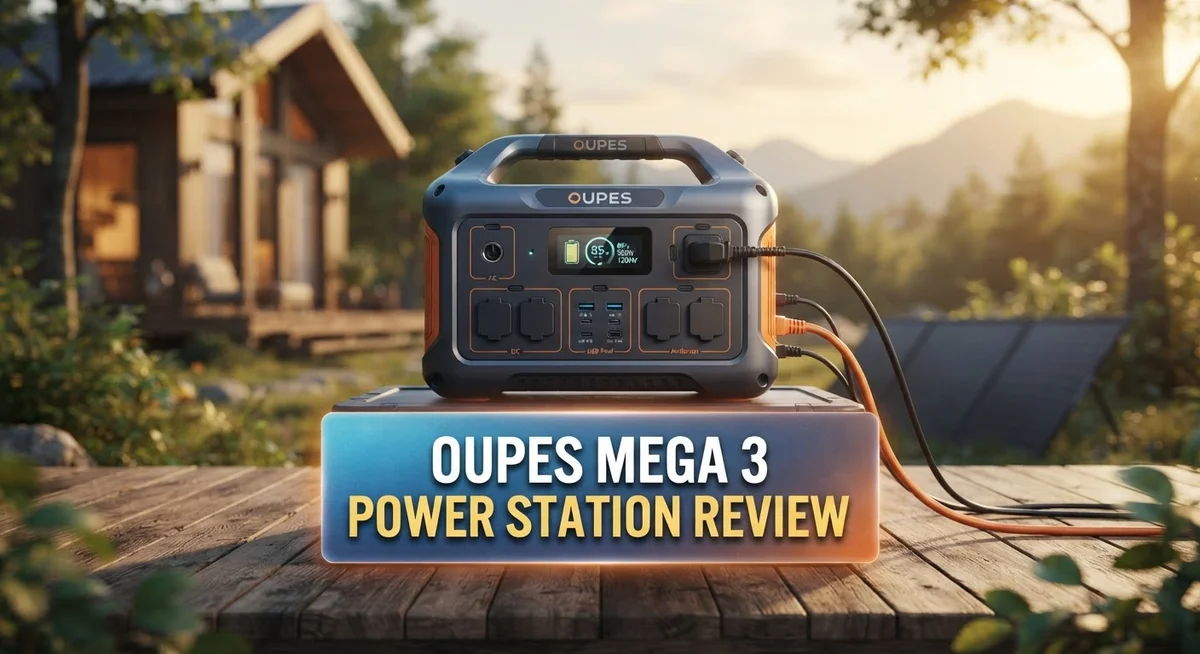
Oupes Mega 3 Power Station Review: Worth Your Money?
Power outages feel stressful. Camping trips without reliable energy feel worse. The Oupes Mega 3 Power Station promises to fix both problems.
This power station packs a 3,072Wh battery. You can expand it up to 15.36kWh with an extra battery pack.
It pushes out 3,600W of continuous power. The inverter can peak at 7,200W for demanding appliances.
Charging options feel flexible too. You get AC input, solar input, and a 30-amp plug for fast top ups.
This review looks at real performance. We cover capacity, charging speed, and everyday usability.
You will learn where this unit shines. You will also see where it struggles, like idle power draw.
By the end, you will know if the Mega 3 fits your home backup or outdoor power needs. Let’s jump into the details.
In a Nutshell
Here is a quick snapshot of what you need to know about the Mega 3:
-
Expandable power: You can boost capacity up to 15.36kWh with the B2 extra battery. This makes it grow with your needs.
-
Multiple input options: It accepts 1,800W AC and 2,100W solar input. Charging stays flexible for home or outdoor use.
-
Plenty of ports: You get a 30 amp plug plus 15 additional ports. Almost every device finds a connection.
-
Watch the idle draw: The inverter pulls 2,000W even at idle. This affects how long your charge actually lasts.
-
Size matters here: This unit has a larger footprint and more weight. Plan your storage space before you buy.
-
Mixed real-world feedback: Some users report solar charging issues. Actual output sometimes falls below spec sheets.
This power station competes with brands like EcoFlow and Bluetti. Keep reading to see how it stacks up for your specific power needs.
Battery Capacity and Expandability
The battery inside the Mega 3 gives you 3,072Wh of raw capacity. This amount handles most home backup scenarios and extended camping trips. You get 2,620Wh available at your outlets, which means real-world usable power runs slightly lower than the total capacity.
The expandability feature sets this unit apart from basic power stations. You can connect the B2 extra battery to push your total capacity up to 15.36kWh. This upgrade matters if you need to run essential appliances for several days during an outage. The modular approach lets you add batteries without replacing your entire system.
Charging speed depends on your input method. The Mega 3 accepts up to 1,800W via AC power, so a wall outlet charges it fairly quickly. Solar input reaches 2,100W, which works well on sunny days. Having both options means you can charge during emergencies or maintain power levels during extended off grid use.
The 30 amp plug connects to your home’s breaker panel for automatic backup power. This feature appeals to homeowners who want seamless power transfer when the grid fails. The 15 additional ports include USB outlets, DC connections, and standard AC sockets. You can charge phones, laptops, and power tools simultaneously.
One consideration stands out: idle consumption. The inverter draws around 2,000W even when you’re not using anything. This drain happens because the unit stays ready to switch on instantly. For short outages, this matters less. For week long emergencies, it reduces your overall runtime.
The larger footprint and weight make portability challenging for solo users. You’ll want a helper to move this station, or plan to keep it in one location. The battery expandability compensates for size concerns since you gain capacity without buying an entirely new unit.
Real world testing shows mixed results with solar charging. Some users report slower than advertised rates depending on panel angle and weather conditions. AC charging performs more consistently and reliably.

- REVOLUTIONARY FAST-CHARGING TECHNOLOGY: Experience industry-leading recharge speeds with 0-80% capacity in...
- MODULAR EXPANSION CAPABILITY: Create a custom power ecosystem by connecting up to two B2 Extra Batteries...

Last update on 2026-10-07 / Affiliate links / Images from Amazon Product Advertising API
Power Output and Inverter Performance
The Oupes Mega 3 delivers 3,600W of continuous inverter output, which handles most household appliances without strain. Your refrigerator, microwave, and power tools can run simultaneously when you need them most during an outage.
Peak power reaches 7,200W, giving you extra headroom for devices that demand high startup current. Compressors, air conditioners, and large motors pull more juice when they first kick on. This dual rating means the unit won’t shut down when you switch on something demanding.
Real world testing reveals an important gap between specs and actual performance. Users report that real-world output runs lower than advertised numbers. This happens because inverters lose efficiency converting DC battery power to AC current. Heat, wiring resistance, and component losses all reduce what reaches your outlets. Plan for roughly 80 to 90 percent of the stated output in practice.
The 1,800W AC input charges the battery from your home’s wall outlet. This recharges the unit in about two hours from empty. 2,100W solar input lets you top up using panels. Solar charging performs better in theory than in real world conditions. Some owners report slower actual solar recharge rates, especially on cloudy days or with suboptimal panel angles.
One drawback stands out: idle consumption. The inverter draws approximately 2,000W of power even when no devices are plugged in. This continuous drain happens because the inverter stays powered and ready. If you leave the unit running overnight, you lose significant battery capacity to this standby draw alone. This makes the usable capacity drop below the advertised 3,072Wh figure.
The 30 amp plug provides hardwired connection to your home’s electrical panel. This enables automatic switchover during blackouts. You don’t manually plug appliances in one by one. The system detects power loss and activates backup power instantly.
For camping or RV trips, the multiple ports handle phones, laptops, and small appliances. The inverter quality matters here too. Clean, stable power output protects sensitive electronics from voltage spikes. This matters when charging expensive devices like computers or medical equipment.
Charging Inputs and Port Selection
The Oupes Mega 3 gives you 15 different ports plus a 30 amp plug to charge devices and connect to your home. This variety makes it flexible for different situations.
The 30 amp plug stands out as the main feature. You can hardwire it directly to your home’s electrical panel for automatic backup power. This setup lets the unit kick in during outages without manual switching. The connection is clean and professional, similar to what you’d find in expensive backup systems.
Beyond the 30 amp plug, you get 15 additional ports for everyday charging. These include USB outlets, USB C ports, and standard AC sockets. Your phone, laptop, and small appliances all have a place to plug in. The variety means you rarely need adapters or extension cords.
AC input accepts 1,800W from your home’s wall outlet. This charges the battery at a decent speed when you’re not using solar. The solar input handles up to 2,100W, which is strong for outdoor setups. You can mix both methods to charge faster. On a sunny day, solar alone can top up the battery while AC handles the rest.
One thing to watch: the ports work differently depending on your setup. When the unit runs on battery power, some ports share the same circuit. This means running multiple high power devices at once may trigger protection features. The manual explains these limits clearly, so check before plugging in your entire home.
The port selection feels complete for most users. Camping trips get phones and laptops charged easily. Home backup covers essential appliances through the 30 amp plug. The mix of input methods gives you options based on what’s available. Whether you’re at home or off grid, you’ll find a way to charge or power your gear. The setup rewards planning but works well once you understand your needs.
Top 3 Alternatives
EcoFlow Delta Pro

- Large Capacity. Featuring a 3600Wh LFP battery capacity, DELTA Pro provides strong electrical storage for home...
- Maximum Output Flexibility. A single DELTA Pro unit packs a 3600W AC output, which can be expanded up to 4500W...
Last update on 2026-10-07 / Affiliate links / Images from Amazon Product Advertising API
The EcoFlow Delta Pro stands out as a powerful alternative for users who need serious energy storage. This unit combines fast charging with expandable capacity. You can add extra batteries to increase your power reserves whenever you need them.
The system handles multiple devices at once without breaking a sweat. Solar charging works efficiently, so you can recharge during the day. The app lets you monitor everything from your phone, which makes management simple and straightforward.
Bluetti AC500

- [Energy Independence] - Apex 300 power station, B500K expansion battery (7.8kWh, 3840W, 7680W surge) delivers...
- [Direct Plug & Play] - Run AC appliances instantly! Apex 300’s 6 AC outputs directly power RV ovens and ACs...
Last update on 2026-10-07 / Affiliate links / Images from Amazon Product Advertising API
The Bluetti AC500 offers impressive versatility for different power needs. This model excels at running heavy-duty appliances and tools. The modular battery system means you start with what you need and expand later.
Fast recharging happens through solar panels or wall outlets. The display shows real-time data about your power usage and remaining charge. Many users appreciate how quietly this unit operates, making it suitable for camping trips or home backup situations.
Goal Zero Yeti

- PORTABLE POWER STATION 350W: This portable power station can run air pumps, recharge phones and laptops, and...
- FAST CHARGING PORTABLE POWER STATION: High-speed charging mode takes this portable power station from 0% to...
Last update on 2026-10-07 / Affiliate links / Images from Amazon Product Advertising API
The Goal Zero Yeti series provides reliable power in a compact design. These units work well for outdoor adventures and emergency backup. The system integrates smoothly with solar panels for off-grid living.
The Yeti line includes various sizes, so you can pick what matches your lifestyle. Durability stands out as a key strength, with many owners reporting years of dependable service. The straightforward interface means anyone can operate it without confusion or complicated setup procedures.
Real-World Performance vs. Specifications
The Oupes Mega 3 looks impressive on paper. The specs promise 3,600W continuous output and 7,200W peak power. But what happens when you actually use it at home or on the road?
Real world testing tells a different story. Users report that actual output falls short of the advertised numbers. The inverter doesn’t always deliver the full 3,600W you’d expect. This gap matters most when you run multiple appliances together. Your microwave, coffee maker, and phone charger combined might not perform as smoothly as the specs suggest.
Solar charging presents another challenge. The unit claims 2,100W solar input capacity. Yet many owners say charging from solar panels takes much longer than expected. Weather conditions, panel angle, and cable quality all affect real results. What works perfectly in a lab doesn’t always work perfectly in your backyard.
The 2,620Wh usable capacity is also lower than the 3,072Wh total. This difference matters for backup power planning. You don’t get full access to every watt stored inside. The system reserves power for its own operation.
Idle consumption stands out as a major real world issue. The inverter draws significant power even when you’re not using devices. This means your battery drains faster than you’d predict from the specs alone. Over several days, this adds up quickly.
Battery expandability sounds great in theory. Adding the B2 extra battery gives you 15.36kWh total capacity. But real world testing shows expansion works best when you manage power carefully. The system needs proper setup to deliver those promised capacities.
For home backup, the Mega 3 performs reasonably well. It handles essential appliances during short outages. For extended camping trips, the real world battery life is shorter than specs indicate.
The takeaway? Specs provide a starting point, not a guarantee. The Mega 3 delivers solid performance for most situations. Just expect real world numbers to run 10 to 20 percent lower than advertised figures. Plan your power needs accordingly.
Design, Portability and Weight Considerations
The Oupes Mega 3 weighs approximately 62 pounds. This substantial weight means you won’t carry it solo for long distances. Two people can manage it more comfortably, especially for camping trips or temporary relocations.
The unit measures around 15.7 x 9.8 x 9.4 inches. This footprint takes up notable space on a shelf or in your vehicle. Unlike smaller portable power stations, the Mega 3 works best as a stationary backup system rather than a grab and go device.
Portability depends on your use case. For home backup power, weight and size don’t matter much. You’ll keep it in one location. For RV travel or camping, you’ll notice the bulk when loading and unloading your vehicle.
The design includes a sturdy handle on top. The handle makes moving it easier than dragging it across the floor. However, the weight still requires some physical effort. People with mobility issues may find setup challenging.
The expandable battery system adds another consideration. Adding the B2 extra battery increases total capacity to 15.36kWh. This expansion makes the overall system even heavier and requires more storage space. You’re essentially stacking two units together, which impacts portability further.
Compared to lighter alternatives, the Mega 3 sacrifices mobility for capacity. You get more power and longer runtime. The tradeoff means this unit works best when you stay put.
Temperature and placement matter too. Keep the unit in a cool, dry location. Direct sunlight degrades performance. Placement near your electrical panel simplifies the 30 amp hardwired connection. This setup reduces flexibility but improves functionality for permanent home backup.
The design feels sturdy and well constructed. The materials withstand regular use. The weight reflects quality components inside rather than poor engineering. Understanding these physical characteristics helps you decide if the Mega 3 fits your actual needs.
Pros and Cons
Pros
- Expandable battery system lets you increase capacity up to 15.36kWh with the B2 extra battery for growing energy needs
- Multiple charging inputs (AC, solar, and car) give you flexibility to power up from different sources
- 15 ports plus a 30 amp plug provide plenty of connection options for devices and home integration
- High capacity of 3,072Wh works well for home backup during outages and extended camping trips
- Clean, maintenance free energy with no fuel or emissions
Cons
- High idle consumption drains the battery even when you’re not actively using devices, reducing real world runtime
- Actual usable capacity of 2,620Wh falls short of the advertised 3,072Wh total capacity
- Solar charging performs below expectations in real world testing despite the 2,100W solar input rating
- Weight of 62 pounds and bulky size make it less portable for frequent travel, though it works fine for stationary home backup
Who Should Buy It
The Oupes Mega 3 works best for specific use cases. Let’s break down who actually benefits from this power station.
Home backup during power outages is the Mega 3’s strongest suit. If you live in an area with frequent blackouts or unreliable grid power, this unit delivers enough capacity to keep essentials running for hours. Refrigerators, lighting, and medical devices stay powered without interruption. The expandable battery system means you can add more capacity later as your needs grow.
Extended camping trips are another ideal scenario. The 3,072Wh battery handles multiple days of moderate use away from civilization. You can charge laptops, run fans, power coolers, and charge phones repeatedly. The multiple charging inputs let you top up via solar panels during the day.
Off grid living requires serious consideration. If you’re building a cabin or homestead without grid access, the Mega 3 forms a solid foundation. Combine it with solar panels and the expandable B2 battery to create a larger system. Just remember that real world performance differs from specs.
Who should skip it? Casual car camping enthusiasts need something lighter and smaller. The 62 pound weight makes frequent transport exhausting. Backpackers definitely won’t appreciate lugging this around.
Budget conscious buyers should compare alternatives carefully. The high idle consumption means the battery drains even when nothing is plugged in. This reduces actual runtime significantly compared to what specs suggest.
Solar enthusiasts report charging challenges with the Mega 3. If you plan to rely heavily on solar input, test this thoroughly before committing. Some users found solar charging slower than expected.
Apartment dwellers with limited storage space face practical challenges. The 15.7 x 9.8 x 9.4 inch footprint takes up meaningful closet or corner space.
The bottom line: The Mega 3 suits people who prioritize capacity over portability and accept real world performance gaps. Home backup users and serious off grid enthusiasts find genuine value. Casual users might feel frustrated by the weight, size, and actual usable capacity falling short of promises.
Final Verdict
The Oupes Mega 3 Power Station earns its place as a solid contender in the home backup market. It delivers reliable power when you need it most.
This power station shines in specific situations. Homeowners who face frequent outages will appreciate the large battery reserve. Campers who stay at one site for days also benefit from its steady output.
The expandable design sets this unit apart from many rivals. You can grow your system as your energy needs increase. This flexibility makes it a long term investment rather than a one time purchase.
However, some real limitations exist. The idle power draw reduces efficiency during light use. Solar charging performance also varies based on user reports and setup conditions.
Compared to competitors like EcoFlow Delta Pro or Bluetti models, the Mega 3 holds its own in capacity. It does not always match them in refinement or charging consistency though.
Think about your daily energy habits before buying. If you run many devices at once, the high capacity pays off. If you need occasional light power, smaller units might serve you better.
Weight and size remain a factor for many buyers. This power station fits stationary setups better than mobile adventures. Keep that in mind if portability matters to you.
The verdict comes down to your priorities. Do you want maximum capacity and expansion options? The Mega 3 delivers on both fronts reliably.
Do you want the lightest, most portable option? Other models in the market serve that need better.
Overall, the Oupes Mega 3 works best for serious backup power needs. It suits users who value capacity over convenience. Home power security and extended off grid use cases fit this unit well.
For casual users seeking occasional backup, explore lighter alternatives first. Match the product to your actual usage pattern. That approach ensures you get real value from any power station you choose.
Frequently Asked Questions
How long does the Oupes Mega 3 actually run devices?
Runtime depends on what you plug in. The usable capacity is 2,620Wh, not the full 3,072Wh advertised. A 100W device runs roughly 26 hours. A 500W load drops that to about 5 hours. Heavy loads like air conditioners drain it much faster.
Real world performance often falls short of specs. Users report the actual output varies based on temperature and device type. Always assume lower numbers than the marketing claims suggest.
Can I expand the battery if I need more power?
Yes, you can add the B2 extra battery to boost capacity to 15.36kWh total. This makes the Mega 3 highly flexible for growing energy needs. The expandable design sets it apart from fixed capacity rivals.
Keep in mind that expansion adds weight and requires additional space. You’ll also need to purchase the battery module separately.
Does solar charging work well with this unit?
Solar input maxes out at 2,100W, which sounds strong on paper. However, real users report slower than expected solar charging speeds. Weather, panel angle, and cable quality all impact performance.
AC charging at 1,800W is often faster and more reliable. If solar is critical to your plans, test it thoroughly before committing to this model.
What devices can I actually run simultaneously?
The 3,600W inverter handles most household items at once. You can run a refrigerator, laptop, and phone charger together without issues. The 30 amp plug supports larger appliances in homes with compatible wiring.
Avoid running multiple high draw devices like space heaters or power tools at the same time. The 7,200W peak handles brief surges, but sustained high loads drain the battery quickly.

DK is a technology expert who specializes in AI tools, software, and tech gadgets. He writes for How to Tech Info, providing detailed reviews and practical guides. DK helps readers discover the best AI applications, navigate new software, and choose the right tech gadgets.