Paper Shoot Camera Review 2026: Eco Friendly Digital Camera?
Have you ever wanted to capture memories without staring at a screen? The Paper Shoot camera has taken the photography world by storm with its screen free, film style approach to digital photography. This tiny, eco friendly camera fits in your pocket, shoots with retro film aesthetics, and uses a case made from stone paper instead of plastic.
But is it actually worth the price tag in 2026? With dozens of compact digital cameras now available, you deserve to know what you are really getting. In this Paper Shoot camera review for 2026, I break down every detail.
I cover the image quality, the build, the filters, the accessories, and the honest pros and cons. Whether you are a creative hobbyist, a party photographer, or someone looking for the perfect gift, this review will help you decide if the Paper Shoot camera belongs in your life.
Let’s dive straight into the details.
Key Takeaways: Paper Shoot Camera at a Glance
- The Paper Shoot camera features a 20MP CMOS sensor with a 28mm fixed focus lens at F2.2 aperture. It produces film style photos with a vintage, grainy aesthetic that many photographers love. The camera stores images on a standard SD card up to 128GB.
- There is no screen on the back of this camera. You shoot blind, just like with old film cameras. This creates a fun, surprise element but also means you cannot review your shots on the spot.
- The camera body weighs only 85 grams and measures just 14mm thick. It slides into any pocket or small bag with ease. The stone paper case is water resistant, drop resistant, and biodegradable.
- Four built in color filters come standard: Color, Black and White, Sepia, and Blue Tone. Extra filter expansion packs and creative lens accessories are available at additional cost.
- Pricing starts at around $139 for the board only and $158.50 for a camera bundle with a case. This places it in a premium range for a point and shoot novelty camera.
- Best suited for casual photography, parties, travel, and gifting. It is not a replacement for your smartphone camera if you need reliable image quality in all conditions. Low light performance is limited.
What Is the Paper Shoot Camera?

Last update on 2026-06-09 / Affiliate links / Images from Amazon Product Advertising API
The Paper Shoot camera is a compact digital point and shoot camera made by a company based in Taiwan. It uses a slim circuit board as its core, wrapped in a swappable case made from stone paper. Stone paper is a material created from pressed limestone and biodegradable resin. This makes the camera both lightweight and environmentally friendly.
The camera takes 20MP digital photos that mimic the look of old film photography. There is no LCD screen on the back. You look through a small rectangular viewfinder cut into the case and press a single button to shoot. The camera saves images to an SD card, and you transfer them to a computer via USB C or a card reader.
Paper Shoot positions this camera as an alternative to disposable film cameras. You get the retro film aesthetic without the ongoing cost of buying and developing film rolls. The camera runs on two AAA rechargeable batteries or charges via USB C, depending on the model you choose.
It has become popular among Gen Z and millennial photographers who want a break from smartphone photography. The experience feels intentional and slow. You cannot obsess over each shot because you simply cannot see it until later. That unpredictability is part of the charm.
Paper Shoot Camera Design and Build Quality
The Paper Shoot camera arrives as a DIY assembly kit. You receive the circuit board, a folding stone paper case, and two screwing pins. Building it takes about two minutes. You fold the case around the board and secure it with the pins. The process is simple and honestly quite fun.
At 68mm wide, 105mm tall, and just 14mm thick, this camera is remarkably slim. It weighs only 85 grams. You can carry it in a shirt pocket without noticing it. The stone paper case feels surprisingly solid for a paper based material. It resists water splashes and can handle drops better than you might expect.
However, the sides of the case leave the circuit board partially exposed. Dust and moisture can reach the electronics through these gaps. With regular use, the case will pick up scratches and dents over time. Paper Shoot sells replacement cases for about $19.50 each, so swapping them out is easy and affordable.
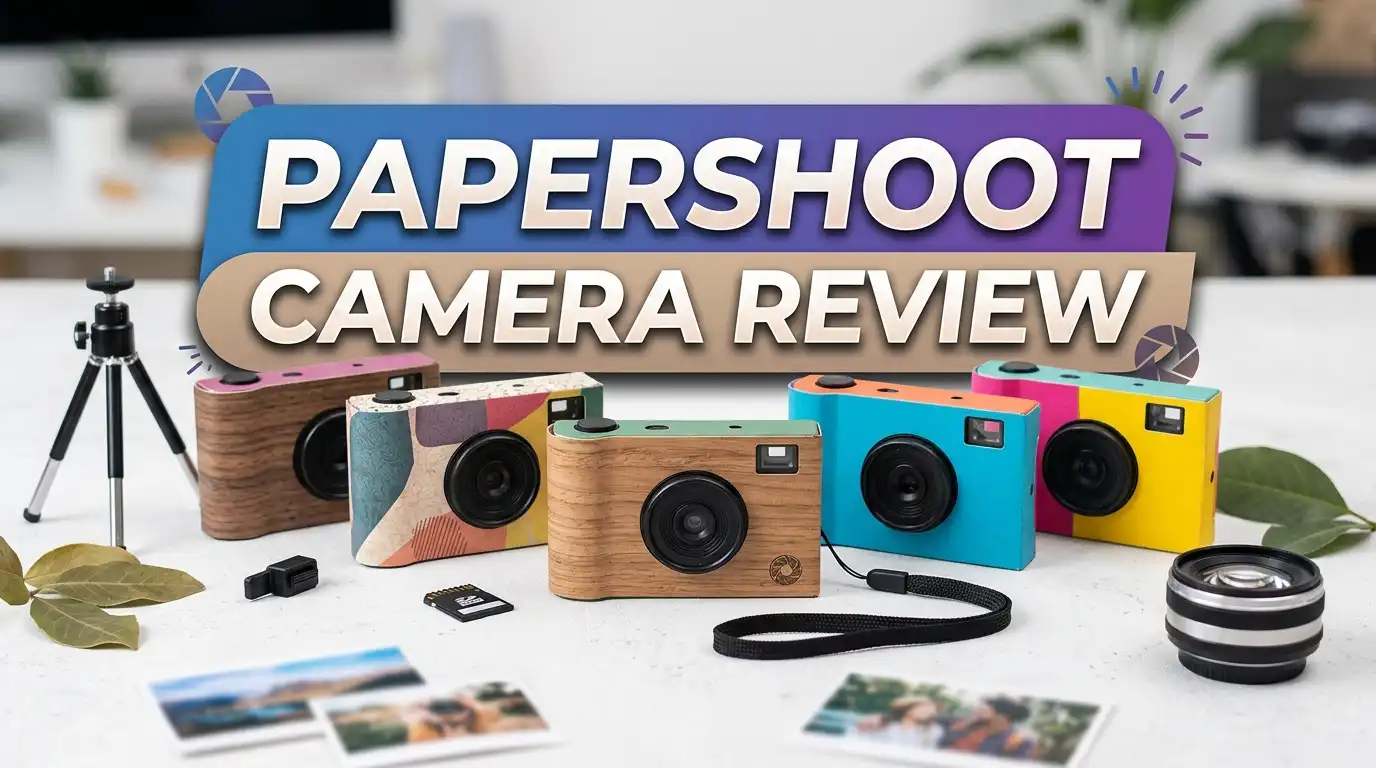
The camera has a clean, minimalist look. Cases come in dozens of designs, from retro and floral patterns to cartoon illustrations. This variety lets you personalize the camera to match your style. Many users collect multiple cases and swap them depending on their mood or outfit.
Camera Specifications and Technical Details
The 2026 Paper Shoot model runs a 20MP CMOS sensor. This is an upgrade from the older 16MP version. The lens is a fixed 28mm with an F2.2 aperture. ISO ranges from 100 to 3200, and the camera adjusts exposure automatically.
The maximum shutter speed sits at 1/30 of a second. This slow shutter speed means the camera struggles with fast movement. You need to hold still while shooting, especially in lower light. Any hand shake will show up in your photos as blur.
The camera records 10 second video clips at 1440p resolution. It also supports time lapse mode. Both features require either a separate function card accessory or an external power bank connected during recording. This makes video capture inconvenient for most users.
Storage relies on a standard SD card up to 128GB. At 20MP per image, a 32GB card holds thousands of photos. The included 32GB SD card is more than enough for casual photographers. Power comes from two AAA NiMH rechargeable batteries, with USB C charging built into the circuit board.
There is no autofocus system. The lens uses fixed focus, which means subjects at a medium distance look sharpest. Close up subjects may appear soft. There is also no built in flash, though Paper Shoot sells a separate ring light accessory for about $29.90.
Image Quality: How Do the Photos Actually Look?
The Paper Shoot camera produces photos with a distinct vintage, film like quality. Colors appear slightly muted and warm. There is often visible grain, which adds to the nostalgic aesthetic. In bright daylight, the results can be genuinely impressive for a novelty camera.
Detail is strongest in the center of each frame. The edges and corners tend to show noticeable blur and softness. Many photos also display a subtle brown vignetting around the borders. This adds character for some users but may annoy those who prefer clean, sharp images.
Low light performance is the camera’s biggest weakness. The slow 1/30 second maximum shutter speed and lack of flash mean indoor and nighttime photos often come out blurry or underexposed. You need to keep your hands extremely steady and find decent lighting for usable results.
The camera also tends to overexpose bright skies, especially on overcast days. Highlights blow out easily. This is a common issue with simple, automatic exposure systems. You have zero manual control over exposure settings, so you cannot correct this in camera.
That said, the imperfections are part of the appeal. Many users love the unpredictable, lo fi results. If you approach this camera with the right expectations, the photos carry a charming, authentic quality that smartphone cameras cannot replicate.
Top 3 Alternatives for Paper Shoot Camera
If you love the idea of a retro, compact camera but want to explore your options, here are three strong alternatives available on Amazon.

- Minimalist & robust design
Last update on 2026-06-09 / Affiliate links / Images from Amazon Product Advertising API
The Camp Snap V105 is an 8MP screen free digital camera with a similar philosophy to the Paper Shoot. It focuses on simple, distraction free photography. It is lightweight, durable, and perfect for outdoor adventures. The image quality leans toward a retro aesthetic with warm tones.

- 📷 Film-saving: You can have twice as many images per roll. For example, a film roll with 36 exposures...
- 📷 Lightweight and Easy-to-use: The pocket-size camera is light and tiny, and hence convenient for you to...
Last update on 2026-06-09 / Affiliate links / Images from Amazon Product Advertising API
The Kodak EKTAR H35 is a half frame 35mm film camera. It uses real film, which means ongoing costs for rolls and development. But the results are stunning and authentically analog. It shoots 72 photos per 36 exposure roll, making it cost effective for a film camera.

- THE ULTIMATE FILM VIBE, DIGITALLY: Experience the "wait and see" magic of film without the expensive...
- STAY IN THE MOMENT (SCREENLESS): Designed without a back screen to keep you present. Stop reviewing every shot...
Last update on 2026-06-09 / Affiliate links / Images from Amazon Product Advertising API
The Cappy Camera is a 20MP screen free digital camera with built in filters and USB C charging. It was created by the former North American distributor of Paper Shoot. It offers a similar experience with some design differences. The built in rechargeable battery eliminates the need for AAA batteries.
The Four Built In Filters Explained
The Paper Shoot camera includes four color filter modes that you toggle using a small switch on the side. These filters apply directly to your photos. There is no way to remove or change them after the shot is taken. Choose carefully before you press the shutter button.
The Color filter is the default mode. It produces warm, slightly desaturated tones that resemble expired film stock. Greens appear olive toned, and blues lean toward teal. The overall look is pleasant and nostalgic without being too heavy handed.
The Black and White filter converts images to monochrome. However, many users note that it carries a slight brownish tint rather than pure black and white. This gives it a sepia adjacent quality. Results work well for street photography and architectural shots where contrast matters.
The Sepia filter pushes the vintage aesthetic further. It adds a warm amber overlay that looks fantastic for retro themed photography. Reviewers have praised this filter for shots taken at art deco buildings, vintage car shows, and historic locations.
The Blue Tone filter adds a cool, moody wash over images. It works best in bright conditions where the blue overlay creates a dreamy, ethereal effect. In low light, photos taken with this filter can appear muddy and lack definition.
All four filters are subtle rather than dramatic. If you want stronger creative effects, Paper Shoot sells an expansion pack of 16 additional filter cards for $35. These slide into a slot on the camera board and offer styles like retro frame, double exposure, and color palette recording.
Accessories and Add Ons You Should Know About
Paper Shoot offers a growing ecosystem of accessories. The Filter Expansion 4 Card Set costs $35 and includes 16 different styles. These small cards slide into the camera to unlock effects like square format photos, retro frames, double exposure, and color palette recording.
The Effect Lens Duo is priced at $21.80. It includes fisheye and prism lens attachments that screw onto the front of the camera. These add fun distortion effects and creative flare to your shots. They are great for parties and artistic experiments.
A separate video and timelapse function card costs $13.30. This card lets you record 10 second video clips without connecting an external power bank. It makes the video feature much more practical. Without it, the standard video process requires cumbersome setup.
Paper Shoot also sells a detachable ring light for $29.90. This small LED light attaches around the lens and provides fill lighting for indoor and nighttime shots. Given the camera’s weak low light performance, this accessory is almost essential for evening use.
Other accessories include chain straps, mobile photo readers, and extra cases. The mobile photo reader ($11.80) lets you transfer photos from the SD card directly to your smartphone. This eliminates the need for a computer and makes sharing on social media faster.
Who Is This Camera Best For?
The Paper Shoot camera works best for a specific type of photographer. It appeals to people who value the experience of shooting over pixel perfect results. If you love the surprise of film photography but hate the cost of developing rolls, this camera delivers that same thrill digitally.
It makes an excellent gift for teenagers and young adults. The DIY assembly, interchangeable cases, and retro aesthetic feel like a creative project. Many parents buy it as a first camera for kids who want something different from a smartphone.
Wedding and party planners use Paper Shoot cameras as table cameras for guests. They are inexpensive enough to buy in bulk, lightweight, and produce fun, candid shots that feel authentic. The screen free design keeps guests present in the moment rather than reviewing every photo.
Travel photographers who want a ultra slim backup camera will appreciate the 85 gram weight and pocket friendly size. It takes up almost no space in a bag and adds a creative element to your travel photo collection.
This camera is not ideal for professional photographers, action photography, or anyone who needs consistent image quality in varying lighting conditions. The automatic exposure, fixed focus lens, and lack of flash limit its versatility in demanding situations.
Paper Shoot Camera vs Smartphone Photography
A common question is whether the Paper Shoot camera can replace your smartphone camera. The honest answer is no, it cannot. Modern smartphones in 2026 produce sharper, better exposed photos in nearly every situation. They also offer video, editing tools, and instant sharing.
But the Paper Shoot camera is not trying to compete on image quality. Its value lies in the experience of shooting. Without a screen to review your shots, you become more intentional about what you photograph. You slow down, compose your frame through the tiny viewfinder, and trust the process.
Smartphone photography often feels rushed and disposable. You snap dozens of photos and delete most of them. The Paper Shoot camera encourages a different relationship with photography. Each shot feels deliberate because you cannot see the result until you transfer the files later.
The film like aesthetic is another differentiator. Smartphone photos look clinical and sharp. Paper Shoot photos look warm, grainy, and imperfect. This lo fi style has become hugely popular on social media platforms. Many users post their Paper Shoot photos specifically because they stand out from typical phone shots.
If you want both quality and character, the best approach is to carry your smartphone for important shots and use the Paper Shoot for creative, low stakes photography. They complement each other well.
Battery Life and Storage Performance
The Paper Shoot camera runs on two AAA NiMH rechargeable batteries. You charge them inside the camera via the USB C port. A full charge takes about three hours. Battery life varies based on usage, but most users report getting several hundred shots per charge.
The camera powers on when you press the shutter button and turns off automatically between shots. This aggressive power saving approach extends battery life significantly. The downside is that the first shot after a pause takes a couple of seconds as the camera wakes up and primes the lens.
Two blue LED lights on the camera indicate battery status. Different blinking patterns signal whether the camera is shooting, recording, running low on power, or experiencing an SD card error. It takes a little practice to learn what each pattern means, but it becomes second nature after a few sessions.
The included 32GB SD card stores thousands of photos at 20MP. Paper Shoot recommends using cards under 128GB. The camera supports standard SD format, which is widely available and affordable. You can swap cards mid session without losing any data.
For long trips, carrying a spare set of rechargeable AAA batteries is a smart move. The USB C charging option also means you can top up the batteries using a portable power bank while traveling.
Durability and Long Term Use
The stone paper case is marketed as water resistant, drop resistant, and tear resistant. In daily use, the case holds up well against minor bumps and brief water exposure. It feels more solid than regular paper and has a slightly textured, almost fabric like surface.
However, extended use reveals some wear. Scratches and small dents appear after a few weeks of regular carry. The edges of the case can fray slightly where the folds meet. If you carry the camera in a bag with keys or other hard objects, the case will show damage faster.
The circuit board itself is the more delicate component. Since the sides of the case leave portions of the board exposed, dust and lint can accumulate around the lens and battery compartment. A quick blast of compressed air helps keep things clean.
Replacement cases cost $19.50 each, which is reasonable. Many users treat cases as semi disposable accessories and swap them every few months. This keeps the camera looking fresh and lets you change up the design regularly.
The lens is small and recessed, which offers some natural protection. But it has no lens cap. Keeping the camera in a small pouch or soft sleeve is a good idea if you want to protect the lens surface from scratches over time.
Price and Value for Money
The Paper Shoot camera board without a case starts at $139. A complete camera bundle with a case, SD card, and batteries costs around $158.50. This pricing puts it in the premium novelty camera category.
When you add accessories like the filter expansion pack ($35), effect lens duo ($21.80), video function card ($13.30), and ring light ($29.90), the total cost can exceed $250. That is a significant investment for a camera with basic features and limited controls.
For comparison, the Camp Snap V105 costs less and offers a similar screen free experience. The Kodak EKTAR H35 is cheaper upfront, though film and development add ongoing costs. Many used CCD point and shoot cameras from the early 2000s produce superior image quality for $30 to $50 on the second hand market.
The value proposition depends on what you prioritize. If you want the eco friendly stone paper design, the customizable cases, and the specific Paper Shoot aesthetic, then the price may feel justified. The camera offers a unique experience that no other product replicates exactly.
If you are purely focused on image quality per dollar spent, the Paper Shoot camera is not the most economical choice. But it was never meant to compete on that metric. You are paying for a creative experience, an eco conscious product, and a conversation starter.
Pros and Cons of the Paper Shoot Camera
The biggest strengths of the Paper Shoot camera include its incredibly slim and lightweight body, the eco friendly stone paper construction, the fun DIY assembly process, and the charming film like photo aesthetic. The interchangeable case system adds a layer of personalization that feels unique and creative.
The screen free shooting experience is both a pro and a con. It encourages mindful, intentional photography. But it also means you cannot check if you nailed the shot. This works great at parties and on vacations where spontaneity matters, but it frustrates users who want more control.
The four built in filters provide nice variety without overwhelming you with options. The sepia and black and white modes produce especially appealing results. The ability to expand with additional filter cards and creative lenses keeps the camera fresh over time.
On the negative side, low light performance is poor. The lack of a built in flash and the slow maximum shutter speed make indoor and evening photography challenging. The brown vignetting in many photos and the tendency to overexpose skies can also be frustrating.
The price feels high for what the camera delivers in terms of raw capability. Once you add essential accessories, the cost climbs further. The exposed circuit board sides and the wear on the paper case are also minor durability concerns.
Final Verdict: Should You Buy the Paper Shoot Camera in 2026?
The Paper Shoot camera is a delightful, niche product that excels at what it sets out to do. It captures the spirit of film photography in a digital, eco friendly package. It is fun to build, fun to use, and produces photos with genuine character and warmth.
If you want a camera that delivers consistent, high quality images in all conditions, look elsewhere. A smartphone or a proper compact camera will serve you better. The Paper Shoot camera has real limitations in low light, action, and exposure control.
But if you want something different, something that slows you down and makes photography feel exciting again, this camera is worth your attention. It works beautifully as a creative tool, a party camera, a travel companion, or a unique gift.
My recommendation is to buy the basic bundle first and see how you enjoy the experience before investing in accessories. If the shooting style resonates with you, the filter packs and creative lenses add real value. The Paper Shoot camera is not for everyone, but for the right person, it is something genuinely special.
How Does the Paper Shoot Camera Compare to Disposable Film Cameras?
Disposable film cameras cost between $10 and $20 upfront. But you also pay for film development and printing, which adds $15 to $25 per roll. Over time, the cost per photo is much higher than with the Paper Shoot camera.
The Paper Shoot camera uses digital storage on an SD card. There are no ongoing film costs. You shoot, transfer, and reuse. This makes it far more economical for frequent shooters. The environmental benefit is also significant since disposable cameras create plastic waste.
However, disposable film cameras produce authentic analog images with natural grain, light leaks, and color shifts. The Paper Shoot camera mimics these effects digitally, but the results are not identical. True film enthusiasts may find the digital imitation lacking in soul.
For parties, weddings, and events, the Paper Shoot camera is the smarter choice. You get reusable hardware, thousands of shots per card, and no development wait time. For a one time special occasion where true film magic matters, a disposable camera still has its place.
Frequently Asked Questions
Is the Paper Shoot camera worth it in 2026?
The Paper Shoot camera is worth it if you value the creative experience, the eco friendly design, and the vintage photo aesthetic. It is not worth it if you expect sharp, consistent image quality in all lighting conditions. The camera works best as a fun, supplementary device alongside your smartphone.
Does the Paper Shoot camera use film?
No, the Paper Shoot camera is fully digital. It uses a 20MP CMOS sensor and saves photos to an SD card. The film like appearance comes from the camera’s processing and built in color filters. There are no film rolls to buy or develop.
How do you transfer photos from a Paper Shoot camera?
You can transfer photos by connecting the camera to a computer via USB C cable. You can also remove the SD card and insert it into a card reader connected to your computer or phone. Paper Shoot sells a mobile photo reader accessory for direct transfer to smartphones.
Can the Paper Shoot camera record video?
Yes, but with limitations. The camera records 10 second video clips at 1440p. Standard video recording requires an external power bank connected during use. A separate video function card accessory ($13.30) removes the need for the power bank. Video quality is basic with muffled audio.
How long does the Paper Shoot camera battery last?
The camera uses two AAA NiMH rechargeable batteries that charge via USB C in about three hours. Battery life supports several hundred photos per charge. The camera automatically powers off between shots to conserve energy, which significantly extends battery duration.
Is the Paper Shoot camera waterproof?
The stone paper case is water resistant but not waterproof. It can handle light rain and splashes. However, the sides of the case leave the circuit board partially exposed. Submerging the camera in water will damage the electronics. Treat it as a splash proof device rather than an underwater camera.

DK is a technology expert who specializes in AI tools, software, and tech gadgets. He writes for How to Tech Info, providing detailed reviews and practical guides. DK helps readers discover the best AI applications, navigate new software, and choose the right tech gadgets.