
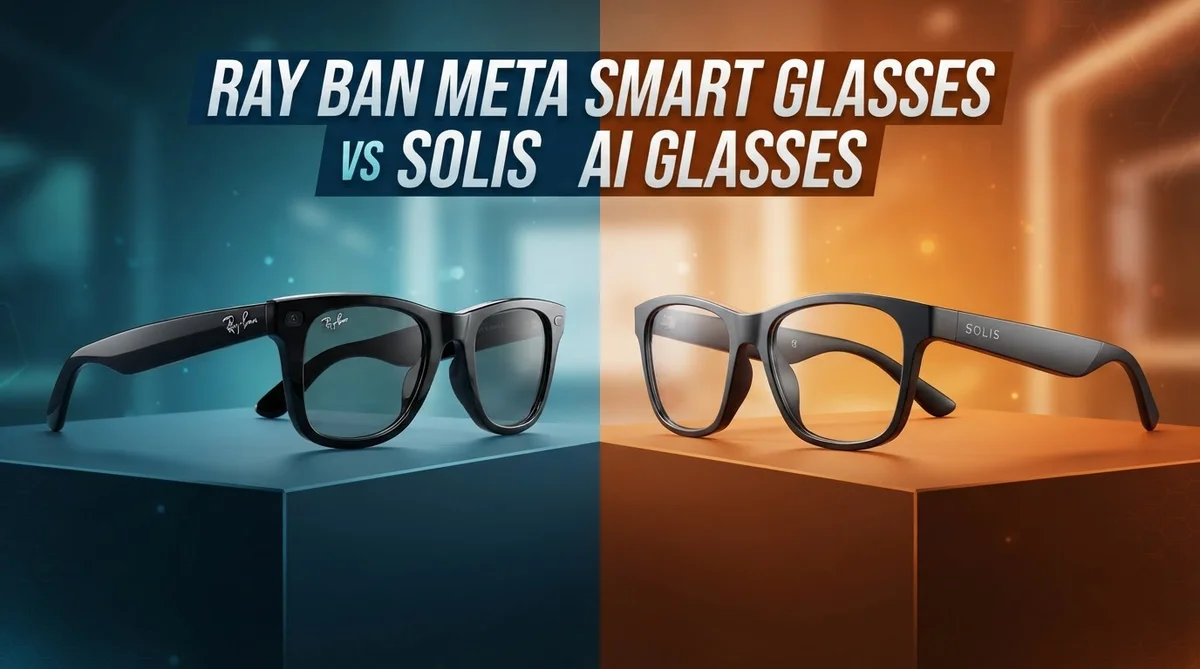
Ray Ban Meta Smart Glasses vs Solis AI Glasses: Comparison
Smart glasses are changing how we see the world. Two models stand out today: Ray Ban Meta Smart Glasses and Solis AI Glasses.
Ray Ban Meta brings sharp camera quality and rich audio to your daily life. It works well for calls, photos, and quick AI help.
Solis AI Glasses take a different path. They focus on helping blind and low vision users read, navigate, and connect with the world.
Both promise smart features. But they serve very different people with very different needs.
This guide breaks down specs, strengths, and weaknesses side by side. You will see how each pair performs in real life.
By the end, you will know which glasses fit your lifestyle. Whether you want style and sound or accessibility support, we have you covered.
Let us jump into the details and find your perfect match.
Quick Comparison: Ray Ban Meta Smart Glasses vs Solis Ai Glasses
| Feature | Ray Ban Meta Smart Glasses | Solis Ai Glasses |
|---|---|---|
| Camera | 12MP, 3K video @30fps | No camera |
| Audio | 5-mic array, directional speakers | Basic audio, touch controls |
| Weight/Comfort | Lightweight, stylish, extended wear issues | 52 grams, very lightweight |
| Battery Life | Full-day typical use | ~6-hour battery |
| Connectivity | USB-C charging case | Built-in WiFi, USB-C charging |
| AI Assistant | Voice AI, live translation | Reading/accessibility focused AI |
| Offline Capability | Limited offline features | Full offline capabilities |
| Target User | General consumers | Blind/low vision users |
Ray Ban Meta Smart Glasses Review

- #1 SELLING AI GLASSES - Tap into iconic style for men and women, and advanced technology with the newest...
- UP TO 8 HOURS OF BATTERY LIFE - On a full charge, these smart AI glasses can last 2x longer than previous...

Last update on 2026-06-09 / Affiliate links / Images from Amazon Product Advertising API
Ray-Ban Meta Smart Glasses deliver premium audio and video capture in a form factor that looks like regular eyewear. These glasses suit anyone wanting to record life hands-free while staying connected through AI-powered features.
The standout feature is the 12MP camera system that shoots 3K video at 30fps and 1080p at 60fps with sharp detail. You also get a 5-mic array paired with directional speakers that produce rich, bass-forward audio—a major advantage over many competitors.
Build quality feels solid and lightweight, making them wearable for shorter periods throughout your day. The haptic feedback and gesture control let you interact with the glasses intuitively without touching your phone.
Real-world performance shines in bright outdoor settings where the camera captures vibrant detail and colors. The voice AI assistant handles calls, texts, and commands smoothly, plus live translation and image analysis work reliably for practical tasks.
Pros
- Exceptional audio quality with directional speakers and clear bass presence
- High-quality camera performance across video and photo capture
- Sleek, lightweight design that doesn’t scream “tech gadget”
- Fast voice AI for calls, translations, and visual recognition tasks
Cons
- Not comfortable for extended all-day wear due to fit and weight distribution
- Limited display capabilities on Gen 1 (improved in Gen 2 models)
Solis Ai Glasses Review

- AUDIO SMART GLASSES powered by ChatGPT/Open AI, IP67 Rating and long battery life
- REALTIME LANGUAGE TRANSLATION with SOLOS Translate, powered by ChatGPT, supports 25 languages
Last update on 2026-08-16 / Affiliate links / Images from Amazon Product Advertising API
Solis AI Glasses (Ally Solos) are accessibility-first smart glasses built for people who are blind or have low vision. They focus on helping users read text, identify objects, and navigate the world with confidence through AI-powered features.
These glasses weigh just 52 grams, making them incredibly light for all-day wear. The touch sensor controls let you interact with the device hands-free, and USB-C charging keeps you powered up throughout your day.
Real-world performance shines in offline mode, meaning you get full functionality without needing constant internet connection. The comprehensive reading features work reliably for capturing and interpreting text in your environment.
Build quality feels solid and practical, with a focus on durability for daily accessibility use. The 6-hour battery keeps the glasses running through typical morning or afternoon sessions.
Pros
- Works offline, so you stay independent without WiFi dependency
- Extremely lightweight at 52 grams for comfortable extended wear
- Specifically designed for blind and low vision accessibility needs
- Touch controls offer intuitive hands-free interaction
Cons
- Battery life limits full-day usage without recharging
- Software still has growing issues and reliability concerns
- Prescription lens options remain limited for users with vision correction needs
Head to Head: Key Differences
Ray Ban Meta and Solis AI Glasses serve different audiences with distinct strengths. Understanding these differences helps you pick the right pair for your needs.
Camera and video capture differ significantly between the two. Ray Ban Meta packs a 12MP camera that records 3K video at 30fps and 1080p at 60fps, delivering sharp detail in bright conditions.
Solis AI Glasses focus on accessibility features rather than video recording, so camera performance is not a priority for this device.
Audio quality strongly favors Ray Ban Meta. The directional speakers deliver rich sound with clear bass presence, making calls and audio feedback crisp and enjoyable.
Solis AI Glasses include audio output but prioritize voice feedback for accessibility rather than premium sound quality.
Weight and comfort play out differently. Solis AI Glasses weigh just 52 grams, making them extremely light for extended wear throughout your day.
Ray Ban Meta feels solid and lightweight too, though some users report comfort concerns during longer wearing sessions.
Connectivity and independence separate these devices. Ray Ban Meta relies on WiFi or Bluetooth connection for full functionality and AI features.
Solis AI Glasses work offline, giving you complete independence without needing constant internet access.
Target users matter most here. Ray Ban Meta appeals to general consumers who want premium audio and video capture with AI assistance for daily tasks.
Solis AI Glasses are purpose-built for blind and low vision users, offering comprehensive reading and navigation features designed specifically for accessibility needs.
Both devices excel in their intended spaces. Your choice depends on whether you prioritize media capture and general AI features or accessibility focused functionality.
Which One Should You Buy
The Ray-Ban Meta Smart Glasses take the win in this comparison. They deliver sharper camera quality, richer audio, and a more stylish design overall.
Their AI assistant also works smoothly across daily tasks, giving users a dependable and versatile experience.
Solis AI Glasses still shine in their own lane, especially for accessibility needs. But for most everyday users, Ray-Ban Meta offers the stronger, more reliable package.
Best for each buyer
- Ray-Ban Meta Smart Glasses: Perfect for general consumers who want premium audio and video capture, paired with smart AI assistance for daily life.
- Solis AI Glasses: Ideal for blind or low-vision users who need accessibility-focused tools like reading assistance and offline functionality.
Frequently Asked Questions
Which glasses work better for video recording and photo capture?
Ray-Ban Meta clearly wins here. The 12MP camera shoots at 3024×4032 pixels and records 3K video at 30fps or 1080p at 60fps.
You get smooth, detailed footage perfect for sharing moments in real time.
Solis AI Glasses skip video recording entirely. They focus on reading text and describing what you see instead.
If capturing memories matters to you, Ray-Ban Meta is your choice.
Can I use these glasses without an internet connection?
Solis AI Glasses shine in offline mode. They work fully without WiFi, so you stay independent and productive anywhere.
This is huge for reliability and privacy.
Ray-Ban Meta needs internet for most smart features like live translation and cloud-based AI tasks. You can record video offline, but the AI assistant relies on connectivity for best results.
Which has better sound quality for calls and music?
Ray-Ban Meta dominates audio. The directional speakers deliver rich bass and clear sound.
Calls sound natural, and you hear everything around you without removing the glasses.
Solis AI Glasses include audio output, but they prioritize voice feedback for accessibility. Sound quality takes a back seat to function.
If audio matters, Ray-Ban Meta is superior.
Who should buy each pair?
Ray-Ban Meta suits general consumers wanting premium camera quality, excellent audio, and smart AI help for daily tasks.
Solis AI Glasses fit blind and low-vision users needing reading assistance, text recognition, and offline independence. They’re built specifically for accessibility.

DK is a technology expert who specializes in AI tools, software, and tech gadgets. He writes for How to Tech Info, providing detailed reviews and practical guides. DK helps readers discover the best AI applications, navigate new software, and choose the right tech gadgets.


