3 Best Graphics Cards for Streaming in 2026 – Power Up Your Live Streams
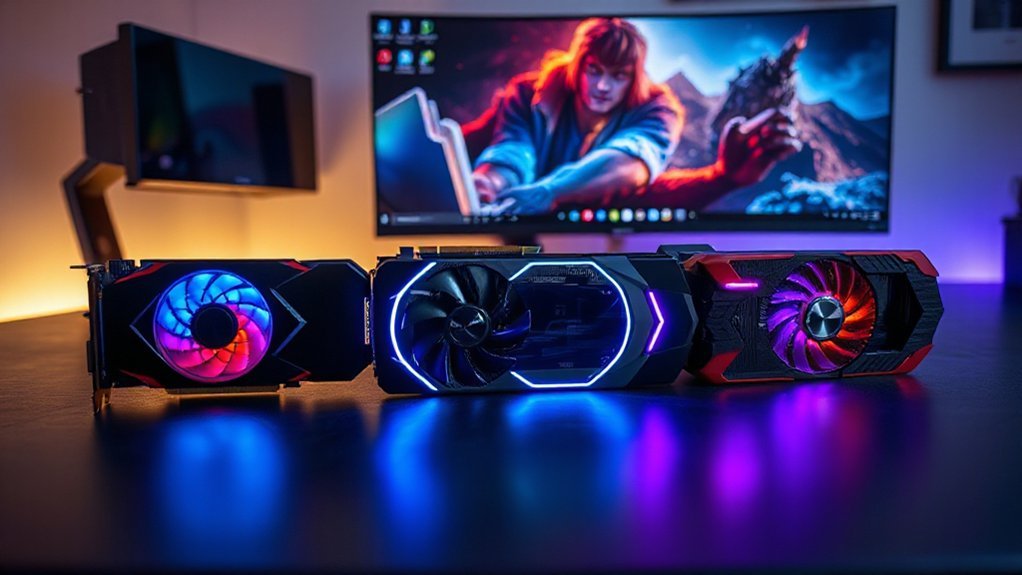
If you’re serious about streaming in 2026, choosing the right graphics card can make or break your setup. Whether it’s the latest NVIDIA GeForce RTX 4060 Ti with robust hardware encoding, AMD’s RX 7600 offering impressive Multi-Stream Processing, or Intel’s Arc A770 with versatile output options, each holds distinct advantages. Testing involves not just gaming performance but real-world encoding scenarios—ensuring seamless, high-quality streams across multiple displays. Ready to see which one best fits your goals?
GeForce GT 730 4G Low Profile Graphics Card

- Powered by NVIDIA GeForce GT 730, 28nm GK208 chipset process with 902MHz core frequency, integrated with 4096MB DDR3 memory and 64-bit bus width
- More stable performance, compatible with Win11, can automatically install new driver
- Support NVIDIA Surround technology for 4 screens output by dual HDMI and VGA / DP. HDMI Max Resolution-2560x1600, VGA Max Resolution-2048x1536, DP Max...
If you want an affordable and easy-to-use graphics card, then the GeForce GT 730 4G Low Profile from Glorto might be a good choice. It’s made for simple computers and helps you work with multiple screens, watch videos, or do basic graphics tasks.
This card uses an NVIDIA GeForce GT 730 chip that runs at 902MHz. It has 4GB of DDR3 memory and a 64-bit bus. It can connect to up to four monitors using dual HDMI, VGA, and DisplayPort. This makes it good for setups with many screens. Its small size also helps it fit in small cases or Home Theater PCs (HTPCs).
The card works well with Windows 11 and installs drivers automatically. You just plug it in and start using it. It’s perfect for office work, watching videos, or using multiple displays without costing too much.
Best for: people who want a simple, budget-friendly graphics card for multi-monitor work, media, and basic tasks in small cases or HTPCs.
Pros:
- Supports up to four monitors with HDMI, VGA, and DisplayPort
- Small size fits in tiny computers and HTPCs
- Easy to install with Windows 11
Cons:
- Not good for high-end gaming or advanced graphics
- Some users report recognition problems or hardware issues
- Only one HDMI port may limit multi-monitor setups for some users
If you want a budget card that handles multiple screens well for everyday tasks, the GeForce GT 730 4G Low Profile from Glorto can be a simple, solid choice.
GeForce GT 610 2G DDR3 Graphics Card

- Powered by NVIDIA GeForce GT 610, 40nm chipset process with 523MHz core frequency, integrated with 2048MB DDR3 memory and 64-bit bus width
- Compatible with windows 11 system, no need to download driver manually
- HDMI / VGA 2 ports output available. HDMI Max Resolution-2560x1600, VGA Max Resolution-2048x1536
Are you looking for a budget-friendly graphics card? Do you want something reliable for media centers, small PCs, or beginner computers? The GeForce GT 610 2G DDR3 is a good choice. It runs on NVIDIA’s GT 610 chip, which works at 523MHz. This card is built for simple tasks and light multimedia work. It has 2GB of DDR3 memory and a 64-bit memory bus. That means it can smoothly play HD videos and handle casual gaming.
This card is compatible with Windows 11. You don’t need to download extra drivers to use it. It has HDMI and VGA ports, letting you connect to high-resolution screens. The HDMI supports up to 2560×1600, and the VGA supports up to 2048×1536. Because of its size, it fits well in small computers and home theater PCs.
Best For: People on a budget who need a simple graphics card for media playback, small builds, or basic Windows 11 use.
Pros:
- It is an affordable upgrade for entry-level or small computers.
- Supports modern video outputs at good resolutions.
- No need to install extra drivers for Windows 11.
Cons:
- It is not good for heavy gaming or demanding tasks.
- Its 64-bit memory bus limits how fast data moves.
- It may not fit in very small cases easily, so check your case size first.
This card offers a simple way to add graphics power to basic computers without spending much. It works well for watching videos, working on simple images, or playing light games.
MSI GeForce GT 1030 4GB Graphics Card

- Chipset: NVIDIA GeForce GT 1030
- Video Memory: 4GB DDR4
- Boost Clock: 1430 MHz
The MSI GeForce GT 1030 4GB graphics card is a good choice if you want a cheap and reliable card for watching videos or casual gaming. It uses the NVIDIA GeForce GT 1030 chip and has 4GB of DDR4 memory. The card runs at a boost speed of 1430 MHz and has a 64-bit memory interface. It’s small and doesn’t need extra power cables, making it easy to install in most computers.
This card supports HDCP, DirectX 12, and has outputs for DisplayPort 1.4a and HDMI 2.0b. It works quietly, so there’s no loud fan noise. You can play most games at 720p with around 60 frames per second, and it can handle HD videos smoothly. It’s a great upgrade for older computers or for those who just want a simple graphics card without spending a lot.
Best For: People who want a low-cost, dependable graphics card for multimedia, light gaming, or upgrading older computers with an easy setup.
Pros:
- Easy to install without needing extra power cables.
- Runs quietly without fan noise.
- Good for 720p gaming and HD videos.
Cons:
- Not strong enough for high-end games at 1080p or higher.
- Might have driver issues on some computers.
- Not meant for professional use or new AAA games.
Factors to Consider When Choosing Graphics Cards for Streaming
When choosing a graphics card for streaming, you’ll want to factor in its performance capabilities to handle game and stream loads smoothly without lag. Video encoding features are vital too, as they reduce CPU strain and improve stream quality—think of them as your card’s secret weapon. Don’t forget to check compatibility, power requirements, and your budget to make sure your setup is a perfect match and won’t leave you stranded with a fancy paperweight.
Performance Capabilities
When you pick a graphics card for streaming, it’s not just about how powerful it is. You also want to see how well it handles video tasks. The way the GPU is built matters a lot. Things like the number of cores, clock speed, and memory speed tell you how smoothly your stream will run. More cores or shader units help with encoding and decoding videos faster. The type of memory, like GDDR5 or DDR4, affects how well it can handle high-resolution videos and multiple streams at once. This keeps your stream stable and clear.
Many GPUs have special features that help with video. For example, hardware codecs like NVENC or VCE handle the video encoding so your CPU doesn’t have to work so hard. This makes your stream more reliable. Also, some cards support multiple monitors or very high resolutions. This way, you can stream on different platforms or at super clear quality without slowing down your setup.
Video Encoding Features
Video encoding features matter a lot for a good streaming experience. Modern GPUs have special hardware to help with encoding videos. This takes some work off your CPU, so your stream stays smooth and steady.
They support popular codecs like H.264 and H.265/HEVC. Think of codecs as the tools that make your video clear and sharp while using less internet bandwidth. The settings for bitrate, which controls how much data your video uses, and how many streams you can run at once, also affect how well your GPU works.
Good encoding features can lower delay and improve how small the file size is without losing quality. This means your video can look good even at lower data rates. It’s important to check that your streaming software can use these features fully. That way, your stream will look better and run more reliably.
Compatibility Requirements
To make your graphics card work well with your streaming setup, start by checking how it connects to your motherboard. Most cards use a PCIe x16 slot, so look for that slot to be sure it can fit and send data fast enough. Next, look at the video outputs on the card—these are HDMI, DisplayPort, or VGA. Make sure these match your monitors and capture devices so everything connects smoothly. If the ports don’t line up, your stream might not look right or even not work at all.
Then, check if your hardware meets the minimum specs for your streaming software. If your computer is too slow or the hardware isn’t powerful enough, your stream could lag. Also, see if your graphics card supports modern video encoding features like NVENC. This can help you stream better and smoother.
Finally, make sure your graphics card works with your operating system, like Windows 10 or 11. If it doesn’t, you might have trouble installing drivers or getting it to run.
Getting these parts right can be boring, but if you skip them, your stream might not get live at all. So check these things carefully before you start streaming.
Power and Connectivity
When you upgrade your graphics card for streaming, it’s important to check the power and connection needs. Make sure your card has enough power, with the right PCIe power connectors or built-in options. This helps your system run smoothly when you’re streaming. Look at the video outputs, like HDMI, DisplayPort, or VGA. Pick the ones that match your monitor and streaming gear. If you plan to use two or more screens, choosing multiple output ports gives you more flexibility. Also, check if your card can handle high-resolution videos, like 4K. Look for standards like HDMI 2.0 or DisplayPort 1.4, which give better quality for streaming. Finally, confirm your power supply can provide steady wattage. A weak power supply can cause crashes or slowdowns during your stream.
Budget Considerations
Choosing a graphics card for streaming depends a lot on how much money you want to spend. If your budget is tight, you can look at options like the GeForce GT 610 or GT 730. These cards usually cost less than $100. They are affordable but not very powerful. They can handle simple streaming tasks, but if you want sharper images or smoother gameplay, you should consider a better card.
A good choice is the MSI GeForce GT 1030 4GB. It costs around $100 to $150. This card can give you better streaming quality and performance. Keep in mind, cheaper cards might have fewer video outputs and less VRAM. This can make your stream look worse. Also, cheaper cards may need a bigger power supply or other parts to work well.
Think about what you need for streaming and how much you want to spend. Sometimes, upgrading your computer parts later can cost more. So, pick a card that fits your needs and your budget.
Deployment Environment
The place where you set up your streaming computer is very important for choosing the right graphics card. If you have a small space, like a tiny case or a media PC, pick a small, low-profile card. These cards are shorter and often have special cooling to fit tight spots.
If you use more than one monitor, make sure the graphics card has enough ports and can handle high resolutions. Running multiple screens can slow down a weak card, so check that it can keep up.
Good airflow and cooling are key. If the area is not well ventilated, a mid-range or high-end card could get too hot, especially during long streams.
Also, look at your power supply and case size. The card must match your case and power source to keep everything stable and working smoothly.
FAQs
How Does VRAM Size Influence Streaming Performance?
Vram size directly impacts your streaming performance by allowing you to handle higher resolution videos and complex textures smoothly. When you have more VRAM, you experience fewer frame drops, better multitasking, and enhanced overall stream quality.
Are Integrated Graphics Suitable for Live Streaming in 2026?
Integrated graphics may handle basic streaming tasks, but for high-quality or demanding streams in 2026, you’ll want a dedicated GPU. It offers better performance, smoother gameplay, and improved stream quality you’ll appreciate.
What Are the Latest GPU Features for Improving Encoding Efficiency?
You’ll find the latest GPUs offer advanced encoding features like AV1 support, hardware acceleration, and improved efficiency. These enhancements boost streaming quality, reduce CPU load, and guarantee smoother broadcasts, making your live streams look professional and seamless.
How Does Graphics Card Power Consumption Affect Streaming Setups?
Your graphics card’s power consumption impacts your streaming setup by affecting your overall energy use and heat generation. A more efficient GPU helps you run smooth streams without overloading your system or needing excessive cooling, keeping everything stable.
Which GPU Brands Offer the Best Reliability for Streaming Purposes?
You’re wondering which GPU brands are most reliable for streaming. Nvidia and AMD stand out for their proven durability and consistent performance, giving you peace of mind during long streaming sessions. Stick with trusted brands for dependable performance.

DK is a technology expert who specializes in AI tools, software, and tech gadgets. He writes for How to Tech Info, providing detailed reviews and practical guides. DK helps readers discover the best AI applications, navigate new software, and choose the right tech gadgets.
Last update on 2026-03-06 / Affiliate links / Images from Amazon Product Advertising API This site is a participant in the Amazon Services LLC Associates Program, an affiliate advertising program designed to provide a means for sites to earn advertising fees by advertising and linking to Amazon.com.